Notice: Function _load_textdomain_just_in_time was called incorrectly. Translation loading for the acf domain was triggered too early. This is usually an indicator for some code in the plugin or theme running too early. Translations should be loaded at the init action or later. Please see Debugging in WordPress for more information. (This message was added in version 6.7.0.) in /home4/hodakate/public_html/wp-includes/functions.php on line 6131

Warning: Cannot modify header information - headers already sent by (output started at /home4/hodakate/public_html/wp-includes/functions.php:6131) in /home4/hodakate/public_html/wp-includes/feed-rss2.php on line 8
Hoda Katebi https://hodakatebi.com/ Mon, 07 Jun 2021 05:07:13 +0000 en hourly 1 https://wordpress.org/?v=6.9.4 https://hodakatebi.com/wp-content/uploads/2019/12/fav.png Hoda Katebi https://hodakatebi.com/ 32 32 Writer, Entrepreneur, and Activist Hoda Katebi on France’s Proposed Hijab Ban | VOGUE https://hodakatebi.com/writer-entrepreneur-and-activist-hoda-katebi-on-frances-proposed-hijab-ban-vogueer-bernie-sanders-newsweek/ https://hodakatebi.com/writer-entrepreneur-and-activist-hoda-katebi-on-frances-proposed-hijab-ban-vogueer-bernie-sanders-newsweek/#respond Sun, 30 May 2021 23:57:33 +0000 https://hodakatebi.com/?p=3515 As an Iranian-American community organizer and abolitionist, I do not believe electoral politics are the arena where much-needed systemic change can happen. But there is too much at stake right now to ignore. While every other Democratic candidate either supports policies—such as sanctions, war, or even the Muslim Ban—that devastates our communities and propels us further into military escalation, Bernie Sanders has consistently been the near-lone voice in preventing war with Iran during his time as Senator, and is the only candidate who comes close to addressing the needs of Iranian-Americans.

The post Writer, Entrepreneur, and Activist Hoda Katebi on France’s Proposed Hijab Ban | VOGUE appeared first on Hoda Katebi.

]]>
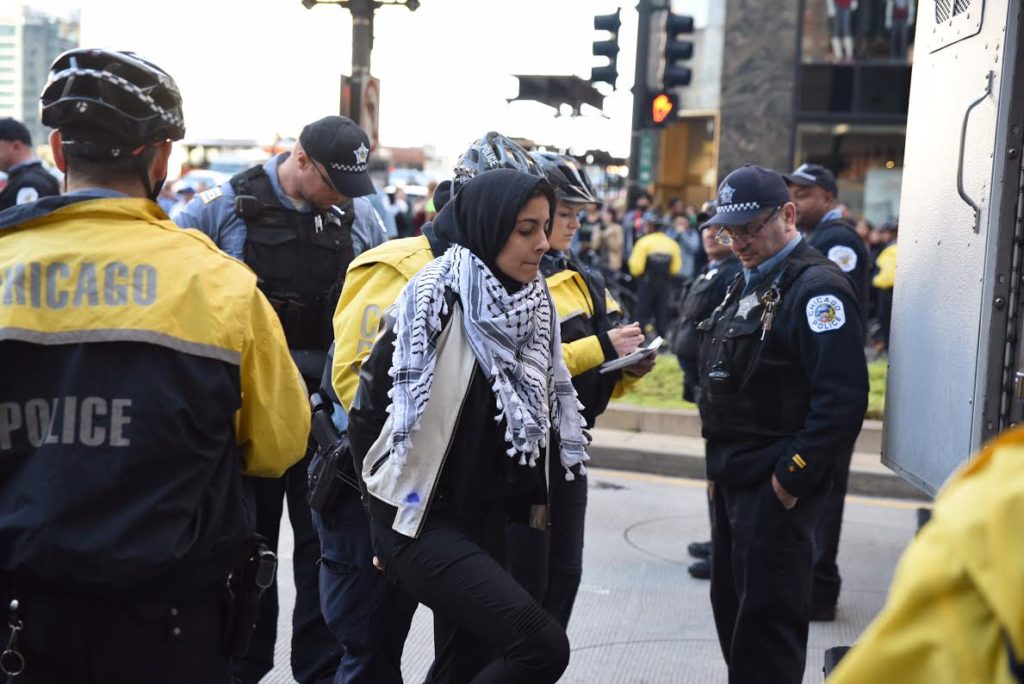
Last week, the French Senate approved a measure to ban the hijab for women under the age of 18. It was an amendment to a proposed law “reinforcing the respect of the Republic’s principles” under the administration of Emmanuel Macron. To be codified as law, the proposal must be approved by the lower house of Parliament, which experts suggest has “no chance” of happening. Still, the ban has triggered global outrage, and rightfully so.

While it may not officially become law, such measures in the name of laïcité, or French secularism, are common tactics by conservative powers to test public reaction in order to determine how and when to actually push them through. Whether this is perceived as a symbolic case study to gather data or an actual attempt at lawmaking, the very introduction of this proposal is cause for alarm. If it doesn’t pass this year, it could certainly pass in the near future; in fact, other anti-Muslim laws in France share similar origin stories. The once “outrageous” early 1990s proposal to ban hijabs and “all ‘ostentatious’ signs of religious affiliation” from schools, for example, was ratified and enforced within the decade and continues to affect young Muslim women today. The new measure would build on that existing ban by outlawing the hijab for young women everywhere in France, not just in schools.


As an Iranian-American, visibly Muslim woman living in the United States, the attempt to restrict our freedom of dress is not foreign to me. Growing up in the South, it was abundantly clear to me that being visibly Muslim—or just not white—and feeling safe in public was not always a guarantee. In middle school, my hijab was torn off, teachers asked me to remove it, and I was physically assaulted by a classmate. These experiences were not unique to me, though, nor were they a product of individuals’ personal biases or ignorance; rather, there are deeper roots in the violence I and other Muslims face around the world.

The hijab, women’s bodies, and fashion at large have long been battlegrounds for political power, colonization, and state control, from Iran to the U.S. Recall how in 2017, President Trump was encouraged to send more troops to Afghanistan after seeing a 1972 photo of Afghan women in miniskirts, evidently a reminder that “Western norms had existed there before and could return,” as reported by the Washington Post. While everyone was debating the liberatory merits of hijabs and short skirts, the U.S. was setting up infrastructure to extract natural resources. Or consider the legally mandated headscarves for women in Iran and Saudi Arabia, enforced in the name of a national religious identity; until just a year ago, Saudi women could be arrested for choosing not to wear one. It doesn’t matter if a state claims to be secular or religious, or if it’s banning a garment or mandating it—in both cases, women’s bodies are being politicized and exploited as a means of control. 

Read the full essay at Vogue.com

The post Writer, Entrepreneur, and Activist Hoda Katebi on France’s Proposed Hijab Ban | VOGUE appeared first on Hoda Katebi.

]]>
https://hodakatebi.com/writer-entrepreneur-and-activist-hoda-katebi-on-frances-proposed-hijab-ban-vogueer-bernie-sanders-newsweek/feed/ 0
From Karbala to Chicago: Reflections on Death, Mourning, & Traditions of Resistance https://hodakatebi.com/from-karbala-to-chicago-reflections-on-death-mourning-traditions-of-resistance/ https://hodakatebi.com/from-karbala-to-chicago-reflections-on-death-mourning-traditions-of-resistance/#respond Mon, 07 Sep 2020 14:43:07 +0000 https://hodakatebi.com/?p=3415 The tragedy of Ashura is contemporary because the justice and liberation Imam Hussain was seeking has still not been achieved. It is an ongoing commemoration for an unfinished liberation struggle. The racial capitalism that continues to inflict violence on our Black, brown, Indigenous, poor, undocumented, refugee communities is oppression that is not simply a repetition of history, but an inheritance from it.

The post From Karbala to Chicago: Reflections on Death, Mourning, & Traditions of Resistance appeared first on Hoda Katebi.

]]>
7 September 2020

From Karbala to Chicago: Reflections on Death, Mourning, & Traditions of Resistance

1: Muharram marks the massacre of the grandson of the Prophet, Imam Hussain (ع), alongside his entire family, after they refused to pledge allegiance to the oppressive rule of the corrupt Yazid. Yazid had usurped control of the Muslim caliphate a few generations after the Prophet’s death. After Hussain responded to calls by the people living under Yazid’s rule for liberation, he and his family traveled to Karbala in southern Iraq, where they were chased and hunted down by Yazid’s armies who cut off their access to water. On the tenth of Muharram, (known as Ashura), Hussain was killed after being given the option for a final time of choosing between acknowledging Yazid’s rule and death. 

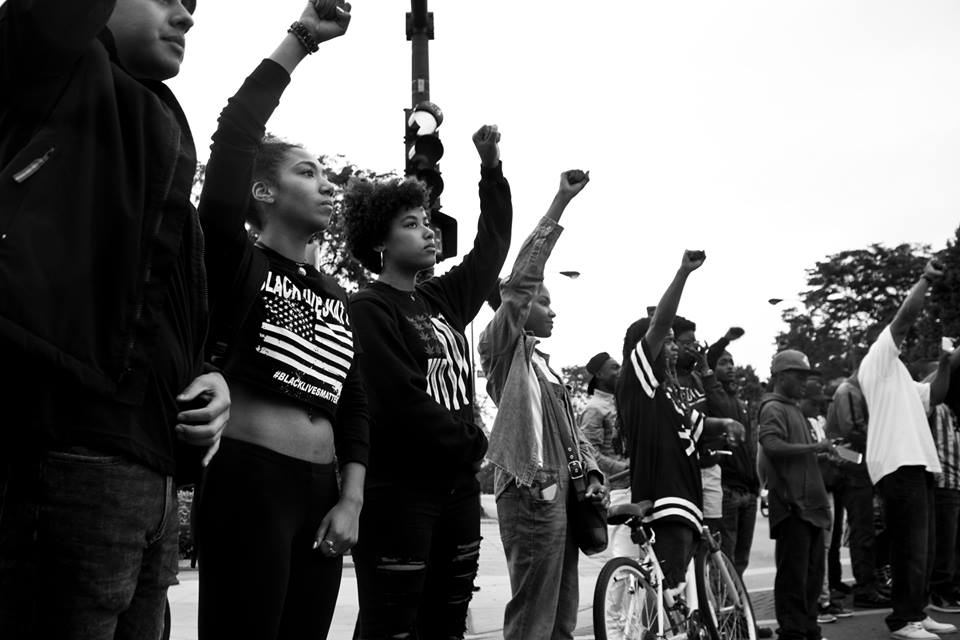
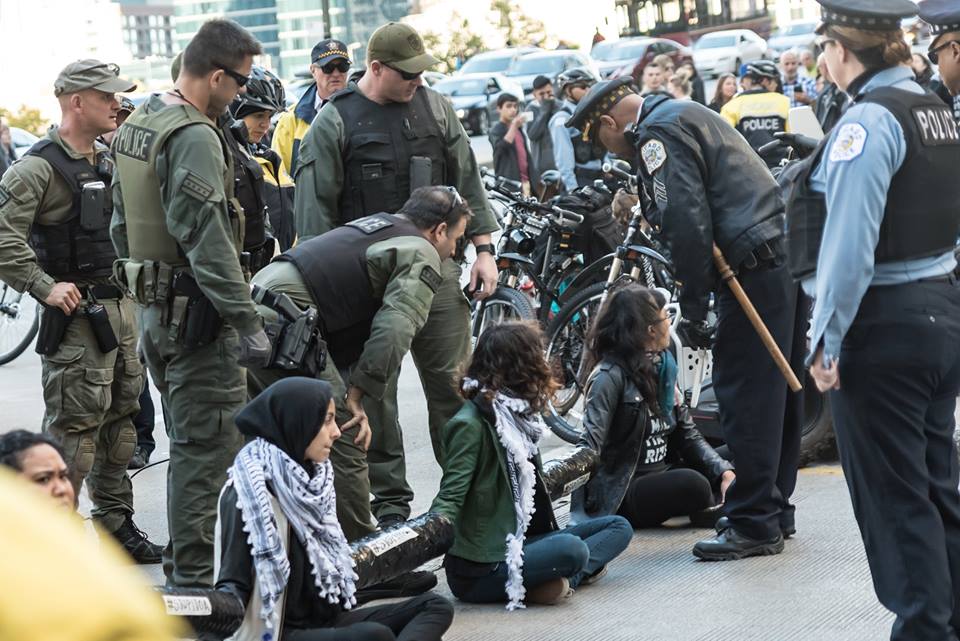
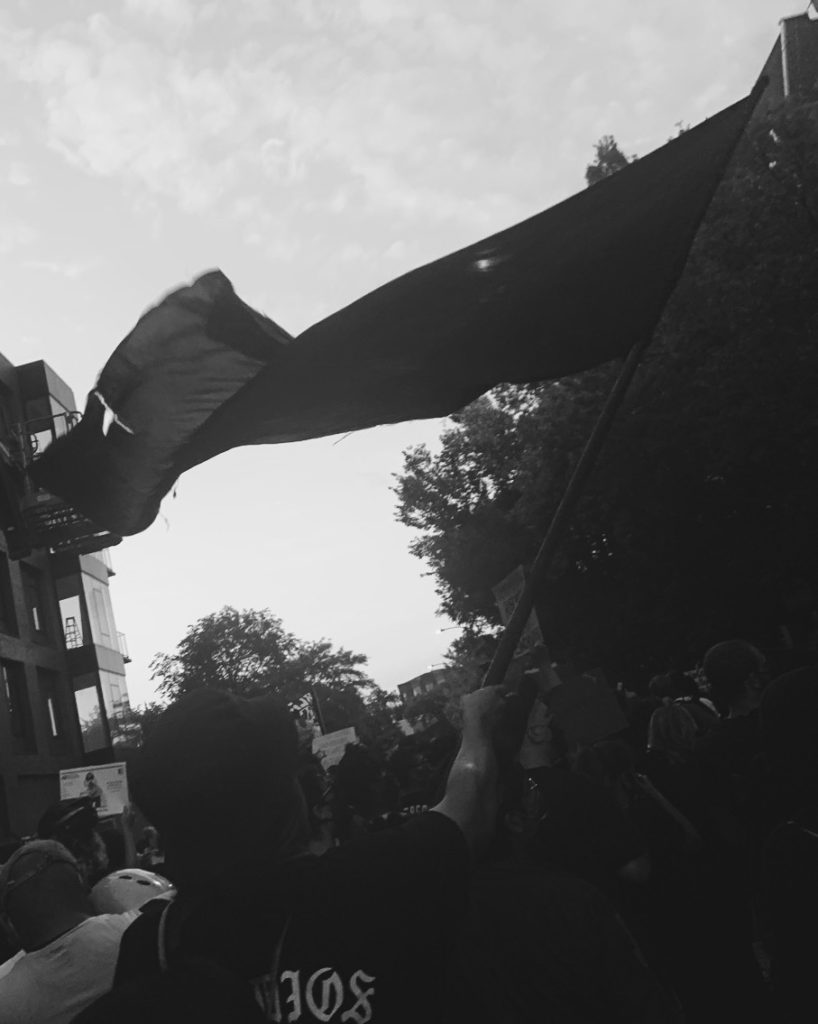
The sun was just setting on the third day of Muharram, finally providing relief from Chicago’s unforgiving heatwave. One by one the streetlights slowly flickered on and the smell of incense drifted around us. All dressed in black and marching together, we were carrying the weight of the lives stolen from us as we chanted demands for a future that would bring justice in their memory. Many of our bodies were sore and bruised from the nights before. A drumbeat kept our pace while others offered food and water or carried massive black flags and other symbolic items above them.

This was a Black Lives Matter protest. But for me, it was also my first Muharram1 procession.

2: For all intents and purposes the line between the police and white supremacist groups are quite blurred, as there is substantial overlap in personnel and purpose. 

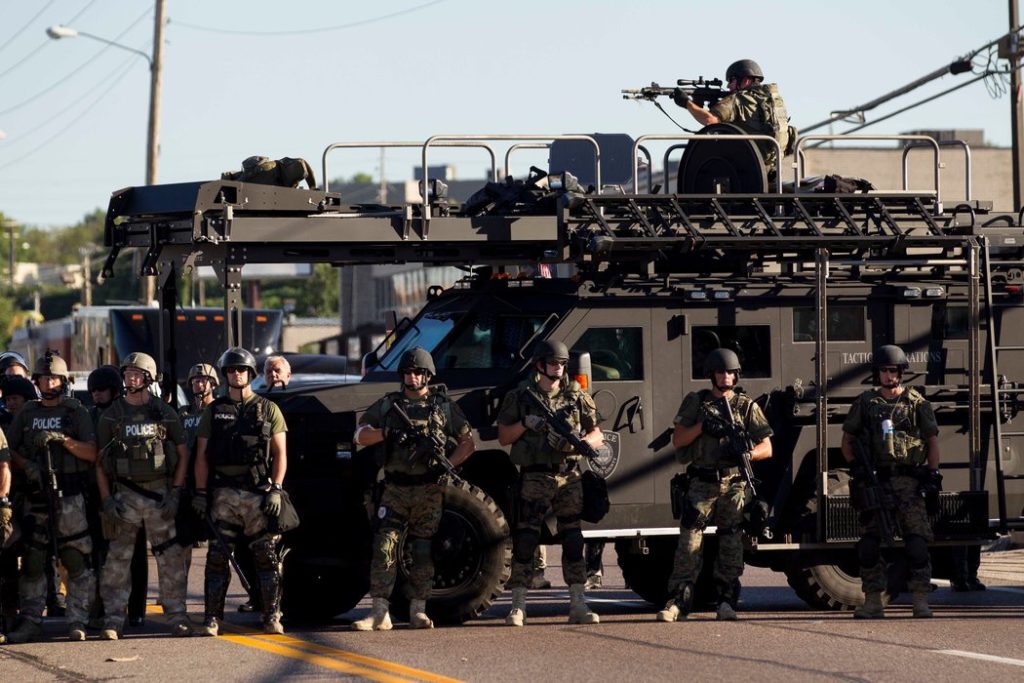
Spending time “in the streets” these past two months, amid what Angela Davis has called “unprecedented” uprisings in cities across the United States, has redefined my relationship with mortality itself. Death has become so much more intimate, tangible, palpable, and with it therefore, my sense of proximity to, and near-constant awareness of, divinity and the world after death. As a non-Black person living in the US, I have had the privilege of being able to take my sense of “safety” for granted (for the most part). But in the last few months, safety has, to some degree, become a relative and fluid concept, one I can no longer foresee or predict, especially when trapped between an overfunded and trigger-happy police force swarmed around us with riot gear and tear gas, batons raised, and the armed white supremacist group we were just alerted are now on their way.2 

As such, the conscious decision to get dressed and race to the police precinct after receiving a text at midnight from a friend on the ground saying “Natl guard just arrived. Wearing gas masks & heavily armed. They’ve boxed us in. Come now” is a simultaneous acknowledgement—whether consciously or not—that the justice and future we’re collectively fighting for is more important than the safety of our physical bodies, which we will all leave behind at some point. It was not simply a responsibility to my friends and everyone beside them at that moment, but more importantly an obligation to participate in Imam Hussain’s unfinished uprising; an attempt to manifest—rather than simply recite—the legacy of our ancestors whose stories are re-told (and erased) every year. Death is inevitable, but justice in this world is not. 

Imam Hussain’s (ع) legacy at Karbala was just that: “death with dignity is better than a life with humiliation.” In other words, justice takes precedence over our livesa notion antithetical to our modern-day carceral state or capitalist “values” on human life, focused so clearly on the here and now, and a fear of a death that separates one from their wealth. 

The revolutionary slogan tells us that “every land is Karbala and every day is Ashura.” The present land that we march on and has been stolen from indigenous people and built by Black slaves cannot be anything but Karbala, and Muhammad Muhaymin calling out to Allah moments before his state-sanctioned murder at the hands of Phoenix police cannot be anything but Ashura.

Of course such a proximity to—and being on the receiving end of—this State violence is scary and emotionally and mentally taxing. But there is something deeply spiritual about the experience which forces one to reckon with mortality, and therefore the consideration of what comes next. As Muslims, we are encouraged to rehearse dhikr, a repetition of words or phrases that serve to remind us of the divinity in our lives. In doing so, this rehearsal is a form of spiritual grounding; a release of this world for a reminder of the next. So then how much more deeply enveloped in God’s mercy and love are those whose everyday is the very embodiment of this remembrance of the divine? How deeply powerful and divinely blessed are the everyday lived experiences of Black people in particular in the U.S. (and truthfully, globally) whose very existence, joy, and love–let alone leadership in continuing Hussain’s unfinished uprising–is in and of itself a form of resistance to racial capitalism and its violence that attempts to erase the divine? 

This in its essence is a form of liberation theology: a way to reject the fears of this world (death, man, poverty, etc) for a prioritization of the next.

To borrow from Iesa Lewis’ beautifully-written piece A Reflection on Revolts:


“In the modern logic of slavery, we perpetually see that bodies are subjugated and enslaved, that those conditions of slavery dictate and regulate behavior, and ultimately that whiteness is glorified and even deified…Allāh tells His creation to seek refuge in Him from these forms, to turn to Him and Him alone. The ‘Word/Testimony of Oneness’ (kalima al-tawhīd), what makes the Muslim a Muslim, Lā ilāha illa Allāh, is a sufficient philosophy of liberation. Inscribed in its everlasting power is the statement to man; “you are not god.”

 … [T]he Islamic imperative is that we complement the negation of deities, the ‘lā ilāha’ [there is no God], with the affirmative statement ‘illā Allāh’ (except Allah)…we must reject the Western anthropocentric tradition that places ‘Man’ at the center of the universe – everything is about our rights, freedoms, and individual interests. Instead, we must renew the Islamic vision of God first, such that liberation is complete submission to Allāh.”

It is with this Islamic liberation theology, lā ilāha illā Allāh, that the legacy of Ashura is clearly understood and we are forced to ask ourselves difficult questions that re-frame life, death, and fears for us outside capitalist framings. When being called to the streets to demand justice, what are we more afraid of than God? What could possibly be more terrifying than the wrath of the all-powerful? And what is more beautiful than the love of the most-merciful? Is our goal to survive—a goal that cannot be ever achieved—or to do what is right so that our souls can transition to the next world with blessings? If, as we are told in the Qur’an, that at the end of our time on earth we will look back on our lives and it will feel like only an afternoon (79:46), what then are the equivalent of a few extra minutes on earth if they are not in pursuit of what is right? For many Muslims like myself and as exemplified during Muharram, seeking God is synonymous with seeking justice. 

And as all stories which serve as revolutionary models for and by the oppressed, Imam Hussain’s story at Karbala has been largely erased from many (primarily non-Shia) Muslim spaces. Many commemoration marches around the world are actively criminalized  and have even been targeted by ISIS and others enacting anti-Shia violence. On August 29th, Indian military forces occupying Kashmir (the most densely militarized region in the world) opened fire with pellet guns on a Muharram procession, injuring dozens. The fact that India has banned major Muharram processions in Kashmir since the 1989 armed uprising against India’s occupation speaks volumes as to the types of parties invested in this erasure and criminalization. 

Others degrade the memory of the Prophet’s family by saying that Shias “are still crying over something that happened over 1400 years ago.” This only serves to indicate a clear lack of understanding of both the history of Muharram and contemporary politics. 

The tragedy of Ashura did not happen over 1400 years ago. It happened on May 25th, 2020; October 20th, 2014March 21st, 2012August 28, 1955; and it will happen again in the U.S. every time another Black person is killed by the police or vestige of slavery.

The tragedy of Ashura is contemporary because the justice and liberation Imam Hussain was seeking has still not been achieved. It is an ongoing commemoration for an unfinished liberation struggle. The racial capitalism that continues to inflict violence on our Black, brown, Indigenous, poor, undocumented, refugee communities is oppression that is not simply a repetition of history, but an inheritance from it.

As poet Nouri Sardar recites in his poem 72 verses for Imam Hussain, “You’ll know how a man lived by how he died.” And Imam Hussain died like George Floyd, Muhammad Muhaymin, Laquan McDonald, Rekia Boyd—as a martyr of a State crackdown on resistance: whether through an uprising or simply “resistance by existence” while Black in a racial caste system. 


It is in this essential justice-seeking that Imam Hussain’s revolt not only provides for us a blueprint of the struggle that needs to be continued, but it is in the commemoration and remembrance of Muharram that we can find a decolonial rubric of healing, community organizing, and vision building.


There is one important element that is quite globally shared in Muharram commemorations: collective grieving. Central to Muslim observations of Muharram are the re-telling of the story of Hussain’s uprising while attendants, and oftentimes the speakers themselves, audibly cry. Did you even commemorate Ashura if you didn’t cry? The scholar Shereen Yousuf writes:

“…our communal grief serves as a radical act…I find that tears can heal the communal body as they would an individual body, in that tears garner the potential to cleanse us of the toxins named fear, shame, doubt, anxiety and guilt, that reside in the crevices of our minds, hearts, and souls. In fact, these very emotions of inferiority are what permits these modes of domination over us to begin with, and it is tears [that] grant us the space to heal from them.”

A “decolonial” (and, dare I say “feminist”) practice of crying is at its core a refusal to become numb and desensitized to, violence. It is a refusal for men to be ripped from their ability to express the full range of human emotion without feeling “emasculated”, a refusal to normalize and contend with ever-present violence and Black and brown death, and a refusal to continue life as “business as usual” in spite of it all. 

Crying as a form of collective healing and emotional reconnection with the divine is not only a significant practice within the tradition of Muharram, but remains necessarily an ever-present need to heal from the ongoing and contemporary tragedy of Ashura of Black death at the hands of the police, and ongoing disproportion of lives taken by COVID-19's toll on Black and brown working-class communities due to structural violence.

It is a decolonizing practice of self-preservation and care, and especially so for those living with a system designed to commodify, profit from, and maintain their/our oppression. Rather than indulging in unhealthy coping mechanisms such as compartmentalization or denial (or celebrating capitalists of color as “hope”), taking a moment to reflect on, engage with, and allow yourself to become (even if only momentarily) overcome by the reality of the suffering potentially ever-present in our lives, neighborhoods, communities, and ancestors, allows us both a release and grounding reminder of the urgency of justice. Practices of communal crying can be critical for our movements’ longevity and personal healing. 

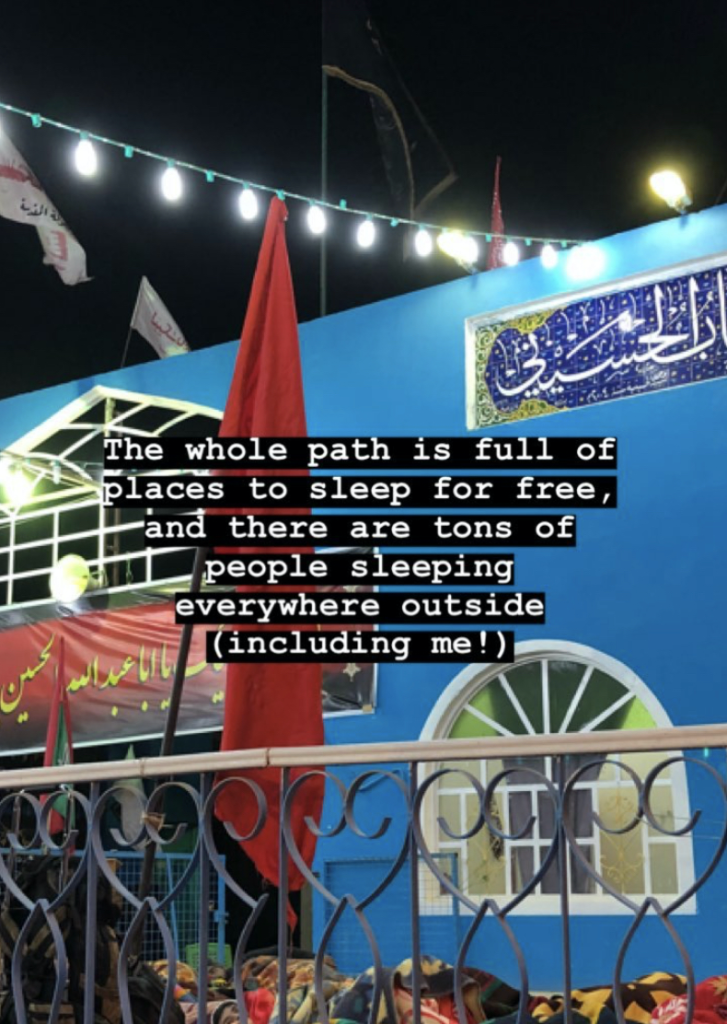
Even more broadly, beyond collective grief, the radical tradition of Muharram can be most clearly witnessed every year during the Arbaeen pilgrimage to Karbala, which takes place 40 days after Ashura. For two weeks, Muslims from around the world come together to walk 57 miles on foot from Najaf, Iraq to Karbala, following the final journey Imam Hussain and his caravan made. Every year more than 20 million people attend, making it also the largest pilgrimage–and autonomous and grassroots-organized mutual aid network–on Earth. 

Photos above c/o Alex Shams, taken in 2019

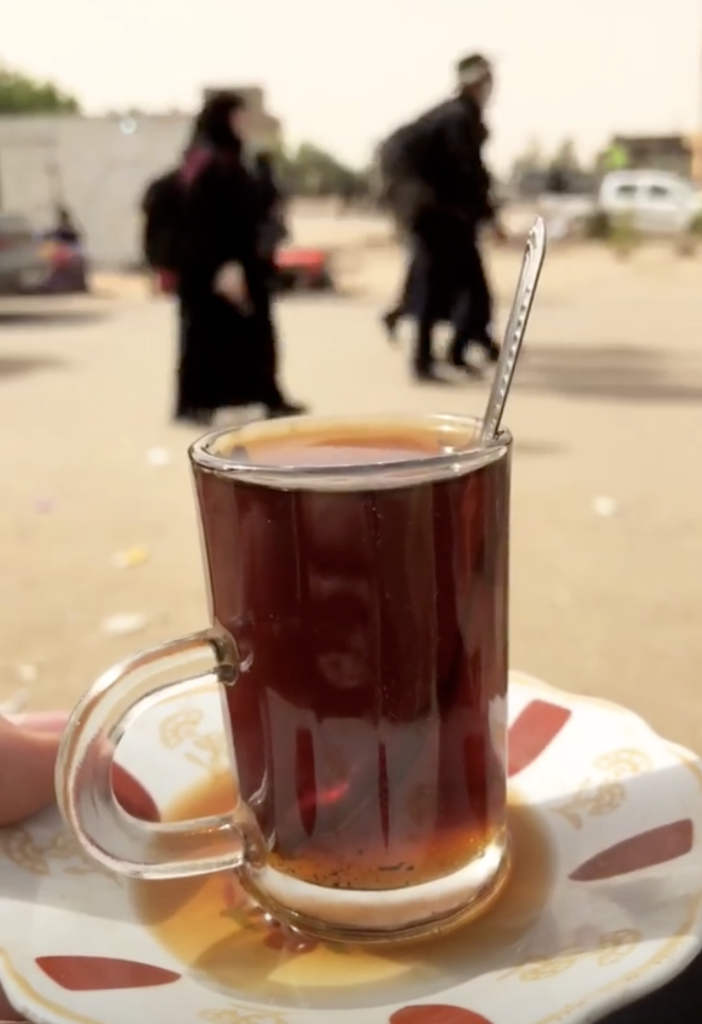
Every day during the two week journey, every single one of the millions of participants hailing from around the globe are fed (with full meals, tea, and sweets from around the world), given shelter, and cared for (including even booths for foot massages) without a single dollar (or dinar) exchanging hands. There are also theatre-like re-enactments along the way of the events of Muharram (known as taziyeh) that serve to retell, embody, and internalize Hussain’s uprising. 

Unsurprisingly, there are no police, borders, markets, or nation-states. There are no “thieves” or “crimes” because there is nothing to steal and no reason to do so. It is an act of radical and transnational vision-building that millions of people participate in literally within the footsteps of Imam Hussain; the imagination of what his uprising would look like, finished. 


Many of these traditions also exist and have been ongoing in a parallel manner in the United States: the massive food distribution may recall the Black Panther Party free breakfast program under their  “Revolutionary Services” branch, and the value of independent community building outside of State markets as a pillar of the Nation of Islam. Much like the
taziyeh and its role in embodying Hussain’s revolt, New Orleans Black activists host an annual Slave Rebellion Reenactment, “retrac[ing] the path of the largest rebellion of enslaved people in United States history, embodying a story of resistance, freedom and revolutionary action.” 

In fact, just last week the scholar Dr. Su’ad Abdul Khabeer juxtaposed the route of Imam Hussain with the routes of the Underground Railroad that Black people followed to freedom:

These parallels are not simply a coincidence, but a manifestation of a liberation framework shared, rehearsed, passed down, and inherited by oppressed people globally. Black people, and particularly Black Muslims are, and have been, consistently leading these movements in the United States. While the particularities of each of these revolutionary services, re-enactments, routes to liberation, and historical moments are distinct from one another, they each are passing on and inheriting both the modes of resistance and the underlying power dynamics, racial and economic caste, and state oppression that seeks to undermine lā ilāha illā Allāh

Taken in a broader, global perspective, these collective and internalized practices have proved to be able to be quickly activated in order to serve tangibly revolutionary moments outside of these spaces. In Iraq’s (unfinished) uprisings last Fall, the same people who had travelled annually to Arbaeen to feed hundreds or thousands of people within the span of a few days were now feeding the thousands on the streets demanding their freedom.

And it is this translation of embodied rituals practiced, rehearsed, and grounded in Islamic tradition to service toward liberation movements seems to be at the very core of the events at Ashura and the commemorations that have followed.  

Imam Hussain and so many of our role models, within the Islamic tradition or otherwise, were rebels and outsiders: those seeking justice within an unjust system and world. If they lived in the contemporary United States, they would likely be incarcerated, or dead. So what does this mean about these systems we find ourselves in if the best among us would be considered criminals, and the worst among us are elected as the leader of this country?

A truly honest reading of the life of Imam Hussain and tragedy of Ashura provides us with the lessons and guidance that many of us—myself included—may not be entirely ready to hear. But this moment in particular that we have found ourselves in has made devastatingly clear the urgency to not only hear the challenges we are called upon to respond to, but to actively respond to them. 

Arundhati Roy says the pandemic is a portal; so too can be each moment of our lives. It is in these moments when we are asked to resist, revolt, and rise up, potentially risking our lives or bodily harm, that we decide who we are, what we believe in, and whose side we’re on. 

Movements are waves, and, to borrow the phrasing of Ruth Wilson Gilmore, “a rehearsal of revolution.” Much like the repetition of praying five times a day, a tangible practice and discipline that connects us to the divine, so too is our embodied practice of collectively demanding justice—whether through a Muharram procession or a BLM march, or both together.   

The post From Karbala to Chicago: Reflections on Death, Mourning, & Traditions of Resistance appeared first on Hoda Katebi.

]]>
https://hodakatebi.com/from-karbala-to-chicago-reflections-on-death-mourning-traditions-of-resistance/feed/ 0
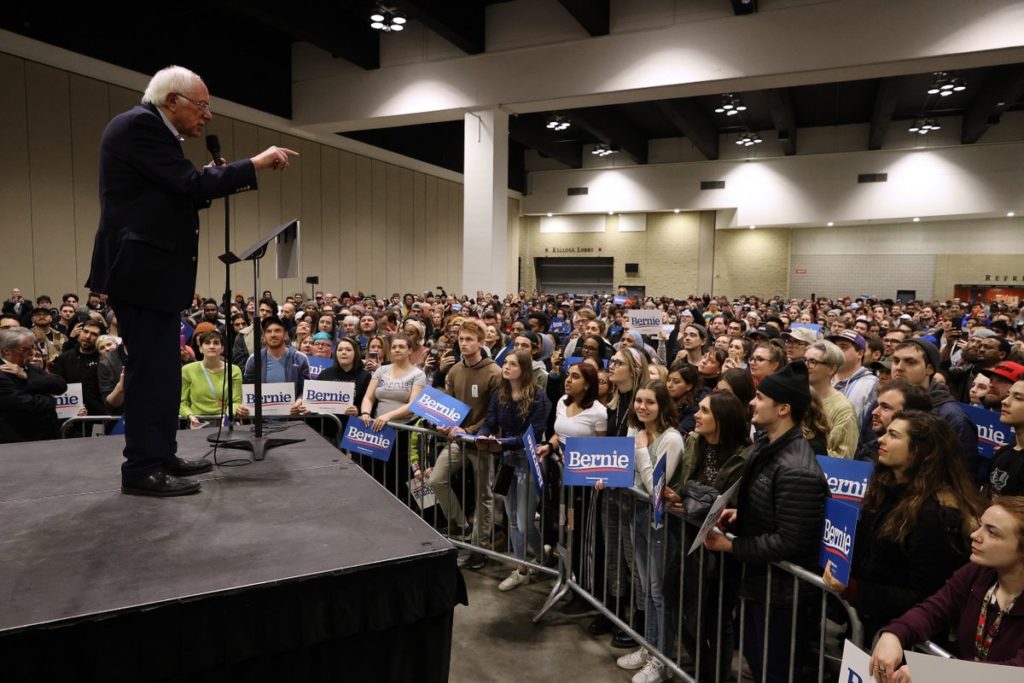
Iranian-Americans Have Only One Candidate This Tuesday, and in November: Bernie Sanders | Newsweek https://hodakatebi.com/iranian-americans-have-only-one-candidate-this-tuesday-and-in-november-bernie-sanders-newsweek-2/ https://hodakatebi.com/iranian-americans-have-only-one-candidate-this-tuesday-and-in-november-bernie-sanders-newsweek-2/#respond Tue, 03 Mar 2020 11:36:21 +0000 https://hodakatebi.com/?p=3029 As an Iranian-American community organizer and abolitionist, I do not believe electoral politics are the arena where much-needed systemic change can happen. But there is too much at stake right now to ignore. While every other Democratic candidate either supports policies—such as sanctions, war, or even the Muslim Ban—that devastates our communities and propels us further into military escalation, Bernie Sanders has consistently been the near-lone voice in preventing war with Iran during his time as Senator, and is the only candidate who comes close to addressing the needs of Iranian-Americans.

The post Iranian-Americans Have Only One Candidate This Tuesday, and in November: Bernie Sanders | Newsweek appeared first on Hoda Katebi.

]]>

“They destroyed us,” Iranian student Mohammad Elmi told The Guardian last month after being detained upon arrival at LAX, interrogated, sent back to Tehran, and billed for his own deportation. The 31-year-old planned to start his PhD program at University of California, Santa Barbara and join his wife already living in the United States. Despite carrying a valid student visa granted after months of security checks, Elmi was “treated like a terrorist,” and forced to agree to deportation—and with it a 5 year ban on visiting the U.S.—in exchange for one last chance to call his wife before being sent on the next plane back to Tehran.

Elmi is just one of the dozens of Iranians on valid visas whose lives have been permanently turned upside down overnight—and their horrific experiences act as hallmarks of Trump’s ongoing, broader anti-Iran and anti-Muslim platform.

Last month, while Trump was busy threatening war crimes against 52 Iranian cultural sites with less than 240 characters, the Los Angeles Police Department heightened surveillance of the Iranian-American community despite admitting “no credible threat[s].” Nearly 200 American citizens of Iranian descent were interrogated and detained—some as young as five were held overnight—at the Peace Arch Border in Washington for the only crime of being ethnically Iranian.

The shameful era of U.S. Japanese internment felt suddenly not so distant, and history seemed doomed to repeat itself.

The past two months underscored for Iranian-Americans the fact that Trump’s policies do not just endanger our families back in Iran; they also endanger hundreds of thousands of Iranian-Americans here at home.

As the last decades have made clear to us, when Americans elect war-mongering presidents with platforms of aggression, Iran will elect leaders who vow to protect them with military strength. The results of the Iranian parliamentary elections earlier this month resulted in a landslide victory for conservative hardliners, largely in response to Trump’s worsening of Obama-era sanctions and unhinged military hostility.

Today, Iranians are watching the U.S. elections closely, and Bernie Sanders may be the only chance for peace with Iran in the foreseeable future.

As an Iranian-American community organizer and abolitionist, I do not believe electoral politics are the arena where much-needed systemic change can happen. But there is too much at stake right now to ignore. While every other Democratic candidate either supports policies—such as sanctions, war, or even the Muslim Ban—that devastates our communities and propels us further into military escalation, Bernie Sanders has consistently been the near-lone voice in preventing war with Iran during his time as Senator, and is the only candidate who comes close to addressing the needs of Iranian-Americans.

Read the full essay on Newsweek.com

The post Iranian-Americans Have Only One Candidate This Tuesday, and in November: Bernie Sanders | Newsweek appeared first on Hoda Katebi.

]]>
https://hodakatebi.com/iranian-americans-have-only-one-candidate-this-tuesday-and-in-november-bernie-sanders-newsweek-2/feed/ 0
Understanding structural anti-Shī‘ism in Sunnī diaspora spaces https://hodakatebi.com/understanding-structural-anti-shiism-in-sunni-diaspora-spaces/ https://hodakatebi.com/understanding-structural-anti-shiism-in-sunni-diaspora-spaces/#respond Wed, 18 Dec 2019 23:55:00 +0000 https://hodakatebi.com/?p=1591 18 December 2019 UNDERSTANDING STRUCTURAL ANTI-SHĪ‘ISM IN SUNNĪ DIASPORA SPACES Truthfully, it was not until rather recently that I really was able to understand the extent and prevalence of anti-Shia bias in the many spaces, relationships, and academic work I occupied and engaged in. The microaggressions, exclusion, erasure, dismissive attitudes, or blatantly anti-Shia remarks were […]

The post Understanding structural anti-Shī‘ism in Sunnī diaspora spaces appeared first on Hoda Katebi.

]]>


18 December 2019

UNDERSTANDING STRUCTURAL ANTI-SHΑISM IN SUNNΠDIASPORA SPACES

Truthfully, it was not until rather recently that I really was able to understand the extent and prevalence of anti-Shia bias in the many spaces, relationships, and academic work I occupied and engaged in. The microaggressions, exclusion, erasure, dismissive attitudes, or blatantly anti-Shia remarks were so normal, latent, casual, and consistent that I did not even realize the extent of the trauma and anxiety I was carrying as a result of it.

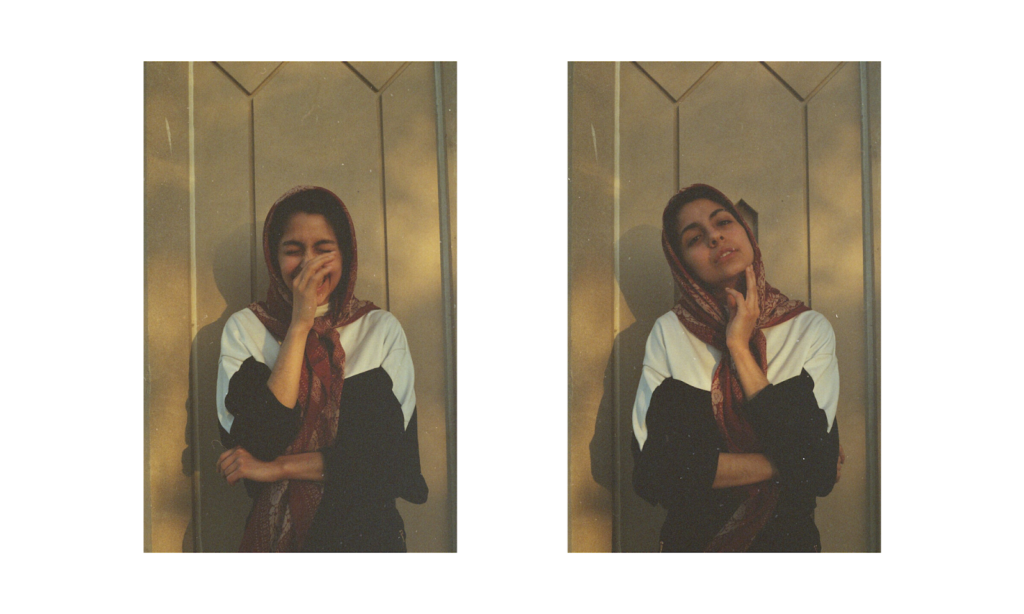
All photography by
Maya Mansour

Growing up as the only visibly Muslim woman throughout my schooling in Oklahoma, USA my self-esteem was completely shattered and my identity and core values were constantly questioned by my peers–and soon, by myself as well. From a constant state of being a minority ostracized and ridiculed within a majority white and conservative suburb, I had internalized a certain level of Islamophobia as a consequence. Islam was viewed to be at odds with a self-proclaimed “secular democracy” and everything I did was seen under a hyper-politicized lens. For example, I did not know it was not “normal” to be called a terrorist on a near-daily basis or get physically assaulted at school for wearing hijab. The few lines of “Islamic history” we learned in class were drenched in violence and only worked to reinforce narratives of ostracization and othering. It was only after I had moved to Chicago in 2012 for college that I was able to truly understand the extent of — and work to unlearn — the white supremacy and anti-Muslim bigotry I had internalized from being in spaces where it thrived unabashedly during the critical years of my identity formation.

Similarly, the extent to which the predominantly-Sunni spaces I have spent significant time in were just as much perpetuating and enforcing a certain degree of prejudice about Shi’a Muslims that I was consequently internalizing and allowing to question the very fundamental aspects of who I am. My renewed understanding of my Shia identity — and the constant discomfort and tension I felt leading up to this point as a result of the spaces I was occupying and learning about Islam in — was sparked only after the sudden end of a two year relationship with an Arab Sunni only months before our anticipated engagement.

While, admittedly, my parents were against our relationship in the beginning, arguing that Sunni-Shi’a relationships do not work when both parties are actively practicing their faith, I consistently pushed back, did the difficult work of having repeated conversations (and arguments) addressing their concerns and eventually won them over. While his parents seemed to be okay with everything in the beginning, I was eventually asked not to “bring up Saudi stuff,” not to “be super political” in conversation with them, and to even “pretend to be Sunni” to his extended family. Eventually, over the course of a phone call that lasted less than twenty minutes, he told me things can no longer move forward, citing again anti-Shia bias I had dispelled in prior conversations.

The end of the relationship in and of itself was less painful than the new realization and recognition of the slow-building trauma of blatant and latent anti-Shi’ism I had internalized and normalized over the years, in spaces and places beyond our relationship. I was hurt and deeply confused as to how someone who claimed progressive values, open-mindedness about so many “taboo” topics within Islam, could so be so easily influenced by anti-Shi’a prejudice. I began to realize that many of my friends were the same way. The conversations we had together about Sunni privilege and anti-Shi’a violence felt like explaining racism to a white man lacking self-awareness and unaccustomed to exclusion and violence in everyday spaces and institutions, or Islamophobes whose eyes and ears have been sealed shut to reality despite how many times they’re told the truth. It seemed unfathomable to many Sunni men that something that seemed so perfect and pure (i.e. Sunni Muslim spaces) could possibly be weaponized — intentionally or not — to make other Muslims (women, Shi’a Muslims, non-Arabs, queers, and other minorities) deeply uncomfortable and systematically disenfranchised.

This experience was important, as it helped me develop language and new structural understandings of anti-Shiism, much like my move from Oklahoma to Chicago did to help me better understand structural anti-Muslim bias. Alongside the ongoing, intense, and structural nature of anti-Shi’ism across Africa, the Middle East (and in particular in the Gulf), and Asia, much of the power dynamics, funding, propaganda, and rhetoric of anti-Shi’ism continues to dominate Muslim diasporic spaces in the West as well. Normalized anti-Shiism manifests (sometimes even unintentionally) into microaggressions in relationships, Muslim Student Associations (MSAs) and groups, mosques, and even (though less so) non-denominational ‘third spaces’ across the Muslim diaspora in systemic and consistent ways.

But regardless of the intentions or situations that create and perpetuate anti-Shi’ism, the result is ultimately always traumatic, harmful, and requires urgent redress. Below are just a few beliefs, attitudes, political dynamics, and behaviors I have been able to understand in which structural Sunni normativity and anti-Shi’ism exists and thrives in Sunni Muslim spaces.


1. Speaking/operating from a Sunni perspective as though it is the “default” mode of Islam in books, lectures, third spaces, etc.

Just as “whiteness” is the normal and default Google stock image, Sunnism typically remains the dominant and assumptive default of any space that has not been specifically defined otherwise. Muslim Student Associations, “third spaces,” and even academic literature about/by Muslims consistently center Sunni schools of thought and doctrine, exclusively Sunni hadiths, and Sunni interpretations of historical events as factual and without noting the Shi’a approaches to the same, let alone the breadth and depth of other perspectives that exist in the tapestry of our tradition.

While Sunnis are the majority in most Muslim spaces, it’s important to note that numbers don’t guarantee the accuracy of a perspective or otherwise.

Not to mention that such an exclusion also erases the diversity of religious opinion that exists within the various branches of Sunni Islam as well, effectively rendering Islam as a homogenous monolith — an end product that many Muslims oftentimes criticize liberal and right-wing “pundits” for falling into.


*Of course, anti-Sufi violence also unfortunately exists widely in various Muslim-majority countries

2. Shi’ism is examined solely through a Sunni lens, and granted validity (or not) through a Sunni interpretation of Islam

From my experiences navigating both Sunni and Shi’a spaces, I’ve noticed rituals and practices particular to each, that seem rooted in different understandings and frameworks of Islam. Of course I am not a theologian, but it seems apparent that Sunni tradition is rooted more in Sunna (as obvious as this may sound), though in contrast, the Shi’i tradition carries an additional layer of emotive, oral practices that have been transmitted to us by the Ahlul Bayt.

In particular, the duas recited in Shi’a masjids tend to originate from members of the Ahlul Bayt that have been passed down through oral tradition. Du’a Jawshan Kabir for example, a long, devastatingly beautiful, and emotionally-captivating duaa containing 1000 names and attributes of Allah and recited regularly during Ramadan in Shia spaces, was written by Zayn al-Abidin (the 4th Imam in Twelver Shia tradition) and passed down through the Prophet’s family.

Additionally, the death of Imam Hussain at Karbala (whose sacrifice is remembered and commemorated during Muharram, a time when anti-Shi’a violence spikes globally) is a grave injustice within the heart of Islam’s history, and it is through this act of mourning that Shi’a Muslims remember and honor the ultimate sacrifice in the name of justice.

These two examples of emotive and oral practices establish a relationship to Islam and Islamic history that elicits and encourages mourning, and is centered in most Shi’a spaces. Therefore, it is very normal (and in fact encouraged) to cry in Shi’a masjids, and it can also serve as a decolonial practice that allows for communal healing and reaffirmation to the pursuit of social justice.

Yet, Shi’as are constantly ridiculed and questioned for these practices that, from a strictly textual (non-Sufi) Sunni perspective, are seen to be superfluous and “overly emotional” — a label not attributed to similar Sufi practices within Sunnism.* Despite lamentation and emotive practices prevalent in Sufi expressions of Sunnism, Sufi Muslims are generally understood to be a “valid” practice of Islam within most mainstream Sunni diaspora spaces — an acceptability typically not afforded to Shi’as.

3. Shi’a spaces are always perceived as political and politicized, whereas Sunni spaces have the privilege and presumption of apolitical innocence


Within most Shi’a traditions, the Prophet (SAW) and his family are revered, celebrated, mourned, and centered in khutbas, programming, curricula, etc. This is largely because, among other reasons, each member of the Ahlul Bayt carry legacies and stories that reflect and model the ideals of Islam on a fundamental level. The unapologetic commitment to social justice, community, radical love, selflessness, pursuits of knowledge, and other virtues encouraged in the Qur’an and embodied in the stories of the Prophet (SAW) and Ahlul Bayt are incomparable. This creates a framing within Shi’a spaces that I have always deeply loved and appreciated because they keep me grounded. Their stories are also particularly important for Shi’a Muslims given the messages of justice they carry and the parallels that are able to be drawn to the current widespread anti-Muslim, anti-Black, (and anti-Shi’a!) persecution globally.

However, in anti-Shi’a discourse, such a framework is criticized as “too political,” calling the emphasis on figures like Imam ‘Ali, Imam Hassan, and Imam Hussein as “excessive” and even sometimes inaccurately assuming Shi’a Muslims place the Ahlul Bayt on the same (or even higher) platform as the Prophet (SAW).


Yet, the near-consistent exclusion of the stories of Imam Hassan, Imam Hussein, and the Ahlul Bayt from most Sunni spaces is just as political as Shia spaces’ focus on them, if not more: despite the fact that Sunni traditions do recognize the contributions of the Ahlul Bayt in theory, most Sunni spaces today consistently (and, I would argue, deliberately and strategically) exclude their stories from regular programming.

 
Shiism is genuinely centered on the stories, practices, legal rulings, authority, and interpretations of text that arose from the Ahlul Bayt as a cornerstone of Shia practice, and therefore focus on the figures’ stories and lives — and especially so in the face of such consistent erasure (and historic censorship) of their stories from mainstream Sunni spaces. In fact, the names of the 12 Imams are even inscribed in the Grand Mosque in Mecca and older mosques across the Muslim world, and yet their presence in contemporary Sunni conversations, khutbas, dialogues, lectures, and curriculum is minimal if at all present.


4. Structural privilege in Sunni spaces creates an unbalanced power dynamic that leads to unequal investment in, and mutual understanding of, Shia Islam and other minority sects

 
As we know, there are significantly fewer Shi’a spaces than Sunni spaces overall, so, chances are when a Shi’a Muslim–or other Muslim minority–needs to find a place to pray, break fast, or build community with, we often do so in Sunni spaces. In Chicago, the few “local” Shi’a masjids are all well over an hour of driving away from the city, whereas the nearest Sunni masjid (that allows women to pray–that is a whole separate conversation for another day) is usually always less than 15-20 minutes away from wherever you find yourself in the city. Alhamdulilah I’m definitely grateful for this blessing, but this also speaks to a deeper structural reality to consider: as there are not as many Shi’a (and other minority) spaces for us to pray and practice in, we inevitably end up needing to attend Sunni spaces, and therefore must find validity in the ways in which Islam is practiced in these spaces. In order to pray in Sunni spaces and engage in Sunni practices and feel valid in doing so, we must consequently also do the work of finding validity and legitimacy in Sunni Islam as a whole–whereas Sunni Muslims are not placed in similar positions vis-à-vis Shia and other Muslim minority traditions. 


Shi’a Muslims oftentimes pray behind Sunni congregational leaders and alongside Sunni communities, listen to Sunni khutbas during Jummah, and sometimes even break fast earlier to conform to Sunni interpretation of “sunset” for the sake of “Islamic unity” and community. Yet, unity and community cannot be created in one direction; a forced assimilation of the minority into the majority. True community building is a collaborative space that creates space for, and values, different practices and interpretations of faith that all shares a root and center.


And yet, Sunni Muslims typically rarely, if ever, have to engage in the same sort of “inter-sectarian” work on a community or personal/individual level as Shi’a Muslims typically do on a consistent basis. Rather, Shi’a Muslims and other Muslim minorities are constantly estranged, excluded, and not given a comfortable space to exist and practice within Islamic “non-denominational” yet Sunni-majority spaces.


5. Saying “we’re all just Muslim” and erasing Shia existence is seen as progressive and unifying and Shias identifying themselves as Shi’a is read as provocative and divisive.


Playing the “colorblind” game has never aided progress–let alone the conversations required to get us there. Nearly every time I passively mention or allude to the fact that I am Shi’a on social media or in conversation, I am usually quickly met with a barrage of messages or hostile questions about why I feel the need to “make such a big deal” about being Shi’a, intrusive questions about my beliefs, or messages proudly proclaiming that they are so “post-sectarian” that “I didn’t even realize I was Sunni until last year.”

That my dear friend @WallahBro69, is literally the definition of privilege.
 

A lack of understanding of differences between Sunnis, Shias, and other minorities does not make anyone any “better” a Muslim or more “sectarian blind,” but rather simply reaffirms the structural privileges of not needing to understand why your faith is constantly questioned and critiqued in everyday, mainstream self-proclaimed “non-denominational” Muslim spaces.


Just as there are various interpretations, practices, and schools of jurisprudence and thought within Sunni tradition, there are several varieties of Shias (including but not limited to Twelvers, Ismailis, Zaydis, etc) and other Muslim minorities (Ahmadis, etc). Just as Sunnis fall on all levels of the religious and theological spectrum, so do Shi’as and others. And just as homogenizing all Muslims under one banner is what Muslims frequently critique Islamophobes for doing, asking minority Muslims to conform to uncompromising spaces and reductive labeling is not only unfair, but violent. Saying “we’re all Muslim” to avoid having difficult but desperately-needed conversations about intra-Muslim dissonance only rips the community further apart, and erases all of the beauty of the variety of ways that Muslims have forged a relationship to Allah and Islam.

If your extended (or immediate!) family would be opposed to you marrying someone who is Shi’a (or Black, working class, etc) that is only all the more reason to use the opportunity to challenge these toxic and harmful perspectives. We need to be having conversations around racism, class, queerness, gender, and other forms of systemic violence–such as anti-Shiism–and hold our family accountable, not excuse them for their harmful beliefs and hide the Shi’as in your life away. These could be the same uncles that defend or justify when Shias are murdered, the same aunts who perpetuate anti-Blackness, and the same grandparents that enforce class or caste divisions. This is more important than labels; this is about combatting systemic oppression regardless of who it is against–and as a Shi’a, I would argue this is a duty in Islam for all Muslims.

A divided greater Muslim community is a vulnerable one: as if class, race, ethnicity, borders, language, sexuality, cultural baggage, “muslimness”, gender, and other divisions of identity within the Muslim community were not enough to keep us divided and conquered, sectarian divisions are oftentimes one of the major ways imperialists work to keep us fighting each other rather than our collective oppressors. It is so vitally important to build together across a global ummah; to build collective power, resistance, and unity against greater systems of injustice in the face of a growing Islamophobic ‘War on Terror’, the rise of white supremacy and fascism globally, devastating capitalism and economic and racial injustice, and climate change.

وَاعْتَصِمُوا بِحَبْلِ اللَّهِ جَمِيعاً وَلا تَفَرَّقُوا


This piece has been cross-published on Amaliah, our favorite UK-based Muslim platform highlighting and uplifting the voices of Muslim women, unafraid to publish the “taboo” or difficult conversations needed in the Muslim community. 

P.S. Sorry friends had to turn off the comments here — though you can probably assume why. 🐤

The post Understanding structural anti-Shī‘ism in Sunnī diaspora spaces appeared first on Hoda Katebi.

]]>
https://hodakatebi.com/understanding-structural-anti-shiism-in-sunni-diaspora-spaces/feed/ 0
Muslims have more visibility than ever. But can we praise it? | Washington Post https://hodakatebi.com/muslims-have-more-visibility-than-ever-but-can-we-praise-it-washington-post/ https://hodakatebi.com/muslims-have-more-visibility-than-ever-but-can-we-praise-it-washington-post/#respond Sun, 02 Jun 2019 23:44:00 +0000 https://hodakatebi.com/?p=3036 02 JUNE 2019 Muslims have more visibility than ever. But can we praise it? | (Washington Post) Between a burkini featured in this year’s Sports Illustrated swimsuit issue and the New Haven mosque set ablaze last month, Muslims in the United States occupy a particularly demanding moment in history. As we near the end of Ramadan, we live at the cusp […]

The post Muslims have more visibility than ever. But can we praise it? | Washington Post appeared first on Hoda Katebi.

]]>

Between a burkini featured in this year’s Sports Illustrated swimsuit issue and the New Haven mosque set ablaze last month, Muslims in the United States occupy a particularly demanding moment in history. As we near the end of Ramadan, we live at the cusp of both unprecedented Muslim visibility and heightened anti-Muslim racism. If we are not careful, these new modes of representation may contribute to the rise of anti-Muslim racism, rather than combat it.

As a visibly Muslim woman born and raised in Oklahoma, I never saw anyone who looked like me shown in a positive light — if even at all — in the magazines I stashed under my bed or the television shows I consumed. Although I still had Muslim role models I looked up to (such as my mother), I grew up feeling unconnected to my surroundings.

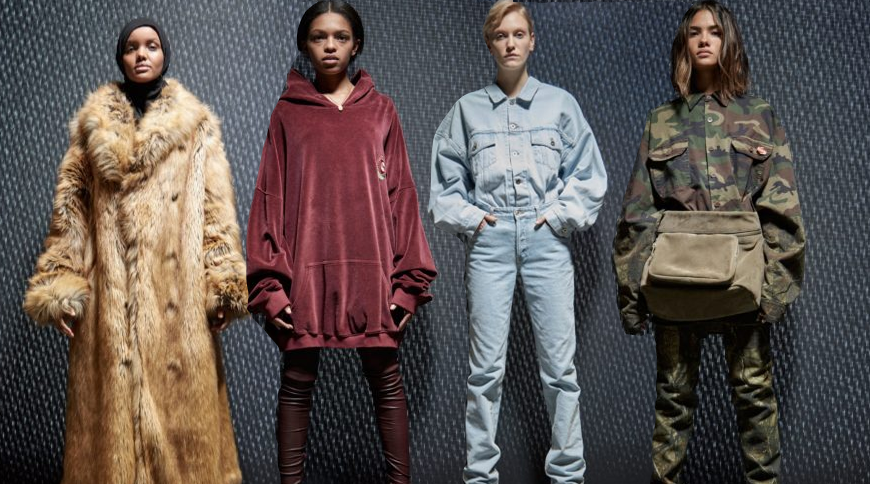
My classmates, fed on the same media, would try to convince me that I was foreign; that nothing was made for me or people who looked like me. Being able to see a gorgeous, hijab-wearing Muslim woman of color such as Halima Aden on the covers of the magazines I picked up as a kid could have helped challenge my and my peers’ understanding of who is allowed to feel at home in the United States.

Yet although raising Muslim representation in popular culture is an important and necessary step forward, it can have devastating consequences if it remains only skin-deep. Representation must also be accompanied by a rise in unapologetic Muslim voices and structural challenges to systems that create and perpetuate anti-Muslim violence.

Today, major department stores are releasing Ramadan collections and modest-wear lines, and the media celebrates hijab-wearing models and influencers as the faces of fast-fashion brands. But too often, the conversation ends there: Our representation stops at the cash registers. And fighting for inclusion in the very systems that require exploitation and even violence against our own communities is not a step forward, but a step back.

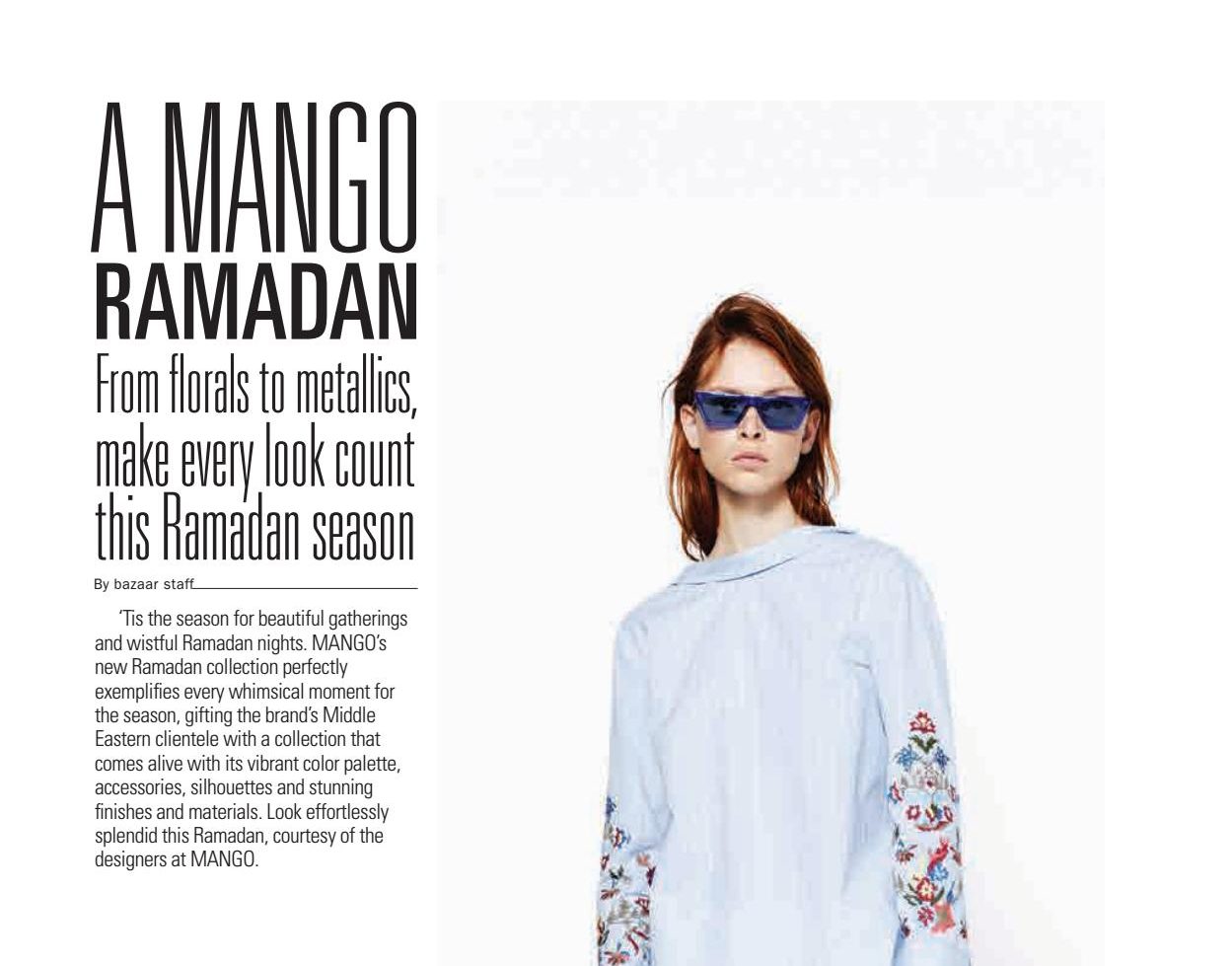
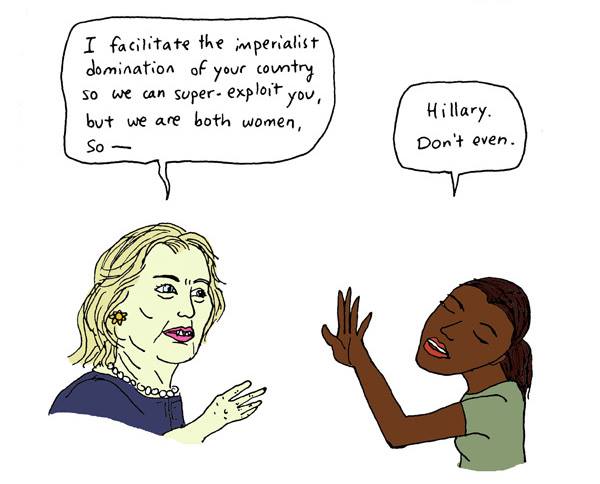
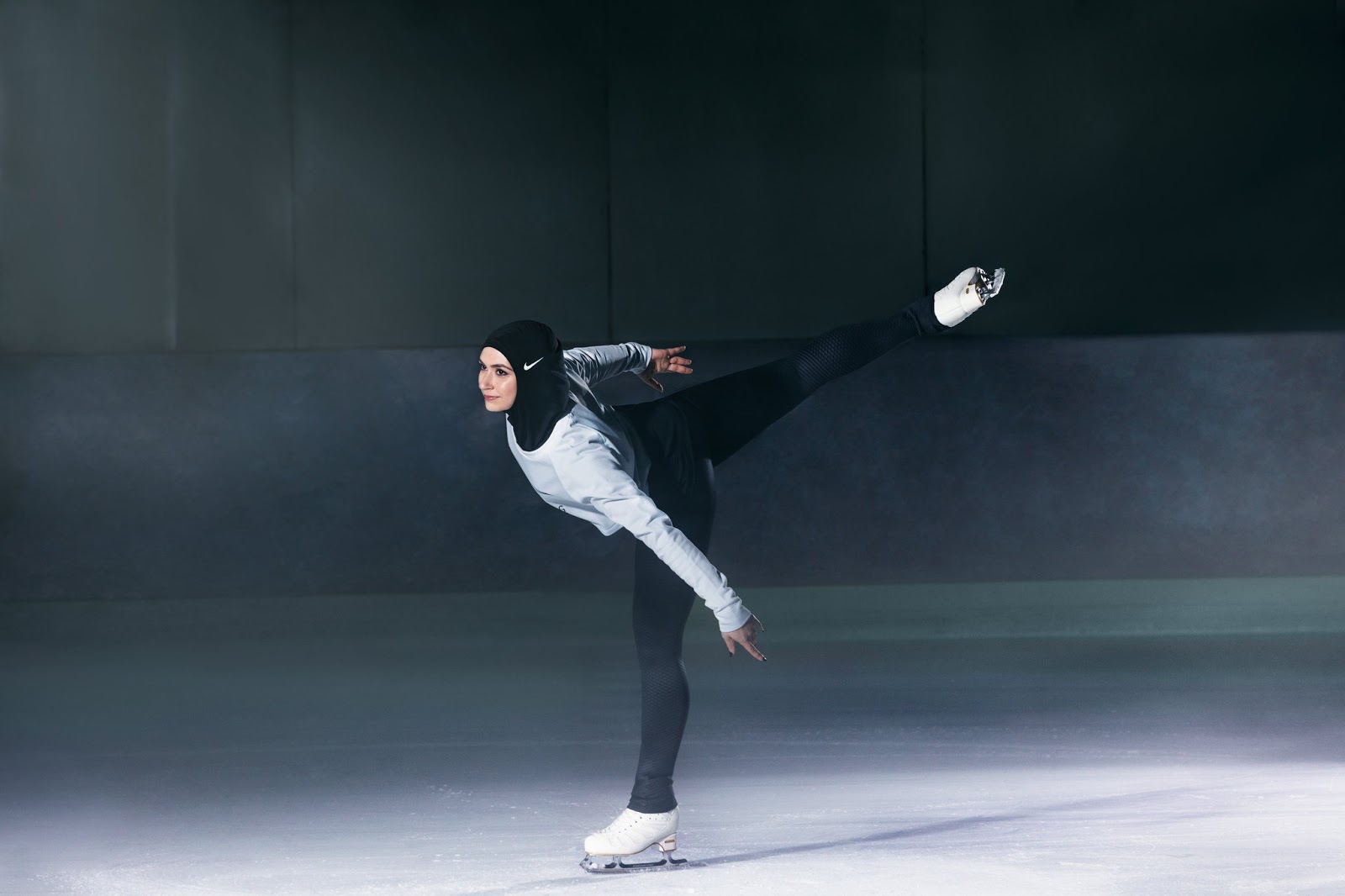
While we are celebrating a Nike Pro hijab and Mango’s Ramadan collection, we know that Muslim garment workers in sweatshops are exploited to make these clothes. While we view more hijab-wearing women in police departments or the military as a “win” for inclusion, we ignore the fact that these institutions commit violence against our communities domestically and abroad.

As Muslims fight for a seat at the table to challenge white supremacy and popular nationalism, have we made sure that we are not oppressing our own communities in the process? Anti-Muslim violence is holistic and systemic; our efforts to challenge it cannot be surface-level and compromised.

Read the full essay on Washington Post

The post Muslims have more visibility than ever. But can we praise it? | Washington Post appeared first on Hoda Katebi.

]]>
https://hodakatebi.com/muslims-have-more-visibility-than-ever-but-can-we-praise-it-washington-post/feed/ 0
From Nike’s Kaepernick to McCain eulogies: revolution-washing and how compromise crumbles our movements https://hodakatebi.com/from-nikes-kaepernick-to-mccain-eulogies-revolution-washing-and-how-compromise-crumbles-our-movements/ https://hodakatebi.com/from-nikes-kaepernick-to-mccain-eulogies-revolution-washing-and-how-compromise-crumbles-our-movements/#respond Wed, 05 Sep 2018 18:26:35 +0000 https://hodakatebi.com/?p=1682 05 SEPTEMBER 2018 FROM NIKE’S KAEPERNICK TO MCCAIN EULOGIES: REVOLUTION-WASHING AND HOW COMPROMISE CRUMBLES OUR MOVEMENTS “Corporations have turned justice into an industry of human rights.”– Arundhati Roy, Capitalism: A Ghost Story (coming soon to a radical, international book club near you!) Nike just signed former NFL star Colin Kaepernick as the face of their 30th anniversary […]

The post From Nike’s Kaepernick to McCain eulogies: revolution-washing and how compromise crumbles our movements appeared first on Hoda Katebi.

]]>


05 SEPTEMBER 2018

FROM NIKE’S KAEPERNICK TO MCCAIN EULOGIES: REVOLUTION-WASHING AND HOW COMPROMISE CRUMBLES OUR MOVEMENTS

“Corporations have turned justice into an industry of human rights.”
— Arundhati Roy, Capitalism: A Ghost Story (coming soon to a radical, international book club near you!)
Nike just signed former NFL star Colin Kaepernick as the face of their 30th anniversary “Just Do It” campaign. This is major.
Kaepernick, who hasn’t played a game since 2016, the year he kneeled during the national anthem for the simple yet somehow controversial demand that Black Lives Matter, will now be affiliated with the brand that is the official outfitter of the industry that cancelled him. This is a strategic political statement–one that cannot be ignored by the NFL and their racists Kaepernick is actually currently in a lawsuit against.
But, unfortunately, like all political statements, Nike’s endorsement may do little more than remain symbolic, vacuous, and destructive when swallowed.
Here is where things get tricky (to say the least):
First, we have the paradox that Nike continues to be the official brand of the NFL while simultaneously endorsing Kaepernick. Much like every single weapons manufacturer ever who fund boths sides of every war, this is truly an ingenious way to continue to reel in profits from both sides. Except, unlike weapons contractors who prefer to launch their ad campaigns in the barely-standing back-doors of formerly colonized nations with celebrity endorsements from U.S. politicians, Nike needs to be a bit more public to be successful.
Of course Nike knew far-right lunatics would burn and cut up their Nike gear (oh how truly dreadful!) and attempt a boycott. You don’t need a major marketing and strategy team to have known that was going to happen (or even have to do much more than take off the words “Merry Christmas” from your Starbucks cups or simply exist as a woman of color to set the right-wing ablaze). But, Nike also understands the mass support that Kaepernick has, especially across the political left. Do you truly think that a brand would endorse someone who is controversial for symbolic value at the sacrifice of their profits? The answer is in a tweet that has already conveniently went viral:
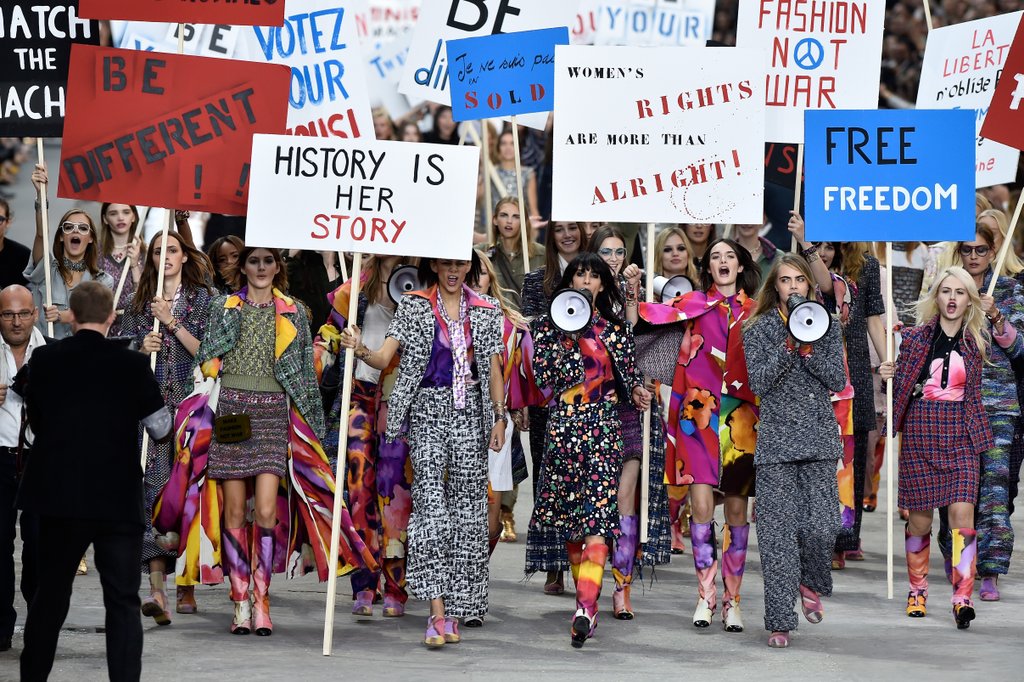
Photo (above): Chanel 2015 Fashion Show / Image Source: Getty / Pascal Le Segretain

You endorse a controversial “hero” such as Kaepernick, and immediately appear as if you’re “taking a stance”. Meanwhile, Kaepernick supporters watch, in mass, as far right-wing idiots burn their Nike paraphernalia (and of course sometimes their feet in the process but that’s okay because it’s not like they use them stand for anything of value anyway). So how do you respond? You make sure that sh*t sells out. You have to make sure the now poor and vulnerable Nike is not scared from their former fans burning Nike logos over this decision. You have to make sure Nike knows this was a good decision. You have to show those racists, through nothing but your consumption, that you are a Kaepernick fan. So you purchase their Kaepernick gear, en mass.
Thus, purchasing Nike has now become a political statement, as significant as voting; they’ve created a certain polarizing environment in which we feel that Nike, rather than actual community organizations working to further civil rights, needs our support, praise, money, and visibility.
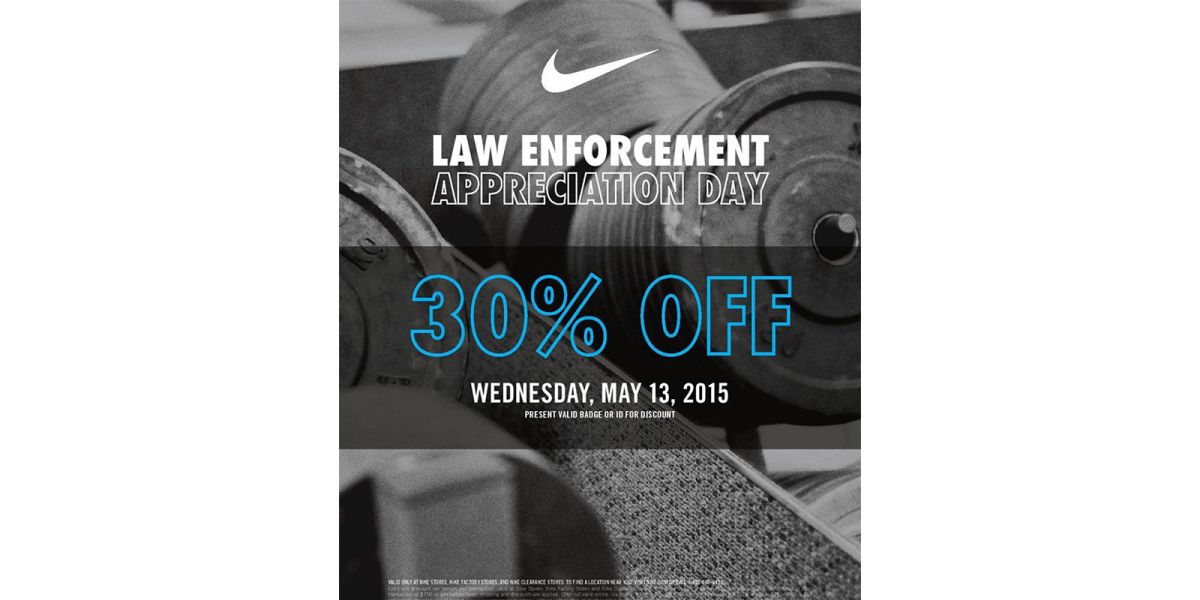
Speaking of things that need our support, praise, money, and visibility, this 30th anniversary campaign also comes just months after Nike signed an 8-year contract with the NFL, which some are speculating to be worth billions. And even further, the last time the #BoycottNike hashtag was trending was when Nike announced their annual “Law Enforcement Appreciation Sale” in the midst of hightented domestic police shootings of Black people.
So, in Kaepernick’s lawsuit against the NFL, Nike is not only funding both sides of the war, but also the institutions at the very core of the suit: those that create, fuel, and enforce violence, both domestically and abroad. Meanwhile, Americans’ favorite past-time, selective amnesia, allows it all to go down like a spoonful of sugar to medicine. Nike is the Mary Poppins to our woes, except less fun and mostly just deceptive.
Oh but there’s more. (There is always more)
There is another moment in the process of supply and demand that is always conveniently erased and preferably ignored, as exhibited by a fun, excited, little individual conveniently named @leastracist:
When Nike sales shoot as high as Kaepernick’s basketball (totally kidding) due to their intentional media buzz causing fans to buy much more than what they normally would to compensate and outdo the feeble attempts at a right-wing boycott, the demand for these products rises, and the burden of which is transferred to their sweatshops, US-based incarcerated slavery camps (prisons), and the producers of their raw material. Yes, sweatshops and prison slave labor will be producing Nike’s new collection with Kaepernick. People of color domestically and globally will be exploited and violence against them justified in the name of civil rights.
Of course, the fact that Nike’s endorsement of Kaepernick is nothing more than a marketing strategy is not a new or novel argument, nor does it take groundbreaking investigative research to uncover.
But what is particularly frightening is that this is not simply a marketing strategy. It is much more powerful, and much more destructive than that. It is part of a larger, decades-long movement of brands, corporations (and their philanthropic shields), and even some progressive politicians revolution-washing our movements until there is nothing left but logos and slogans as empty as our pockets and foresight.
It’s like green-washing (in which environmentally destructive fast-fashion brands paint themselves as “sustainable” or “ethical” by creating one-off conscious collections) but for our movements, reducing our systematic approaches for change to pacification with representation, and movement building to celebrity endorsements.
Revolution-washing is an incredibly effective and destructive tactic, encouraging us to further silo and divide our issues, become increasingly America-centric and exclude those beyond our borders from our consciousness and solidarity, normalize compromises that strip the very essence of our values to the tastelessness of white people’s “seasoned” cooking, and justify the exploitation of those who are not “in our backyard”. Essentially, as more and more corporations and brands attempt to “buy” their way into the “resistance”, the faster our movements compromise and crumble.
Revolution-washing is externally not asking the larger questions of “who is ultimately profiting”, “at whose expense”, and “what are the larger, more complex parts of this issue”, and internally preparing your self for a slide down the steepest, most slippery slope called compromising. And your values are strapping in for the ride.
Because the thing is, once we start allowing our values to become increasingly nothing more than a set of compromises in one avenue (such as fashion), this will ultimately become a trend that spreads to different avenues in our lives faster than gossip travels in Iranian dinner parties.
And according to the Iranian khalehs (aunts) on the Whatsapp group chat, this wasn’t a great week for liberals.
Another major moment of a massive values-slip in the left this week were progressive politicians’ somehow collective eulogies of war criminal John McCain.

From Bernie Sanders to Ocasio, progressive politicians have “gotten high on their own supply” of America’s potent selective amnesia drug, re-writing John McCain’s legacy as one of “sacrifice” and “heroism” giving respect and honor to a genocidal war criminal responsible for taking the lives of 100s of thousands and demanding the carnage of millions more.
This was a clear instance of a values-slip, at a time when it was not needed nor can be afforded.

The scary thing is, selling-out or losing yourself is a gradual, typically incremental process that starts with a series of negotiations of values. We begin with slow, conscious justifications for why it would be okay for us to accept that money, say this thing, buy the swoosh, and ultimately end in a place where we have nothing but hollowed-out words that to us still seem to be the same from the outside.
Most people don’t make the decision to lose themselves and what they stand for. It happens naturally when compromises reshape and redefine our values, platforms, and movements.
If you claim to support Muslims you cannot be pro-war, or memorialize war criminals responsible for mass Muslim deaths. If you endorse a movement for Black lives you cannot simultaneously exploit Black (non-American) lives abroad and Black incarcerated lives domestically while also profit off of feigned support for both the plaintiff and defendant in a civil rights lawsuit.
I currently have a lot of respect for Kaepernick and I hope this decision was not easy for him. I am happy that Kaepernick is getting a major check cut to him, as someone who has donated millions and is actively engaged in important, activist work. But unfortunately, knowing that Kaepernick endorses Nike is also opening the floodgates for other left-leaning celebrities and activists who might otherwise have heeded Nike garment workers’ calls for solidarity, to now also sign on to endorsements and campaigns with Nike, which normalizes garment worker exploitation and deeply undercuts the power of their organizing and demands.
The same goes for our politicians. Calling yourself a progressive or liberal (such as Obama) and administering the most drone strikes and deporting more people than anyone else before you, sets a similar rubric of what is acceptable and will remain unchallenged. Knowing you can get elected on a progressive platform and then or say, go back on your calls for justice in Palestine or memorialize a sexist, racist, murderer (no, I’m not talking about Trump), normalizes war criminal eulogization in progressive spaces.
This type of compromising (both on their end on their stated values and on our end for not holding them accountable for it) across industries inevitably leads to a complete reduction, destruction, and redefinition of our movements for tangible, systemic, liberation-based change.
After all, if you lose your values, what are you even fighting for?
So now what?
Representation is important. Brands taking a stance is important. Progressive politicians should be voted for. Ethical brands are desperately important and currently one of our only few alternatives. But none of this will save us.
Liberation will not come through a series of compromises within industries that rely on those very systems of oppression to function. Liberation comes from unapologetic, unequivocal, uncompromising values that poses a very threat to those institutions of oppression — ones that cannot be made from within the system.
We cannot allow ourselves to continually allow symbolic efforts to become enough, or even more important than or in place of, tangible change.
I’m not asking for perfection. I’m asking that we work to continually shift our own understandings of the role of brands–be it a representative or Nike–in acting as the sit-in for our own actual organizing and work, and look at the larger system in which they are a part of producing and reproducing.
I’m also asking that those with influence — from brands to representatives to the people they sign — can and should be held to a higher standard. I’m not asking for call-out culture, but accountability. If you claim to support me, people who look like me, and the movements I’m a part of, I have a right to question to what extent. At whose expense. We have a RIGHT and obligation to demand better and more, especially for what is attempted to be done in our name.
These are not complex, difficult demands. Why do we feel like asking a billion dollar brand to increase worker wages and improve factory conditions (barely even reducing profits) is out of the question? If a politicians whose base is majority Muslim eulogizes someone responsible for their families’ deaths why is it unheard of to hold them accountable? Why have we allowed ourselves to set the bar so dreadfully low?
As movement organizers, people of values and morality, people who stand for something: we need to set the bar, be intentional about who we’re including in our fight for justice, and frame the conversation before it is set and defined for us, before we are revolution-washed of our goals, ambitions, and hope. Otherwise, our wins will always be negotiations at other oppressed groups’ costs. And that’s not how we’re gonna get free.
At the end, seeing the left cover themselves and their social media headers in brand nike because of the Kaepernick endorsement is much like watching progressive politicians memorialize a war criminal: it’s reductive, equivocating, and another compromise closer to a total loss of values.
Just (don’t) do it.

The post From Nike’s Kaepernick to McCain eulogies: revolution-washing and how compromise crumbles our movements appeared first on Hoda Katebi.

]]>
https://hodakatebi.com/from-nikes-kaepernick-to-mccain-eulogies-revolution-washing-and-how-compromise-crumbles-our-movements/feed/ 0
All fast-fashion requires systemic gender-based violence: conscious collections are fake news https://hodakatebi.com/all-fast-fashion-requires-systemic-gender-based-violence-conscious-collections-are-fake-news/ https://hodakatebi.com/all-fast-fashion-requires-systemic-gender-based-violence-conscious-collections-are-fake-news/#respond Thu, 05 Jul 2018 05:24:11 +0000 https://hodakatebi.com/?p=1717 05 July 2018 ALL FAST-FASHION REQUIRES SYSTEMIC GENDER-BASED VIOLENCE: CONSCIOUS COLLECTIONS ARE FAKE NEWS “It hurts us to be paid so little. I have to do this and they sell one piece of clothing for more than I get paid in a month. We cannot eat nutritious food. We don’t have a good life, we […]

The post All fast-fashion requires systemic gender-based violence: conscious collections are fake news appeared first on Hoda Katebi.

]]>


05 July 2018

ALL FAST-FASHION REQUIRES SYSTEMIC GENDER-BASED VIOLENCE: CONSCIOUS COLLECTIONS ARE FAKE NEWS

“It hurts us to be paid so little. I have to do this and they sell one piece of clothing for more than I get paid in a month. We cannot eat nutritious food. We don’t have a good life, we live in pain for the rest of our life and die in pain”
— Sakamma, a 42 year old garment worker in GAP’s factory in India and mother of two
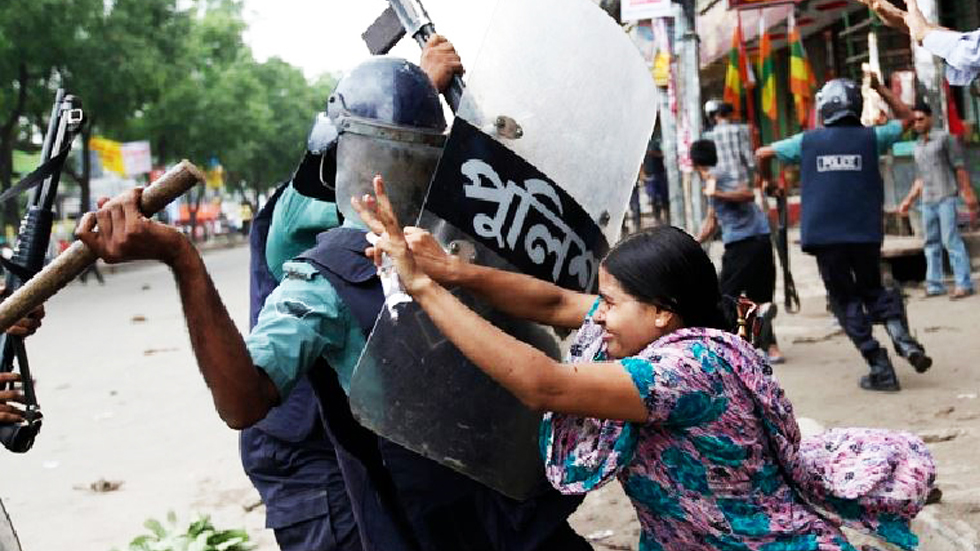
(photo: garment worker strike in Bangladesh met with police violence / libcom))
Between conscious collections, in-store recycling programs, and campaign spreads of more raised fists than you’ll see at the average protest, the fashion industry has delved into the deep end of the latest trend: sustainability and political awareness — or at least, the appearance of such. Sexy catch phrases such as “organic cotton”, “sustainable development“, and of course the beloved “on sale now” plaster nearly every major fast-fashion label, fusing the seemingly compatible concepts of ethical production standards with the fast-fashion model of production.

We’re able to clear our conscience with conscious collections and recycle our worries into feelings of optimistic do-goodness. After all, we’re all becoming “one stitch closer” to supporting and empowering women of color in impoverished nations globally thanks to fast-fashion labels’ self-proclaimed commitment to sustainability and ethical production.

*cue kumbaya music while birds chirp softly in the background*
Not so fast.

UNDERSTANDING FAST-FASHION

Despite fast-fashion prevalence and domination of the industry, this particular manufacturing model developed just recently (in the late 1990s and early 2000s) as a form of producing clothing from the runway to a mass market, quickly and inexpensively. It depends on both the continual creation of desire for consumption within the minds of consumers and the Quick Response Manufacturing model of production. Quick Response Manufacturing (QRM) centralizes timeliness as the central and highest priority in the production process in order to create the mass output and scale of profits needed to remain competitive within the Western capitalist system.

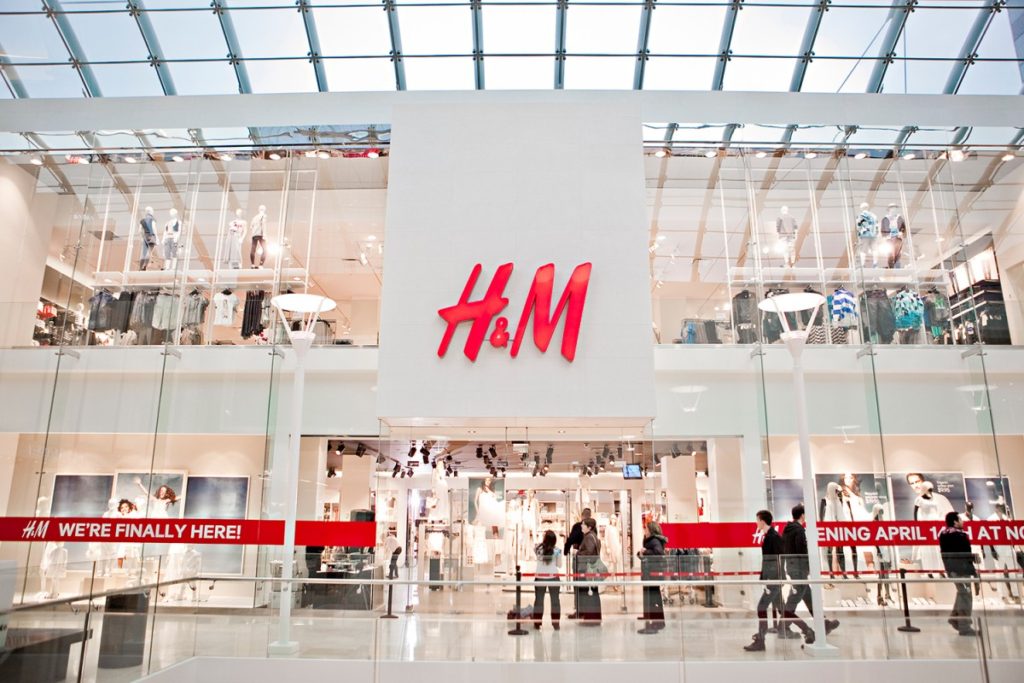
For example, H&M, the second largest retailer internationally after Inditex (which owns Zara), has been accused of incinerating 12 tonnes of new and unused clothing every year, is currently sitting on over $4.3 billion of unsold inventory, and actively produces between 550 and 600 million garments annually. They simultaneously have one of the most aggressively-marketed
greenwashing campaigns of fast-fashion brands.

We cannot allow ourselves to continually allow symbolic efforts to become enough, or even more important than or in place of, tangible change.
This central focus on time and low production costs to produce countless new styles every week (currently the fast-fashion industry has to work to meet their 52 “micro-seasons” annually) are directly reproduced in every aspect of fast-fashion supply chains and creates the very environments that necessitate violence on the production floor.

These are not complex, difficult demands. Why do we feel like asking a billion dollar brand to increase worker wages and improve factory conditions (barely even reducing profits) is out of the question? If a politicians whose base is majority Muslim eulogizes someone responsible for their families’ deaths why is it unheard of to hold them accountable? Why have we allowed ourselves to set the bar so dreadfully low?

Therefore, this seeming harmonious blend of fast-fashion and ethical production is not only deceptive marketing, but inherently and wholly incompatible. In the midst of all the smiling faces of brown Muslim women at sewing machines excited and ready to sew another pair of ripped jeans in Bangladesh, three new reports published by Global Labor Justice and Asia Floor Wage Alliance, describing severe gender-based abuse in some of the largest fast-fashion labels’ supply chains, indicates a deep and systematic incongruity between what brands are saying and what is actually happening. The abuse was documented between January and May of this year in H&MGAP, and Walmart factories across Bangladesh, Cambodia, India, Indonesia and Sri Lanka and reveals the horrifying working conditions women of color are subjected to on the job, daily.

GENDER-BASED VIOLENCE INSIDE THE FACTORIES


The reports, developed by an international coalition of human rights organizations, unions, and other labor organizations active on the ground including Global Labor Justice, Asia Floor Wage Alliance (AFWA), CENTRAL Cambodia, Sedane Labour Resource Center (LIPS) Indonesia, and Society for Labour and Development (SLD) India, detail sexual violence and verbal abuse against female garment workers on top of their already oppressive sweatshop working conditions.

Pulling hair, hitting breasts, firing pregnant women, threats of sexual violence and non-renewal of work contracts are just some of the forms of difficult-to-read gender-based violence documented in the report that frame the daily realities of female garment workers across South and Southeast Asia:

“…my batch supervisor came up behind me as I was working on the sewing machine, yelling “you are not meeting your target production.” He pulled me out of the chair and I fell on the floor. He hit me, including on my breasts. He pulled me up and then pushed me to the floor again. He kicked me.”

This is just one of the abusive experiences reported by Radhika, a widow, single mother, and garment worker in one of H&M’s major supplier factories in India. Unfortunately, such harrowing reports of gender-based violence and economic exploitation are not unique to H&M, GAP, and Walmart, nor are they the simple result of mismanagement, or careless top-down inspection. These experiences sit at the intersections of particularities of class, gender, and race: the abuse female garment workers face is no isolated accident. Garment factories exist in nations of color due to the legacies of colonialism, and are systematically dependent on exploitation and gender-based abuse to function within the fast-fashion model of production.
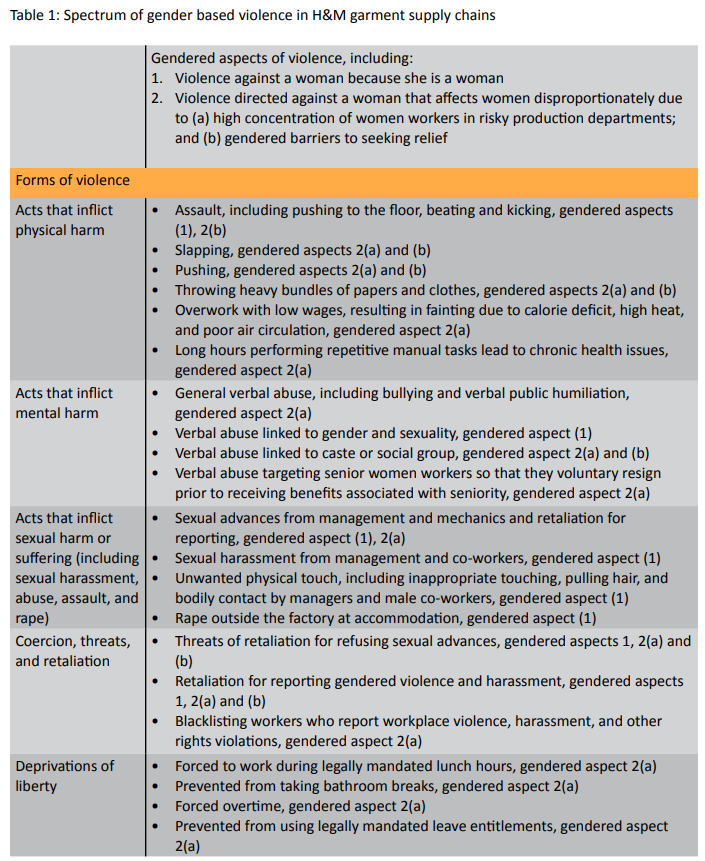
Table: H&M report, Global Labor Justice / Tweets: via our Twitter town hall


Furthermore, according to the GLJ report, “Examples of physical abuse reported by workers interviewed for this study include slapping workers and throwing heavy bundles of papers and clothes at workers, especially during high stress production times. Workers reported that physical discipline practices spiked after second tier management came out of meetings with senior management driving production targets.”

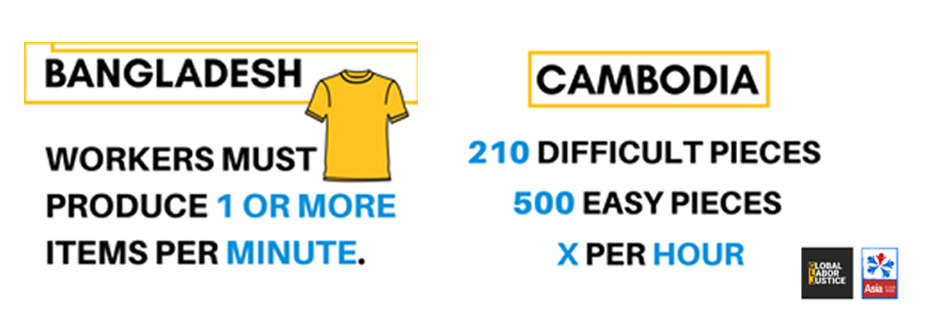
Much like Radhika’s experiences quoted above, the findings from the reports clearly indicate that these impossible time and production demands that fast-fashion places on factories are one of the major causes for factory violence.
Photo: Walmart supply chain demands on garment workers
GLJ’s report also uncovers gendered hiring practices across fast-fashion supply chains: women workers are overwhelmingly dominant (up to 95% of the garment workforce in many of the South and South East Asian countries investigated in their reports) yet “rarely” hold any positions of power within management. This results in women becoming especially vulnerable to sexual abuse and violence that are enabled from such gendered power structures. One example of this is illustrated in an interview conducted with a female garment worker in H&M’s factory in Sri Lanka:

“When girls scold machine operators for touching them or grabbing them, they take revenge. Sometimes they give them machines that don’t function properly. Then they don’t come and repair it for a long time. After that, supervisors scold us for not meeting the target.”

Women are not only routinely threatened or mocked for not working fast enough to meet the demands placed on them by fast-fashion brands, but are also punished for reporting the sexual violence that is cited as justification for not meeting quotas, oftentimes being fired and blacklisted from all factory jobs. One garment worker notes that factory supervisors have even hired informants to ensure the women do not talk with anyone outside of the factory. Even more so, local press that document or report on the factory conditions are often retaliated against as well.

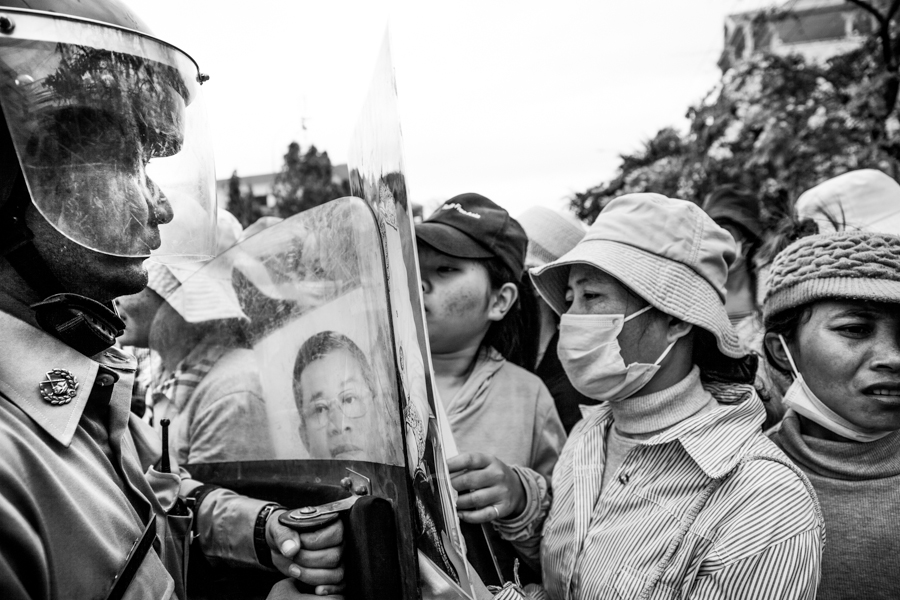
Furthermore, such time sensitivity and high production demands also violate garment workers’ general rights and liberties, beyond the vulnerabilities of gender-based violence: Muslim garment workers in Indonesia are unable to take prayer breaks, as they will not be able to meet production targets otherwise; in Cambodia overtime is forced and normalized (leading to “mass fainting” from exhaustion on particularly hot days); and job insecurity is widespread across all factories by imposing short term contracts with compensation far below living wages.


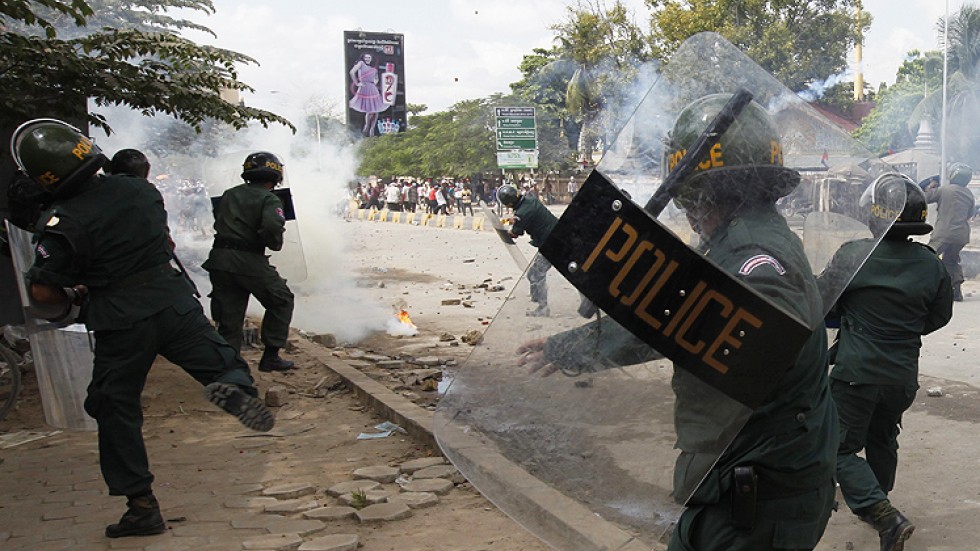
Photo: “Woman shot dead and several injured in protest by garment workers in Phnom Penh, Cambodia” / South China Morning Post

CAN BRANDS DO BETTER?

Meanwhile, on the other side of the Atlantic Ocean, H&M, GAP, and others are putting up a seemingly noble front: H&M’s 2017 Sustainability Report claims transparent supply chains, minimum wages, and codes of conduct for all formal subcontractors. So how does this all fit together? Buzz words such as “creating jobs”, “investment in developing countries,” or, as proudly declared on H&M’s website, “Everyone should be treated with respect and the suppliers should offer their workers fair wages and good working conditions” seem to set the scene for progress. Indeed, workers should have fair wages and good working conditions. But such deceptive terms and phrases do not do much else than ease consumers’ conscience who fall for their branding tricks.
Oftentimes, such deceptive greenwashing, accelerated by H&M’s “Conscious Collections” or Zara’s “Join Life” collection, leave consumers assuming that, in the off chance that they learn about such violent factory conditions, such conditions are simply the result of either flexible local laws or independent factories, rather than intentional corporate decisions. Because, at least they’re trying, right? H&M especially prides itself on its corporate sustainability and is oftentimes one of the first brands to conduct independent investigations of their supply chains when sweatshop conditions are publicized. Shouldn’t we support the brands that are attempting to do better?
Actually, the majority of the violations reported in H&M, GAP, and Walmart factories also violate international and local labor laws–this is not simply an unfortunate “third world” situation that fast-fashion corporations are taking advantage of; rather, factories’ pressures that lead to violence are a direct result of the production processes and demands inherent to fast-fashion.
Moreover, fast-fashion corporations most definitely have the means and resources to do better. In the first three months of 2018, Inditex (parent company to Zara, Pull and Bear, Stradivarius, and other fast-fashion labels) witnessed a record-breaking $6.6 billion in revenue, with CEO Amancio Ortega’s personal net worth currently sitting at $73.9 billion (making him one of the top 10 richest people in the world). Supply chains are left intentionally opaque to distance themselves from responsibility, and use phrases like “should be treated with respect” or “independent investigations”, which are as meaningless as Trump’s white house iftars.
Regardless of how a brand frames its “corporate responsibility” policies, the bottom line still stands: all fast-fashion is deeply and wholly dependent upon violent working conditions due to their production needs. Sweatshops, economic exploitation, and gender-based abuse of garment workers are not a reformable by-product of fast-fashion; they are a systemic, inevitable, and necessary component central to fast-fashion’s model of production, at almost every level of the supply chain.
Therefore, top-down approaches to change factory conditions (such as working with or supporting brands that appear to be more sustainable or conscious) are ultimately futile and have historically failed. The only way H&M, GAP, Walmart, Zara, Forever21, and other fast-fashion brands can truly systematically end the abuse and gender-based violence that frames their supply chains is to minimize their production quotas (i.e. no longer work within production timelines that fill the demands of 52 faux seasons), allow unionization and collective bargaining, and pay living wages, among other proposals outlined in the GLJ reports.
In the specific cases of H&M, GAP, and Walmart, in light of the Global Labor Justice report they need to immediately meet with the leadership of women of Asia Floor Wage Alliance to pilot programs to end gender based violence in their supplier factories.
Rather than supporting fast-fashion brands that are putting on the best “green” front, which would be marginally noticeable and only encourage more campaigns that use sexy words that carry no value, it is absolutely integral that we support and follow the leadership of garment workers organizing globally for their human rights. Sweatshops are “in”, and as long as we don’t end fast-fashion, they’re not going anywhere.
To those who are now thinking about your consumption of fast-fashion and, much like the high schooler who, after I finished a presentation on the production chain of fast-fashion for his class are wondering if you now are “a bad person,” I leave you with this: all fashion is political, complex, and more than just a t-shirt on a clothing rack. Beyond an individual decision of what clothes you chose to adorn your body with, we need to redefine our relationship to consumption and understand the complexities of the particular political and economic contexts that create and maintain the capacity for such forms of exploitative labor. Your individual consumption is not unimportant, but for us to truly be able to transform the fashion industry and the violence that plagues it, we must support the organizations investigating and reporting factory abuse and pushing for policy change, the on-the-ground organizing and unionizing led by garment workers, and movements challenging militarization and occupation globally.
Especially in the wake of the #MeToo movement in the West bringing attention to the normalization of sexual violence in Hollywood and other workplaces, we’re left asking ourselves how exclusive such movements are, and whose sexual violence we’re allowing ourselves to ignore or justify.
This piece is part of a global campaign aimed at pressuring H&M and GAP to meet with their garment workers to pilot programs to immediately end gender based violence in their supplier factories. Learn more about the campaign on Global Labor Justices’ website or reading through our twitter town hall, in collaboration with various unions, human rights groups, and others working to challenge gender-based violence in the fast-fashion industry.

The post All fast-fashion requires systemic gender-based violence: conscious collections are fake news appeared first on Hoda Katebi.

]]>
https://hodakatebi.com/all-fast-fashion-requires-systemic-gender-based-violence-conscious-collections-are-fake-news/feed/ 0
You cannot challenge gun violence without challenging the military https://hodakatebi.com/you-cannot-challenge-gun-violence-without-challenging-the-military/ https://hodakatebi.com/you-cannot-challenge-gun-violence-without-challenging-the-military/#respond Fri, 27 Apr 2018 01:43:00 +0000 https://hodakatebi.com/?p=1614 27 APRIL 2018 YOU CANNOT CHALLENGE GUN VIOLENCE WITHOUT CHALLENGING THE MILITARY One of the headlining endorsers of #MarchForOurLives held last month in Washington, D.C. was the organization Veterans for Gun Reform. The group released a video that played during the flagship march, featuring 16 veterans who had served in wars from Vietnam to Iraq. […]

The post You cannot challenge gun violence without challenging the military appeared first on Hoda Katebi.

]]>


27 APRIL 2018

YOU CANNOT CHALLENGE GUN VIOLENCE WITHOUT CHALLENGING THE MILITARY

One of the headlining endorsers of #MarchForOurLives held last month in Washington, D.C. was the organization Veterans for Gun Reform. The group released a video that played during the flagship march, featuring 16 veterans who had served in wars from Vietnam to Iraq. They spoke to their personal experience using the M-16—the military-grade counterpart to the commercially-available AR-15 used in the Parkland shooting—and the meaninglessness of differentiating between the two.
Throughout the video, veterans comment on their experiences with the AR-15:
“There is no reason…why anyone other than military and law enforcement should have an assault weapon like this.”
“High powered, rapid-fire assault rifles like the AR-15 are meant for one thing…That’s not something I want in my country.”
Kyle Hausmann-Stokes, the video’s director and a veteran himself, says in reference to the availability of the AR-15:
“It’s like taking a soldier off the battlefield with a machine gun and bringing it into the civilian world.”
cover photo: screenshot from Veterans for Gun Reform PSA, above

The rhetoric of the video draws a familiar line between the acceptable use of gun violence on the foreign “battlefield” and its unacceptable use in the domestic “civilian world.” Yet, the persistence of this imagined dichotomy derails the very message many of the march’s young leaders were beginning to raise: Any real challenge to gun violence in the U.S. requires questioning the very culture of militarism that makes it possible—and the U.S.’ role in proliferating it globally.

The Israeli military came under international scrutiny in late March when snipers shot live ammunition into crowds of Palestinians participating in the Great Return March within the Gaza Strip. In the first day alone, more than 750 were injured, and at least 18 were killed–including youth, and journalists wearing clearly-designated press vests. Videos showed unarmed protesters murdered as they prayed, as they ran, at times being shot down to cheers from the soldiers. Days later, the U.S. blocked a vote by the U.N. attempting to launch an investigation into the Israeli military’s claim that the shootings were part of a “precision strike.” Two additional protesters died from their wounds earlier this week.
There are deep ties between Israeli militarism in occupied Palestine and gun violence in the United States. From the U.S.’ multi-billion dollar fiscal sponsorship of the Israeli army, to the weapons tested on Palestinian protesters before they are sold to the U.S. military, transitioned into local police departments, and eventually made available on the civilian market, the way military, police, and interpersonal gun violence are connected internationally is exemplified by the relationships that bind the United States and Israel.
A prime example of this are the tactical trainings offered by the Israel Defense Forces to police departments across the U.S., passing on the very strategies used to brutally suppress Palestinian protesters to law enforcement and private security forces internationally. The St. Louis police department participated in these trainings in 2011—one of the many reasons the state’s response to protests in Ferguson after Mike Brown’s murder looked so similar to scenes from occupied Gaza. Indeed, military ties between the U.S. and Israel also lay bare the deep interconnectedness of the fight for Black lives with Palestinian liberation.
Ferguson, Missouri. 2015. (Photo via IVN)
Many Black organizers expressed dismay at how the country rallied to support Parkland youth in ways it has never supported the victims of police shootings. One of the primary demands of The Movement for Black Lives has been ending the militarization of local police departments—a phenomenon the Veterans For Gun Reform video perpetuates rather than criticizes.
Yet, as many pointed out, the difference between #MarchForOurLives and #BlackLivesMatter isn’t merely the skin color of lead organizers, nor their access to resources and the ears of celebrities. It is equally that the former calls for state intervention to stop interpersonal violence, while the latter implicates the state as a primary culprit for interpersonal violence. While one demands gun violence be restricted to “the battlefield,” the other acts from the knowledge that “the battlefield” exists wherever there are Black people, Muslim people, border-crossers, and those resisting the inherent violence of militarism.
Where is the line between “the civilian world” and “the battlefield?” Were protesters killed in Gaza, and the thousands of Palestinian children who have been murdered by the Israeli military, acceptable victims of gun violence? If automatic weapons weren’t meant to take the lives of young people attending school in Parkland, were they meant to take the lives of young people attending schools in Baltimore, Kabul, Brooklyn, Waziristan?
Only days before #MarchForOurLives stormed Washington, hundreds of protesters blocked traffic and interrupted a King’s basketball game in Sacramento, CA, protesting the death of Stephon Clark at the hands of police. While they had no permits, had raised no money, and had no celebrity endorsements, they insisted their message was just as crucial as the one lifted up by Parkland students. They insisted that being shot in your grandmother’s backyard is as unconscionable as being shot in your classroom, or being shot during prayer, no matter the qualifications of the individual pulling the trigger.
The same weapons that killed young people in Parkland are killing young people in Damascus, in Chicago, in Baghdad. And just as there is no meaningful difference between an M-16 and an AR-15, no meaningful difference between “the military” and “law enforcement,” there is no meaningful difference between “the battlefield” and “the civilian world.” The distinction merely delineates the communities the state deems deserving of gun violence, and the populations on which it condones the testing of deadly weaponry for the sake of private profit.
Instances of gun violence are connected through the governments, weapons manufacturers, and systems of dominance that make them possible. To truly challenge gun violence, our conversations about the international reach of militarism must be connected, too.
This essay was written in collaboration with the inspirational, talented, visionary writer and dear friend Benji Hart of Radical Faggot. Benji is a Black, queer, femme artist and educator currently living in Chicago. They have essays featured in the anthologies Rebellious Mourning: The Collective Work of Grief (2017) and Taking Sides: Radical Solidarity and the Poverty of Liberalism (2015), both from AK Press. Their writing has also been published at Black Youth Project, Truthout, Salon Magazine, and other feminist and abolitionist media.
They are the recipient of the Rauschenberg Residency (2018), Chicago Women and Femmes to Celebrate (2016), and the 3Arts Award in the Teaching Arts (2015).

P.S. We’re also honored to have Benji as our official #BecauseWe’veRead discussant! Tune in to Instagram live at 11am CST Sunday, April 29th to join the conversation as we discuss Assata Shakur’s autobiography!

The post You cannot challenge gun violence without challenging the military appeared first on Hoda Katebi.

]]>
https://hodakatebi.com/you-cannot-challenge-gun-violence-without-challenging-the-military/feed/ 0
On International Working Women’s Day, please understand complexity https://hodakatebi.com/on-international-working-womens-day-please-understand-complexity-2/ https://hodakatebi.com/on-international-working-womens-day-please-understand-complexity-2/#respond Thu, 08 Mar 2018 18:28:00 +0000 https://hodakatebi.com/?p=1681 08 MARCH 2018 ON INTERNATIONAL WORKING WOMEN’S DAY, PLEASE UNDERSTAND COMPLEXITY What do Hilary Clinton, Google, L’Oreal, Wonder Woman, and Nike all have in common? They are all fairly successful at convincing mass audiences that they are inclusive and support women despite actively causing violence against women from particular racial, ethnic, socio-economic, gender, and religious identities whose […]

The post On International Working Women’s Day, please understand complexity appeared first on Hoda Katebi.

]]>


08 MARCH 2018

ON INTERNATIONAL WORKING WOMEN'S DAY, PLEASE UNDERSTAND COMPLEXITY

What do Hilary Clinton, Google, L’Oreal, Wonder Woman, and Nike all have in common? They are all fairly successful at convincing mass audiences that they are inclusive and support women despite actively causing violence against women from particular racial, ethnic, socio-economic, gender, and religious identities whose voices are systematically silenced: those who are not white, not American, working-class, trans, and Muslim.
Illustration: Stephanie McMillan
Two days ago, on March 6th, Google announced its campaign for International Women’s Day “encouraging ladies across the world to share their stories” while The Intercept announced that “Google is quietly providing AI technology for drone strikes targeting project.” Quietly, indeed.
While Google is receiving praise from media outlets for collaborating with artists to celebrate and uplift women’s voices “from Japan to Pakistan,” they are simultaneously supporting U.S. military efforts to drone strike women, mothers, grandmothers, and girls. Truly, a feminist icon.
But, we permit them to get away with it, as we do with others every single day. We tend to continuously allow negotiations in our feminism or support of women: we forgive multi-billion dollar exploitative corporations as fast as they can put a headscarf on a model or imperialism as fast as it can put on a pink pantsuit.
But of course, these exclusions are intentionally meant to be so: if we questioned how everyone–from the (most likely) child picking the cotton in Burkina Faso to the mothers in Bangladesh sewing it all together in stuffed factories–were getting paid behind every $5 t-shirt we saw at Forever21, we no longer would have the “luxury” of cheap clothing. And God forbid we can’t hit the sale rack and impulsively buy in the name of self-care.
So, we’re taught to not think beyond “our borders”, shut up, and just buy the damn thing. It’s easier to not think about the complexity: it takes less time, it sounds nice, and ultimately, it is not in our favor after all?

Illustration: Stephanie McMillan

Intersectional feminism–a holistic understanding of women’s rights that includes space for women from aforementioned identity groups whose realities challenge our privilege–comes right down to your own body and the conscious (and unconscious) choices you’re making every day as you decide what to wear. Or whose surface-level narrative you might be buying into (and therefore paralyzing you from doing something about it).
It’s not easy, because it if it was then we would already be out of this mess. It is an intentional set of decisions we must make, every single day, as we choose where we buy our clothes, what we are and are not using our platforms for, how we choose to love or not love ourselves and our communities, and the extent we choose to engage with or not engage with the realities of privilege and violence we find ourselves in.
As written previously on JooJoo Azad, it is increasingly important to see past surface-level inclusion, ask important questions, love our communities over corporations, and understand the complexity of narratives designed to sail smoothly down our throats.

On International Working Women's Day, let's make this a commitment.

I’m sharing the quick speech I gave one year ago today at the International Working Women’s Day rally in Chicago, adapted a little to read better as a standalone piece, as it remains unfortunately relevant. I’ve been getting a lot of messages recently from people asking for support in articulating the politics of JooJoo Azad in speeches they’re giving at protests and rallies, so I hope this can be of help. I’ll also be uplifting women I love across my social media today, as well as DRUM’s (Desis Rising Up and Moving)’s “Working-Class SHEroes” campaign, for those following along. I encourage people who are able to, to donate to their important work.

Illustration: Stephanie McMillan

March 08, 2017:
Today we are at a time of exacerbated anti-Muslim racism that has only been increasing throughout my lifetime.
So as our mosques continue to get burned, our people continue to be banned, harassed by police, killed by white supremacists, stalked by DHS, as I continue to get called a terrorist and spat on as I read my book on the red line, let me set the record straight on the multiple layers of anti-Muslim racism that is prevalent in society that you might not have noticed.
First, Stop draping your american flags over our Hijabs to make us American enough for your solidarity.
Stop infantilizing us in your bystander intervention comics, stop localizing international politics, and stop flattening our identities as Muslim women into a single hijab.
So here is what you should know.
Know that anti-Muslim racism existed long before Trump.
Know that “counterterrorism” or “national security” are only code words for anti-Muslim policies. Know that Obama administered more drone strikes than any other president before him and is largely responsible for creating many of the refugees who Trump is now banning.
Know that if Hilllary Clinton would have become president, one of the only things that would have changed is that many of you would not be standing here today, in protest.
Know that hyper-militarization of police is largely fueled by anti-Muslim racism. And know that the police are only here to serve and protect upperclass white people, and that you cannot be pro-Muslim and support the police. Know that if you are Muslim you must not say but demand that Black lives matter not only because the first Muslims in this country were Black slaves, but because our community is also Black, and our individual liberation is wholly dependent on each other.
Know that Israel is an apartheid state that spends millions creating and perpetuating anti-Muslim propaganda. That Israel trains American police. That you cannot be pro-Israel and support Muslims.
Let me repeat: You cannot be pro-Israel and support Muslims
You cannot be pro-war and support Muslims
You cannot be pro-drone strikes and support Muslims
You cannot remain silent or ignorant about the genocide of Rohingya Muslims in Burma and support Muslims
You cannot be transphobic or pretend that this land was not stolen and call yourself an immigrant and support Muslims.
Why? Because we, as Muslims, should and will refuse to be complicit in support that marginalizes or causes direct violence and injustice to our own or others. That does nothing to move us forward. But also, if you look deeper, you see the roots of all of these systems of violence are one and the same.
And know that with all of this, if you cannot, therefore, support Muslims, you cannot call yourself a feminist either.
And no, I will not, under any circumstances, compromise any of this. I will not excuse you if you are a zionist. I will not smile at you if you are “wearing a hijab for a day.” I will not join your movement if you forget Americans are privileged at the expense of people of color around the world.
Let us not compromise our values, our identities, our histories, our spiritualites to have one extra person show up at our rallies, for one extra person in my march who refuses to accept the complexity of my identity, my family trauma and displacement, and my oppression.
And finally, at a time where violence against our communities is becoming increasingly normalized, let us not forget to show up for our people. We must love our people–those who are truly here with us– we must show up for, support, build with, and love, deeply, intentionally and intensely. Because The movement forward will be rooted in radical love. It will be uncompromising in our values.
So I thank you all who came out today to celebrate and resist.
And I encourage you to come out tomorrow. And the day after. And the day after. And for Black lives. and for indigenous people and for trans people. And for working class people. And for Palestinians. And for Muslims.
Because we will not remain silent when the trump regime makes trans people feel unsafe to use the bathroom. We will not remain silent when they expand military and police and ICE raids. Or when our mosques are burned and synagogues vandalized.
And we should not remain silent after 16 shots. Because we are stronger when we are together. Because we are powerful when we are together. Because we will win when we are together. Because love trumps hate…and Trump.
So thank you for being united. Thank you for coming together Muslim and non-Muslim, from different sects and backgrounds and languages and abilities and genders and ages. Thank you for refusing to remain silent. In honor of working class women around the world, let’s actively work to complicate our world views, internationalize local politics, and take shit down together, with a holistic understanding of what that will look like.

Illustration:Stephanie McMillan

* Edit March 8, 10:50am CST — I incorrectly used feminism and womanism interchangeably, and have updated the piece accordingly. (more on “womanism” and why it’s different from feminism here)

The post On International Working Women’s Day, please understand complexity appeared first on Hoda Katebi.

]]>
https://hodakatebi.com/on-international-working-womens-day-please-understand-complexity-2/feed/ 0
“You do not sound American”: a live interview on WGN-TV https://hodakatebi.com/you-do-not-sound-american-a-live-interview-on-wgn-tv/ https://hodakatebi.com/you-do-not-sound-american-a-live-interview-on-wgn-tv/#respond Sat, 10 Feb 2018 11:09:00 +0000 https://hodakatebi.com/?p=1820 10 FEBRUARY 2018 “YOU DO NOT SOUND AMERICAN”: A LIVE INTERVIEW ON WGN-TV *This piece has been updated as of February 14, 2018* I was on WGN for a live interview last week, and was asked to speak about my work and my book, but when I gave answers the hosts didn’t like, their questions […]

The post “You do not sound American”: a live interview on WGN-TV appeared first on Hoda Katebi.

]]>


10 FEBRUARY 2018

"YOU DO NOT SOUND AMERICAN": A LIVE INTERVIEW ON WGN-TV

*This piece has been updated as of February 14, 2018*

I was on WGN for a live interview last week, and was asked to speak about my work and my book, but when I gave answers the hosts didn’t like, their questions (and comments) started to get hostile, literally telling me I “don’t sound American.” They gave me 5 minutes on-air. I’m going to give myself this short article instead. Here are a few quick thoughts about this interview (which they also did not publish online, or give us access to the clip), as I feel it serves as a good example for a bit of commentary that can be applied to so many conversations happening now, and relevant to the work that is happening here on JooJoo Azad.

"Do you think, you would like to see Iran go back to that before women were wearing hijabs?"

This question is assuming that there was, in fact, a time in recent Iranian history where women were wearing miniskirts and not hijabs as if there were no Muslim people in Iran before the revolution or that everyone is wearing black now and all sense of personal expression has been stripped from them. So wearing a black chador is not “expressing yourself”? Is expression of self through the body truly only limited to dressing in Western fashion?
For more elaboration on my response, a dear friend Alex Shams wrote a brilliant piece: “The Weaponization of Nostalgia, How Afghan Miniskirts Became the Latest Salvo in the War on Terror”, discussing how this exact dichotomous framework of seeing women’s bodies in the middle east (mini skirts as freedom and liberation and hijabs as repression and lack of rights) is established as justification for keeping troops on the ground in Afghanistan. Fashion is powerful, but it’s not a gauge of a state’s morality or progress based on how it frames women’s bodies.
 

"Let's talk about nuclear weapons"

So hindsight is always 20/20, and I honestly should have just stopped him right there and questioned why he thought it was okay to make this ridiculous comment and pose it as a question (I think I was too excited to answer the question than question his premises). Nothing to do with what we are talking about and yet, I’m forced to take up a role as an expert on all things related to Iranian politics — a position I know other POC/Muslims have found themselves in if they have ever been the token Muslim on a panel or interviewed about their work. The title they gave me on the show was “fashion blogger,” yet here I am being asked about nuclear weapons. Would they ever bring on a white chef to their show and then ask him about Brexit or his thoughts on the rise of white supremacy?

"You don't sound American"

Clearly, this is not the interview they expected. Identifying me as an Iranian-American, just moments before they wanted me to swiftly and unquestionably denounce Iran and then am immediately called out for not blindly pledging to the USA. Of course, both countries deserve their questioning, but the double standards is mind-blowing. Not to mention that what, then, must an American “sound like”? Are they saying that Americans must not question their government, must see the world in black & white, and chose simplicity over nuanced understandings? In that case, you all are doing it right. But furthermore, what an incredibly loaded statement to say to a visibly Muslim woman on live TV, pushing every stereotype of “other”, “foreign”, and “incompatible with America” that Muslims are so systematically characterized as–and therefore used as justification to commit violence against, both here and abroad. If a white person said the same things as I did I guarantee you their “American-ness” would not have been questioned.
This is so deeply related to my piece “Please Take Your American Flags Off My Hijab” I published around this time last year, where I write:
“Know that Muslims are tired of having to “prove” they are American. But also, know that one does not need to be American to deserve respect, humanity, dignity, equality, rights, and freedom from hate and bigotry. An over-emphasis on being American as a prerequisite of deserving respect is harmful for immigrants and refugees. Especially under the new administration that already has plans of “extreme vetting” to prove American-ness. This is only pushing their agenda further.”
Also, mom, I’ve made it — I’m officially a meme:

Update February 14, 2018, 10:15am CST:

*p.s. quick note that I edited a few seconds of this for clarity*

The post “You do not sound American”: a live interview on WGN-TV appeared first on Hoda Katebi.

]]>
https://hodakatebi.com/you-do-not-sound-american-a-live-interview-on-wgn-tv/feed/ 0
Making racists uncomfortable, one outfit at a time https://hodakatebi.com/making-racists-uncomfortable-one-outfit-at-a-time/ https://hodakatebi.com/making-racists-uncomfortable-one-outfit-at-a-time/#respond Tue, 17 Oct 2017 12:13:00 +0000 https://hodakatebi.com/?p=1834 17 OCTOBER 2017 MAKING RACISTS UNCOMFORTABLE, ONE OUTFIT AT A TIME Black head-to-toe minus the loud, blockish letters that yell “DEMILITARIZE” in white across my chest, right below the folds of my black Hijab — the outfit of choice for this Iranian Muslim living in Trump’s USA, on her way to the airport. Of course, […]

The post Making racists uncomfortable, one outfit at a time appeared first on Hoda Katebi.

]]>
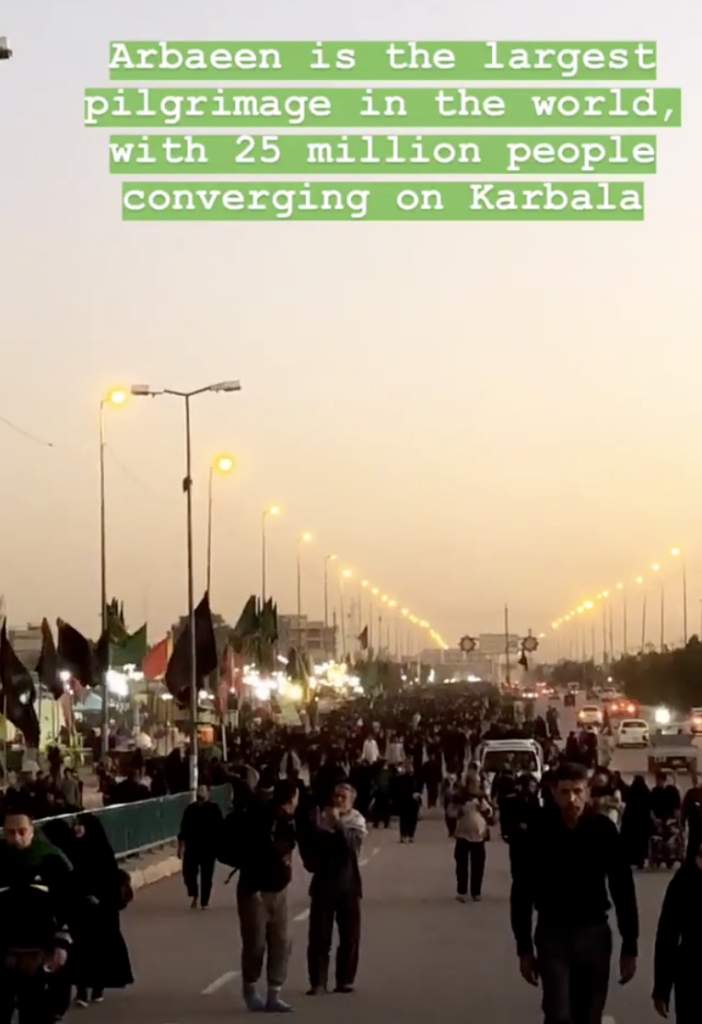

17 OCTOBER 2017

MAKING RACISTS UNCOMFORTABLE, ONE OUTFIT AT A TIME

Black head-to-toe minus the loud, blockish letters that yell “DEMILITARIZE” in white across my chest, right below the folds of my black Hijab — the outfit of choice for this Iranian Muslim living in Trump’s USA, on her way to the airport. Of course, a look like this would demand an extra hour to proceed through TSA’s ‘random check’ and extensive search, the intrusive pat downs, and forehead and hand swipes to check for explosive residue while I stand, smirking and causing discomfort.
Growing up, I was embarrassed to walk with my Pakistani friends who wore their traditional clothes in public spaces. Dressed in gorgeous sparkling embroidery laced onto endless fabric and wrapped in rich tones that seemed to radiate light, downtown Oklahoma City did not deserve such beautiful art — or seem to notice anything else.
And so, walking loosely alongside them, I held a staring contest with the concrete, careful not to catch the uncomfortable stares of onlookers sharing judgmental whispers and demeaning looks of disgust with their partners. It was of course, ultimately a useless pursuit, as always: I wore a Hijab and despite trying my best to wear what Abercrombie & Fitch told me to, I was visually guilty by association — guilty of not assimilating, guilty of deserving to feel like an outsider, guilty of compelling others to frown and stare.
So I just kept quiet, painfully absorbing the sideways glances I felt pierce my body regardless of whether or not I unlocked my gaze from the concrete and looked up to confirm that we were, in fact, being uncomfortably stared at. Again.
When I first started wearing the Hijab in sixth grade, I learned that you didn’t have to necessarily physically see the person who is sending you looks of disgust; you just have to allow yourself to feel it.
“Why do you try to make people uncomfortable, intentionally?” I was asked, again, as she pointed to my shirt. I looked down and smiled — a grotesque illustration of a pig wearing a police hat was plastered across my torso. The rhetorical question came just after a walk together through Wall Street in downtown NYC, where the sea of mostly White people in suits and abnormally tight ties continually parted in front of us as we walked, complete with broad frowns and bewildered eyes fixated on my shirt, careful not to catch my glance–or walk too close. My friend was clearly not as amused as I was.
Photo: @kasmos.kariblak t-shirt, photographed by Hushidar Mortezaie, Los Angeles
Above: ‘BANNED’ Scarf: Slow Factory / Photo: Driely Carter / MUA: Grace Ahn / Stylist: Solange Franklin, NYC
Aside from being a great way to gauge the politics of my surrounding environment, my anti-police shirt, designed by a young Black artist from the Southside of Chicago, never fails to demand the reaction of everyone whose eyes are unwillingly drawn toward it. The provocative image demands people’s gazes — whether or not they’d like to notice it.
It was not the first time I was asked, by friends, family, and strangers across the internet — why do you wear provocative clothes that make people stare at you? Are you intentionally wearing clothes that make people uncomfortable?
The answer is less simple than you might think.
Dressed in black, patterns, or Abercrombie & Fitch head-to-toe (don’t worry I don’t do the latter anymore — that was designated for teenage angst Hoda years only) — all will get my hijab-wearing, Middle Eastern self the same result: endless, uncomfortable staring. It’s a reality I’ve lived with for over ten years, regardless of where I am in the USA.
Constant stares of disgust were more difficult to deal with for me when I was younger than now, but a decade of people telling you with their body language that you’re a scary outsider — or object of fantasy and fetish — is not insignificant. Sometimes it’s more than just a look: sometimes it’s a middle finger while mouthing ‘terrorist’ or even physical violence. In concert with the exponential rise of hate crimes against Muslims and Muslim-perceived people — especially since Trump took office — street interactions are more intense than what others might feel is just “a simple glare.”
So, for me, wearing provocative clothing as a Muslim is a way of taking up visual space, signaling that I’m over their fear-mongering games and liberals’ depictions of helpless, Orientalized Muslim Hijabi women in bystander intervention how-tos, and personal failed assimilation attempts.
But more importantly, wearing provocative clothing — complete with my Hijab — allows me to reclaim my agency in an public transaction of non-verbal communication I would have otherwise been subjected to without consent.
And an interaction that I get to politicize further based on what message my clothing is expressing, be it “DEMILITARIZE” in all caps while being patted down by armed and nervous TSA agents or getting arrested by far too many SWAT and police officers, or a drawing of a pig in a police hat while I walk through white and upperclass neighborhoods (you know, the only people law enforcement in this country actually “serve and protect”).


View this post on Instagram


Fixed it. 🔥

A post shared by HODA KATEBI | هدی کاتبی (@hodakatebi) on

So after a decade of non consensual glares, I am demanding my agency. I am commanding stares. I am being stared at because I intentionally am asking for them to do so; it is at my will, not theirs.
Rather than being inevitably receiving something I do not want, why not request that it is given to me? It’s a powerful move.
Even more so, in Muslim spaces, wearing politically-charged clothing as a Hijab-wearing Muslim woman also enables me to use a visually-expressed identity (Hijab) that is typically valued in the community to work to normalize another possibly less-accepted politic/identity (being fiercely anti-war, anti-militarization, etc). There is something about seeing intersectional and anti-Imperialist politics shared openly and unafraid in Muslim spaces that is refreshing, and I feel needed in this particular moment of political scare and silencing tactics and repressive federal, anti-Muslim policies.
And no, this is not just a swap of tables; doing onto others what has been done to me. There is no privilege, power, or billion dollar industries of white-washing and forceful assimilation behind my message. There is not a history of people wearing pig-and-police-hat shirts who have committed violence against you, your place of worship, and your homeland. I am commanding your attention through my clothing, not making you feel as if you are alien and must shed your culture to blend into mine and earn comfort in public spaces.
Actually, if a shirt that is asking your country to end their violent military expansion abroad makes you uncomfortable, then maybe it’s more important for you to go figure out why that is?
My clothing intentionally make people with shitty politics uncomfortable, because they are forced to remember their privilege and recall the violent histories and violent present they are responsible for. I am able to take advantage of the fears of racists, white supremacists, and anti-Muslim bigots and use it against them. I’ve happily learned there are few things more terrifying to a bigot than a confident Muslim woman dressed in all black.
If teen angst Hoda just knew — or my many Muslim and POC friends today who still are working through navigating feelings of foreignness in their own skin — no amount of eyebrow plucking, arm shaving (or for me, failed attempts at doing so), hair straightening, or how well we’ve visually “assimilated,” we will never be white–nor should we aspire to be. The most you will ever be is an “exception” to the rule, or “the one who made it” (in their eyes, not ours). You play the game of good Muslim – bad Muslim and no one wins.
So, own your space, your culture, your streets, your comfort. Don’t ask or wait for it by trying to dress or play the part.
Before I end, let me quickly add: be sure that this piece is *not* sponsored by Dior’s $700 ‘We Should All Be Feminists’ t-shirt. Corporate ‘revolution-washing’ is not my source of liberation — nor should it be yours. I am not advising everyone to go out and buy sloganed clothing and feel as if they’re changing the world.
Rather, be unafraid in reclaiming interactions that you might feel as if do not belong to you. Take up space where it is not given to you, demand what is rightfully yours, and understand that if causing ‘discomfort’ permits you your agency at the expense of ‘whiteness’ or racists, so be it.
P.S. Are you on the JooJoo Azad Facebook Live mini concert series takeovers yet? Peep it.
– sharing is caring! Found this article helpful? Your friends might too! –

The post Making racists uncomfortable, one outfit at a time appeared first on Hoda Katebi.

]]>
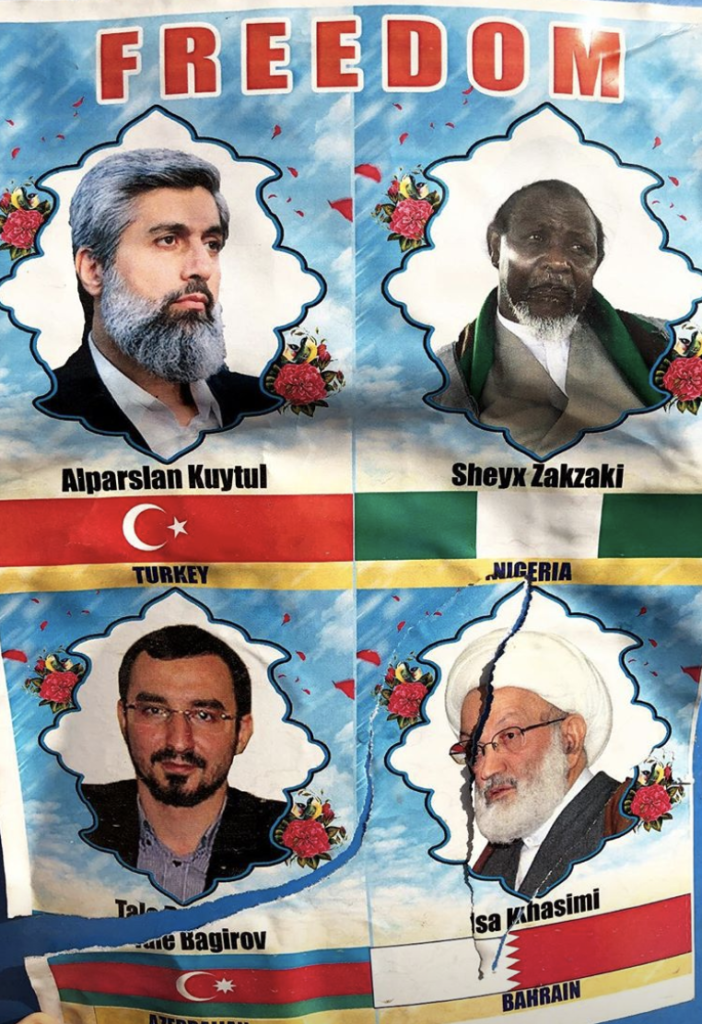
https://hodakatebi.com/making-racists-uncomfortable-one-outfit-at-a-time/feed/ 0
How H&M is erasing war crimes in their latest marketing campaign https://hodakatebi.com/how-hm-is-erasing-war-crimes-in-their-latest-marketing-campaign/ https://hodakatebi.com/how-hm-is-erasing-war-crimes-in-their-latest-marketing-campaign/#respond Thu, 29 Jun 2017 12:38:56 +0000 https://hodakatebi.com/?p=1849 29 JUNE 2017 HOW H&M IS ERASING WAR CRIMES IN THEIR LATEST MARKETING CAMPAIGN Andy Torres (and her blog Style Scrapbook) was the second blog(ger) I ever found, and first I read religiously. I remember spending hours on end going through years of her blog’s archives, soaking up her content, ideas, personality, and style. Her […]

The post How H&M is erasing war crimes in their latest marketing campaign appeared first on Hoda Katebi.

]]>
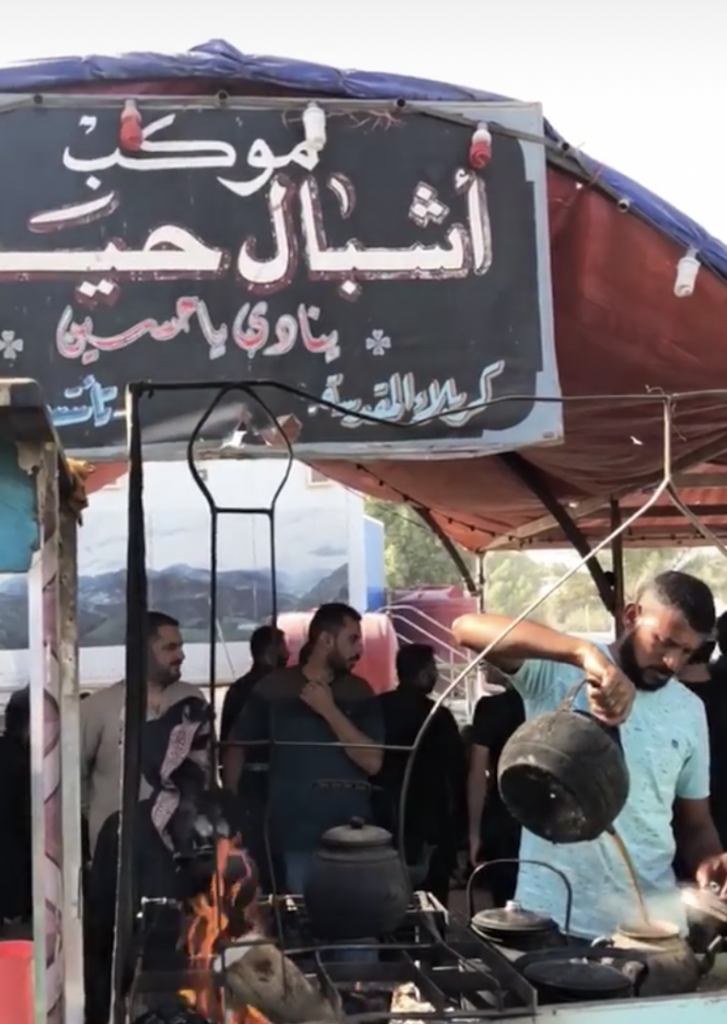

29 JUNE 2017

HOW H&M IS ERASING WAR CRIMES IN THEIR LATEST MARKETING CAMPAIGN

Andy Torres (and her blog Style Scrapbook) was the second blog(ger) I ever found, and first I read religiously. I remember spending hours on end going through years of her blog’s archives, soaking up her content, ideas, personality, and style. Her move to Amsterdam with nothing but aspirations was inspiring, and her style was relatable (of course, a few months later I would discover my first Muslim fashion blog, as a pleasant surprise to little Hoda growing up in Oklahoma without other Muslim friends).
Two years after finding Andy’s blog for the first time, much time spent naturally reflecting on my experiences growing up as Muslim hijab-wearing girl in the south, several frustrations with bloggers I followed and their collaborations with unethical brands, and many encouraging friends later, I decided to start my own editorial space and JooJoo Azad was born.
All this to say I owe Andy a lot when it comes to filling a sartorial void in little 17-year-old Hoda’s life. But her seemingly-innocent latest collaboration with H&M works to erase war crimes and human rights violations in more ways than one. Let me explain.

Greenwashing: A Problematic Fast-Fashion Branding Trick

H&M is not a new name to the JooJoo Azad Boycott list — or human rights violations. Their over-stuffed factories in Cambodia (in which thousands of garment workers faint on the job annually due to poor working conditions and extensive hours on end) are nothing less of sweatshops. Four years after signing the Bangladesh safety accords after the horrible 2013 Rana Plaza factory collapse, H&M’s factories remain unsafe.
And yet, despite all this, somehow H&M is consistently able to paint themselves as progressive in their industry and dedicated to making a difference, with a focus on being ‘conscious’ or ‘sustainable’ fast-fashion. How? By creating collections labeled just that. The H&M ‘conscious’ collection prides itself on using materials and production methods that are better for the environment and mindfully sourced: organic cotton, recycled wool, and organic silk are just a few of the sexy/trendy buzzwords that make me think less of a fast-fashion clothing line and more of the gluten-free non-gmo vegan detox gentrifying cafe joints I made fun of on Snapchat while in Berkeley, CA.
Of course, while H&M’s efforts at exploring and experimenting with sustainable fabrics and materials is commendable, my applause is (very) short.
Oxymorons of ‘ethical’ fast-fashion aside, H&M’s conscious collections–which they are currently in their 6th year of producing–constitute ‘greenwashing’: an attempt to use self-proclaimed environmental sustainability to wash (or attempt to hide) the human rights abuses that the rest of their clothing is complicit in.
Because logically, if H&M has constructed an entirely separate ‘sustainability’ collection, what are they then implying about how the rest of their clothing is made?
Garment workers organizing with ‘Labour Behind the Label,’ demanding better wages and safety conditions / Photo: Labour Behind the Label
By creating a (very small) collection centered on sustainability, H&M is able to use this line to market themselves as ‘green,’ ‘ethical,’ and incomparable to other fast-fashion brands. They are able to take away the focus of their human rights violations of mass deforestation and use of sweatshop labor-like conditions by diverting attention toward a marketing tool: a ‘conscious’ collection made with organic products.
(yet somehow you can still buy a $5 ‘conscious’ t-shirt, which definitely raises my thick Middle Eastern unibrow eyebrows)
Greenwashing is a strategic marketing/branding tool for fast-fashion companies: you are able to divert attention from the violence of your brand and market yourself as what you are not: ethical, sustainable, and conscious.
(Today, while greenwashing is still a practice that is alive and well, ‘revolution-washing‘ (help me think of a more creative name pls) is quickly becoming the latest iteration of this problematic practice. And fast-fashion brands (including H&M) love using hijab-wearing models to do it.)

Not Just for Fast-Fashion Brands

The fun part about writing a political fashion blog is that everything is related: this practice isn’t just designated to the fashion industry.
Israel, similar to H&M and other fast-fashion brands, is also great at washing things — that and running an apartheid regime set on ethno/religious-supremacy. Except after washing, Israel’s laundry comes out pink.
Among other types of ‘washing,’ Israel is most notable for ‘pinkwashing’: think greenwashing, except with all things queer/LGBTQI+. And, especially relevant to discuss right now given it’s pride month, and you might have seen a few of these pinkwashing flags at your parades/marches.
Israel tries to brand itself as the “queer haven of the Middle East,” and uses anti-Muslim and harmful portrayals of Muslim countries’ relationships with LGBTQ issues in order to brand themselves as a safe sanctuary. The truth is, queer and trans Muslims very much do exist in the Middle East, and their complex experiences cannot be so easily simplified into good or bad.
But even more so, similar to fast-fashion brands’ ‘revolution-washing’ (using hijab-wearing models for surface-level inclusion yet exploiting Muslim garment workers) or ‘greenwashing,’ Israel’s pinkwashing and claims of inclusion is just as surface-level: Israel’s military occupation of Palestine does not exempt queer Palestinians, they continue to blackmail gay Palestinians into becoming informants, and queer people continue to be stabbed and killed in gay-pride protests in Jerusalem.
Simply put, it’s a strategic marketing tool for brands and regimes alike.
So, given a shared history of attempting to distract from their human rights violations using various ‘washes,’ H&M and Israel’s come-together* for a travel campaign collaboration with the acclaimed blogger Andy Torres is just another spin in the old washing machine.
*While it is not confirmed that this was an intentional collaboration between H&M and the State of Israel (although such a collaboration would not be unprecedented), the fact of the matter still stands: H&M is complicit of whitewashing Israel’s apartheid regime through this campaign. They are violating an international call of solidarity by Palestinians for the international community — one that countless musicians, academics, scholars, and creative/cultural makers have signed on to — and work to normalize what is far from normal: an apartheid state centered on ethno/religious supremacy.
In their collaboration, Andy explored Tel Aviv, “the city that’s always down to party” wearing H&M head-to-toe. The editorial describes Israel as the “Land of Milk and Honey” — an idiom generally understood to mean a land of richness where all is well and people are happy, but also a reference to the Old Testament (yes I’ve read it) and its descriptions of ‘The promised land,’ which is a religious root of some Jewish people’s claim to Palestinian land. Under political Zionist ideology, Israel is a God-given land to Jewish people, and that means uprooting/destroying the indigenous Palestinian population in order to create a Jewish majority in ‘the promised land’ (and evidently, violating international human rights for fifty years in the process)
In short, H&M’s latest collaboration with Andy Torres works to portray a violent apartheid state as the world’s next best travel destination.
Just as H&M tries to get away with branding itself as a ‘green’ fast-fashion brand, Israel also tries to brand itself as feminist, progressive, home of sexy soldiers, a safe-haven for LGBTQI+ people, and now with H&M’s support, a top tourist destination. Never mind that many of the stops on Andy’s travel were built atop the destruction of Palestinian homes and villages — she wants to party and look cute doing it wearing H&M’s $7 off-the-shoulder blouse!
Dance the night away, Andy!
And yet, just as you cannot be apolitical as a white person doing an advertisement campaign in South Africa during apartheid (given power structures that are built for white colonists at the expense of the indigenous Black population), this trip to Israel cannot be played off as apolitical.
There is nothing apolitical about a fashion editorial story that works to wash out (whether intentionally or not) war crimes and make normal what is not: Israeli apartheid.
The infamous Israeli Apartheid wall, heavily militarized and controlled by Israel, continuously ever-expanding into Palestinian land. / Photo: South Africa BDS Committee
Of course, for avid readers of JooJoo Azad (I see you!), you know I’m always of the argument that all fashion is wholly political, period. So, this campaign acts as a further hyper-politicization of an already powerful form of visual communication.
And this isn’t the first time H&M’s love affair with Israel is being called out by international human rights activists: in 2010 the company decided to open a flagship store in Tel Aviv and 6 other major stores on stolen and illegal land, including in the ‘Malha Mall’ in Jerusalem:
“Malha is one of the Palestinian villages that were ethnically cleansed during the 1948 Nakba and whose original Palestinian inhabitants are refugees denied their UN-sanctioned right to return to their lands. Israel, to this day, continues its policies of ethnic cleaning in Jerusalem by evicting Palestinians from their homes and replacing them with Jewish colonial settlers and by constructing tens of thousands of housing units for those settlers in the occupied Palestinian territory. All Israeli colonies are regarded as war crimes under the Fourth Geneva Convention.”
Not only is H&M complicit in erasing Israeli international war crimes, but they are actively building upon illegally-attained land and working to re-shape the brand of Israel to what it is not. So, whether through greenwashing sustainability or whitewashing war crimes and international human rights violations, H&M’s spot on the JooJoo Azad Boycott List has been rightfully earned.

Join us for an 'Instagram Live' discussion on this piece July 2nd at 11am CST!

In order to make JooJoo Azad more accessible & engaging, I’m hosting an Instagram Live conversation as a complement for each piece as a time/space where you can agree, disagree, ask questions, and join in on the conversation…in real-time!
Instagram: @hodakatebi
For the conversation on this piece, I’m excited to be joined by my good friend Leila Abdelrazaq, Palestinian graphic novelist, & community organizer. You can read more of her work, which has been featured and on display internationally, here.

– sharing is caring! Found this article helpful? Your friends might too! –

The post How H&M is erasing war crimes in their latest marketing campaign appeared first on Hoda Katebi.

]]>
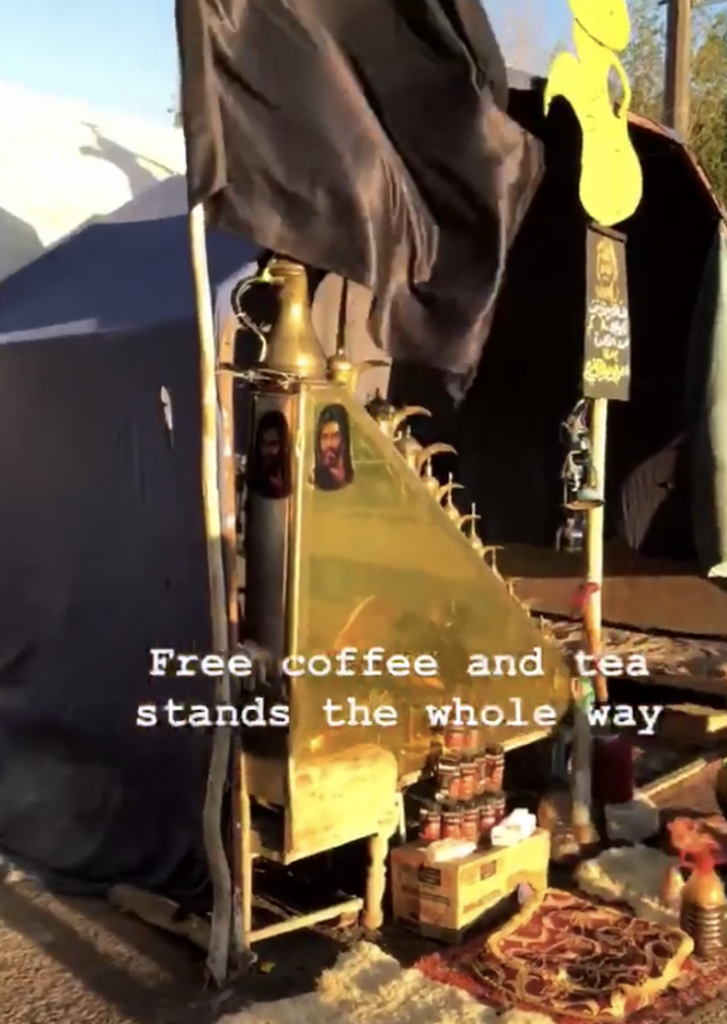
https://hodakatebi.com/how-hm-is-erasing-war-crimes-in-their-latest-marketing-campaign/feed/ 0
From fashion to war: breaking down Orientalism https://hodakatebi.com/from-fashion-to-war-breaking-down-orientalism/ https://hodakatebi.com/from-fashion-to-war-breaking-down-orientalism/#respond Mon, 29 May 2017 14:54:00 +0000 https://hodakatebi.com/?p=1886 29 MAY 2017 FROM FASHION TO WAR: BREAKING DOWN ORIENTALISM Orientalism: the normalized (& highly problematic) framework through which the West observes, writes about, and examines the East — specifically, the Middle East/North Africa/South Asia and Islam. And, a concept that has probably been mentioned on JooJoo Azad more than my love of saffron ice […]

The post From fashion to war: breaking down Orientalism appeared first on Hoda Katebi.

]]>
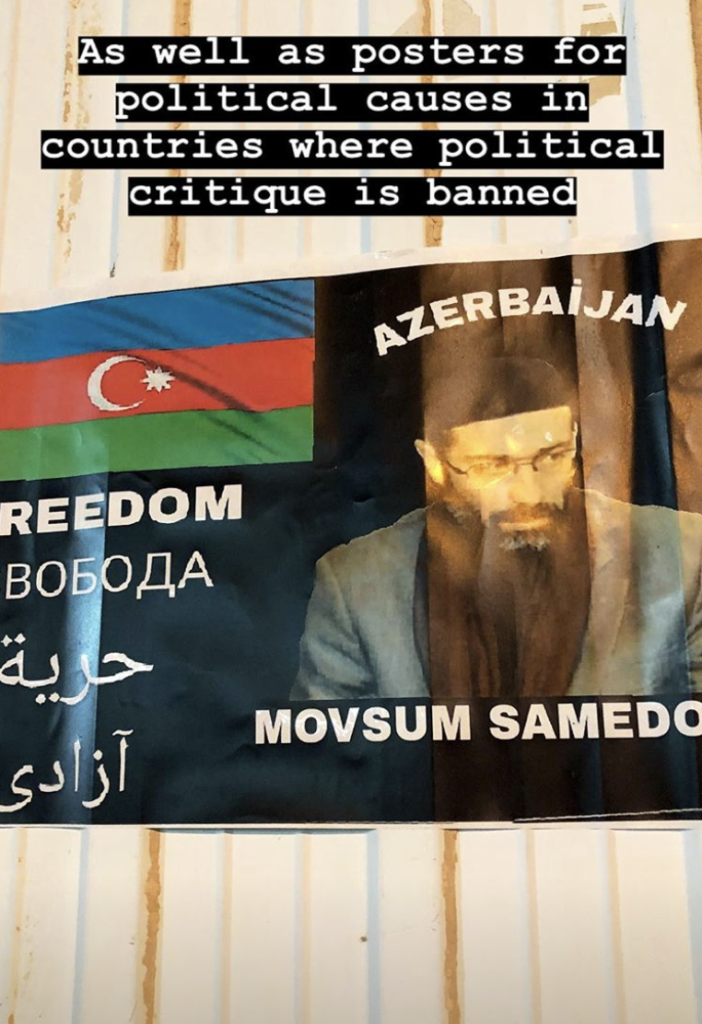

29 MAY 2017

FROM FASHION TO WAR: BREAKING DOWN ORIENTALISM

Orientalism: the normalized (& highly problematic) framework through which the West observes, writes about, and examines the East — specifically, the Middle East/North Africa/South Asia and Islam. And, a concept that has probably been mentioned on JooJoo Azad more than my love of saffron ice cream (that is saying a lot).
‘BANNED’ Scarf: Slow Factory / Photo: Driely Carter / MUA: Grace Ahn / Stylist: Solange Franklin | More from this shoot soon, stay tuned!
References to food aside (especially given it’s day 3 of Ramadan, a time for Muslims of abstention from food, drink (yes, even water), smoking, sex, etc — points of pleasure, essentially, from dawn to dusk for 30 days, so I’m clearly doing a bad job of distracting myself), Orientalism is a concept that is integral for being able to de-code media & academic portrayals of Muslims, the West’s obsession with the Hijab, and the work of both to justify and accelerate anti-Muslim racism domestically (surveillance, refugee bans, etc) and internationally (war, drone strikes, etc). Central to a lot of my writing and work here on JooJoo Azad but never fully broken down or explained — until now!

Why is Orientalism such an important concept to understand on a fashion blog?

Modern-day Orientalism manifests right now in fashion & art more than anything else, everywhere from right-wing and conservative to leftist and liberal spaces. Especially in this particular political moment in which the hijab has become a hyper-politicized symbol and continued point of conversation and heated debate, it is all the more important to know how such markers of visual representation (this thing we call ‘fashion’) can also be weaponized, or rendered violent.
Fashion is inherently political. Take the recent Trump visit to Saudi Arabia as a more recent example, where the obsession with how Melania and Ivanka Trump were dressed only became a topic of conversation when traveling to a Middle Eastern country. A conversation though, that played directly into an Orientalist framework: creating a (false) binary between liberation and oppression; lightness and darkness (as the Washington Post describes it–see below); and the West and the East — just based on the wearing — or not — of a headscarf. (But God forbid we talk about the fact that Trump’s visit to Saudi was not, in fact, a fashion statement but rather to sign a $100 billion arms deal that will only escalate regional violence, specifically US-backed Saudi drone strikes in famine-torn Yemen.) Fashion here now serves as both a form of anti-Muslim violence and strategic political distraction.

“Liberation,” “freedom,” etc are used incredibly loosely, minimizing the act of being free or oppressed simply down to how a woman dresses. Which is incredibly problematic. Freedom is in the choice, not in any particular way of dressing. Hence, always returning to this concept of Orientalism — how this simplification of liberation and freedom are linked simply to fashion choices (as opposed to, for example education or not being drone-striked) — and then how that is used to justify military occupation.

So, fashion as justification for war.

I got to sit down with two good friends who run a rad podcast called The Lit Review to break down this book & concept — along with all of the big words that come with it.
A few of the major concepts discussed in this conversation, as I use them:
+ Orientalism | A lens or framework of looking at the ‘Orient’ or the East, particularly Islam, without the East’s voice present; an imperialism of academia that creates simplistic dichotomies between progress and backwardness, freedom and repression, liberation and oppression.
+ Hegemony | Full and complete power, authority, and domination.
+ Imperialism | Hegemony of one country over another, backed by a military with economic, social, and cultural implications.
+ Linear Time | The concept that one country can be ‘ahead’ of another country; one country is modern and another still needs to ‘catch up,’ or that there is a series of steps that one country must take to become a ‘modern’ country. This is false because as we exist all currently in the modern time — we are all modern people. There is no state that is ‘backwards’ or behind, but they might be better at hiding structural issues better. Time is cyclical; history repeats itself.
+ Gendered | The East is also portrayed in gendered terms; specifically, as a highly sexualized female that needs to be saved, penetrated, and destroyed. Imperialism, is, after all, a product of patriarchy.
+ The ‘Voiceless’ | “There is not such thing as the voiceless, there is only the deliberately silenced or the preferably unheard” -Arundhati Roy. Easterners are described with a lack of agency, in need of saving or unable to consciously make their own decisions.
Side note: nothing bothers me more than the overly-used phrase “I am a voice for the voiceless” — no, you’re just using your privilege to speak over others. Rather, use your platform to uplift and share their voices rather than speaking over and for them.
+ Homogenization | The Middle East/Islam is described as all the same, unchanging, without diversity. But the narratives, displacement, and experiences of a Syrian family is not the same as family from Iran or Iraq or Sudan. There is incredible complexity, diversity, and history within a region and religion that is always flattened and rendered all the same.
Hope this is helpful! As always, feel free to reach out/drop a line with your thoughts.
And for those of you who are fasting, Ramadan Kareem!
We have a few exciting video collaboration projects coming up so stay tuned 😉

Related writing:

The post From fashion to war: breaking down Orientalism appeared first on Hoda Katebi.

]]>
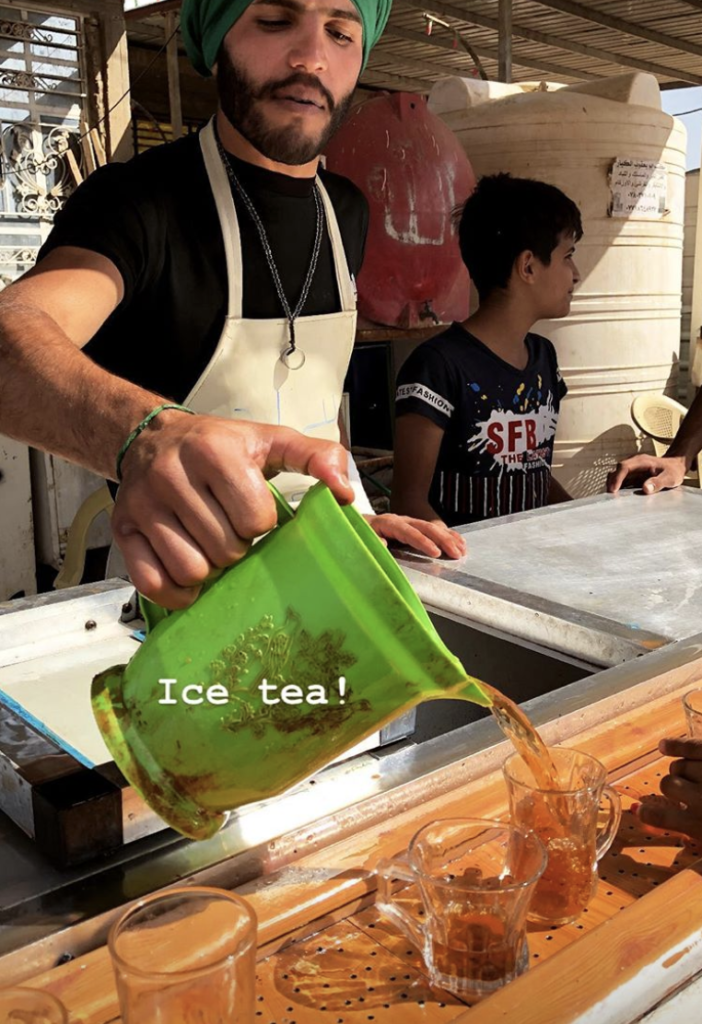
https://hodakatebi.com/from-fashion-to-war-breaking-down-orientalism/feed/ 0
From Drone Strikes to MOAB: The Strategically Silenced | Truthout https://hodakatebi.com/from-drone-strikes-to-moab-the-strategically-silenced-truthout/ https://hodakatebi.com/from-drone-strikes-to-moab-the-strategically-silenced-truthout/#respond Wed, 19 Apr 2017 00:00:00 +0000 https://hodakatebi.com/?p=3043 19 APRIL 2017 From Drone Strikes to MOAB: The Strategically Silenced | Truthout US foreign policy consists of trading bodies for approval ratings, guilt for innocence, absence for life, and strategic silencing, all for fear of a threat both feigned and self-made. On April 13, 2017, the Trump regime dropped the GBU-43 massive ordnance air […]

The post From Drone Strikes to MOAB: The Strategically Silenced | Truthout appeared first on Hoda Katebi.

]]>
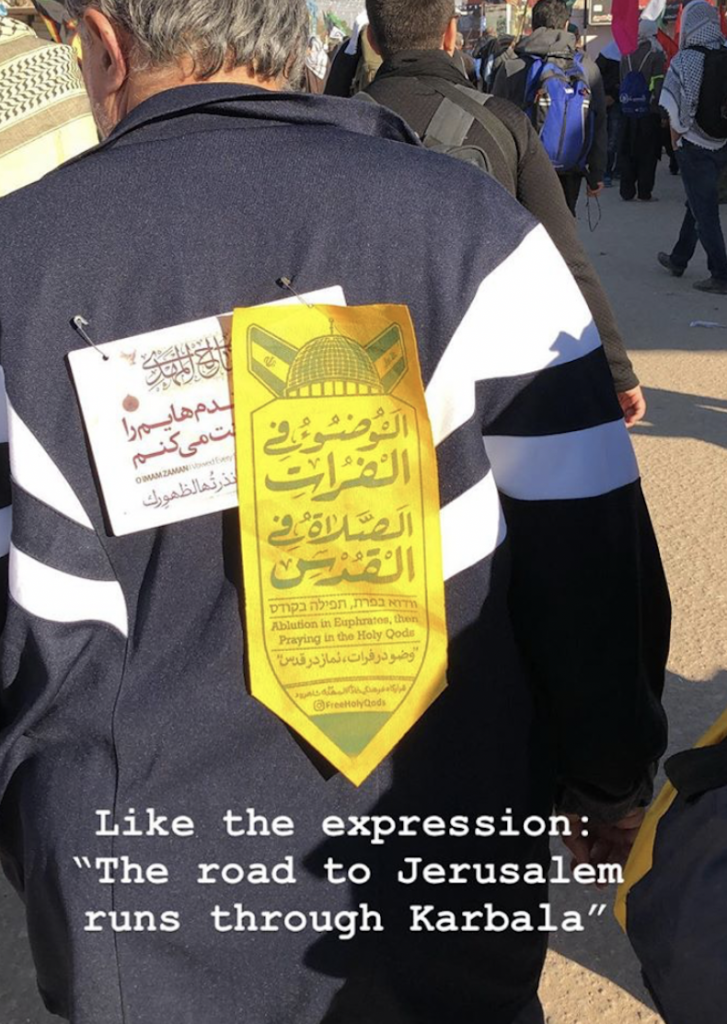
US foreign policy consists of trading bodies for approval ratings, guilt for innocence, absence for life, and strategic silencing, all for fear of a threat both feigned and self-made.

On April 13, 2017, the Trump regime dropped the GBU-43 massive ordnance air blast (MOAB) also known as the “Mother of all Bombs” in the Achin district of Nangarhar in Afghanistan. While the official statement from the Headquarters of the United States Forces in Kabul, Afghanistan, notes that the military “took every precaution to avoid civilian casualties” in what White House Press Secretary Sean Spicer called on Thursday morning a remote, mountainous area, the Achin district is, in fact, home to a population of 150,000 and sits a little over 20 miles from the capital of Nangarhar, a province in Eastern Afghanistan with a population of almost 1.5 million. This population now has to endure, at the very least, the lasting psychological effects of witnessing a massive mushroom cloud rising from their backyards, as well as the ongoing threats to their safety.

Bilal Sarwary, a journalist based in Afghanistan who spoke to locals in the area after the bombing, told BBC Friday morning that “their doors are destroyed or damaged and every single window or glass is broken … [they felt] more like doomsday … like the sky is coming down.” Fresh bombings in Achin continued through this morning, according to local sources. Nangarhar has been noted by many Afghans as one of the more beautiful parts of the country, with perpetual spring-like weather.

The US government and mainstream media’s failure to mention the presence of unmistakably large civilian populations — and the fact that these populations were placed in immediate physical and psychological dangers — is not at all an uncommon practice. Much like the history of physical, rhetorical, ideological and academic erasure of Indigenous people from North America, there is a continual erasure of mass populations in the Middle East and Africa, who are frequently invisibilized and deemed irrelevant by those who wish to craft a narrative that excuses violence and mass destruction.

Afghanistan carries a deep history of being designated as a testing ground for Western and Russian military weaponry (as India, Ghana and other Asian and African countries are for Western medicine). Although its population is significantly larger than that of Berkeley, California, Achin is portrayed as empty and vacant — a place where the dropping of a never-before-used, 30-foot-long, 21,600-pound bomb filled with 18,000 pounds of explosives is portrayed as carrying no risk of civilian casualties.

Beyond recognizing the continual erasure of civilians and populations at the state’s discretion, it is important to ask: According to the US government, who is classified as a “civilian”? Who is not considered a “civilian,” and is instead marked with the ever-shifting and contagious label of “enemy combatant”?

To answer this question, we must turn toward the foreign policy hallmark and legacy of the Obama administration: drone strikes.

Read the full essay on Truthout.com

The post From Drone Strikes to MOAB: The Strategically Silenced | Truthout appeared first on Hoda Katebi.

]]>
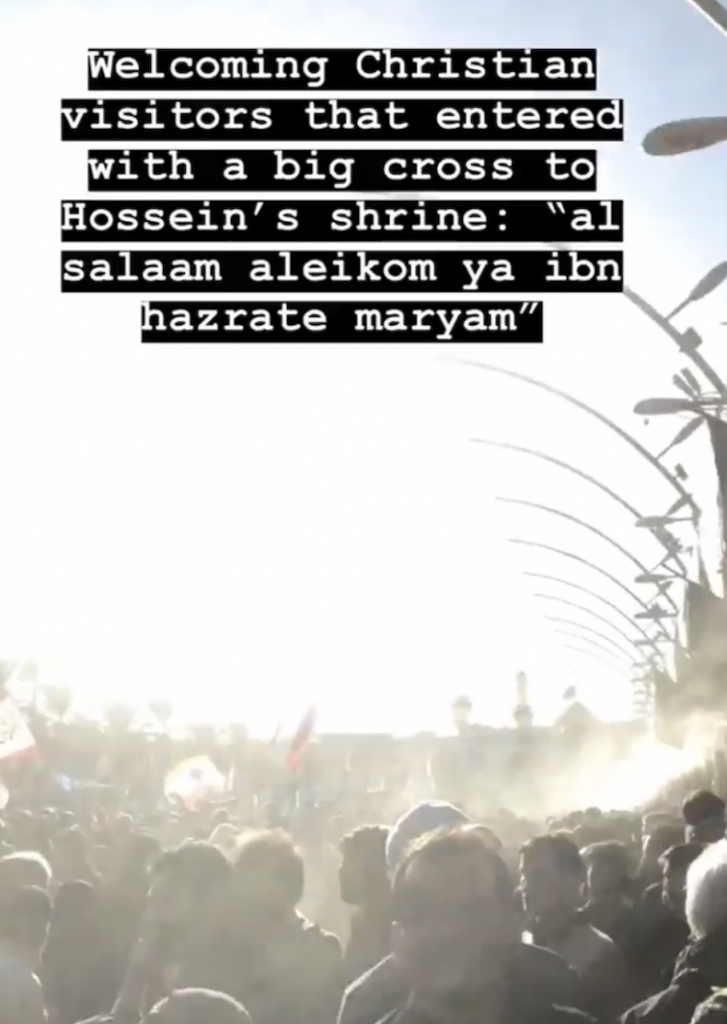
https://hodakatebi.com/from-drone-strikes-to-moab-the-strategically-silenced-truthout/feed/ 0
Learning from the east: on self-care / editorial https://hodakatebi.com/learning-from-the-east-on-self-care-editorial-3/ https://hodakatebi.com/learning-from-the-east-on-self-care-editorial-3/#respond Sun, 02 Apr 2017 16:25:00 +0000 https://hodakatebi.com/?p=1899 02 APRIL 2017 LEARNING FROM THE EAST: ON SELF-CARE / EDITORIAL Oh capitalism, always devaluing women’s work and emotional labor and warping people’s sense of self-worth based on a physical measurable output of profit. If you don’t manage to check everything (or hell, anything) off your to-do list for the day, going to bed can […]

The post Learning from the east: on self-care / editorial appeared first on Hoda Katebi.

]]>
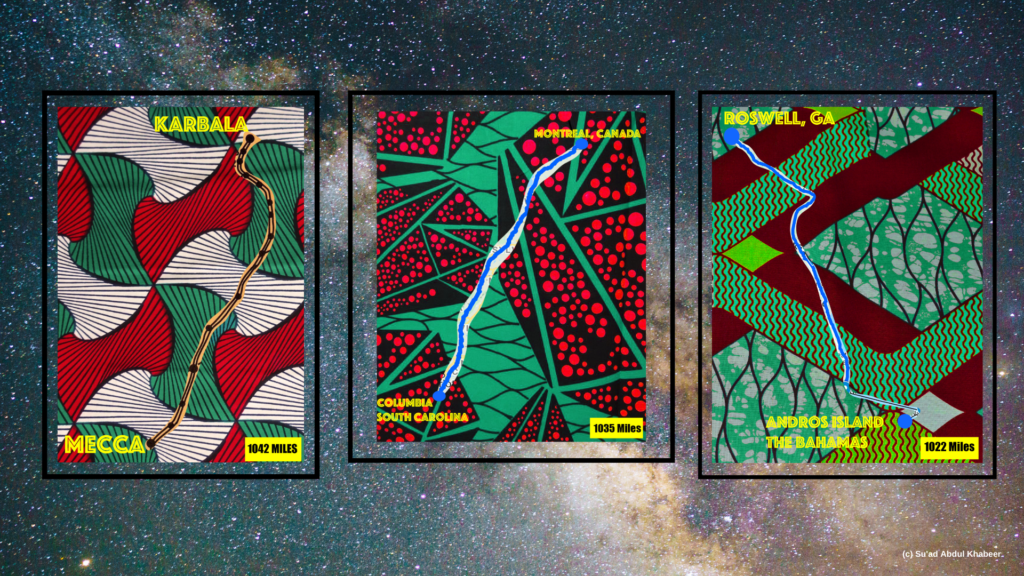

02 APRIL 2017

LEARNING FROM THE EAST: ON SELF-CARE / EDITORIAL

Oh capitalism, always devaluing women’s work and emotional labor and warping people’s sense of self-worth based on a physical measurable output of profit. If you don’t manage to check everything (or hell, anything) off your to-do list for the day, going to bed can feel guilty, and overwhelming to-do lists can even become discouraging to the point that you just want to burn all of your notebooks and lay in bed with netflix and take-out all day. Productivity literally comes from yeilding mass “product” or commodities.
 
Self-care (especially for women and women of color) is a radical act in the West.
Of course, here I don’t want to talk about self-care that has been turned into an excuse to get out of just about everything, ultimately adding more work for everyone else you’re working with (and therefore disrupting their ability to “self-care” as well), but a redefinition of our relationships to productivity and how we can avoid this type of “burn-out” self care altogether, as learned while in Iran.
Think of this as a preventative self-care method to help prevent burn-out, rather than a list of ways to take care of yourself and enjoy cute things after you’ve already over-worked yourself (because let’s be real–my list includes looking at cute baby bird photos and I’ve been told many times, wildly enough, that not everyone finds comfort in doing so).
The concept of individual “self-care” is a learned act, foreign to many AMEMSA (African, Middle Eastern, Muslim, South Asian) people as continual self-sacrifice for a family or community is deeply inherent to collectivist communities of the “East” (as opposed to the Western model of individualism). It doesn’t matter that you are sick and have two exams tomorrow — if your friend is also sick you’re bringing them homemade soup, pronto. But this mindset of serving others before looking after yourself does not play out in isolation: it is part of a larger culture and lifestyle that has a particular definition of productivity, idea of relationships, and outlook of time (why do you think we are always late!!) that sits almost directly contrary to Western, capitalist-infused culture.
Here in Chicago (okay well now technically I’m in a cafe in New Jersey where I just finished getting in an argument with a Trump supporter who was defending the Muslim Ban. I’m on my Tehran Streetstyle book tour so if you’re in NYC peep my upcoming events to see where you can catch me!) we correlate happiness to productivity, and productivity to checking concrete things off our to-do lists–things that are usually chores or related to work or organizing (replying to client emails, meetings, etc). And more often than not, we tend to drop those activities and rituals first that are deeply grounding and healing: praying, playing music, reading, writing poetry…sleeping, as they don’t make it on our list of to-dos: they are “saved” for our non-existent free-time.
But, one of the most important things I’ve learned from my time in Iran and the Middle East & North Africa is redefining my relationship to productivity: being productive more than just in a capitalistic, individual economic sense, but being productive for myself, my relationships, and my community too.

How can I structure care--for myself and for others--into my routine as a way to prevent burn-out from solely work-related tasks and errands?

You’d be surprised at how much further your energy lasts when you haven’t just been sitting in front of a computer all day, distracted by every Trump supporter who walks into the cafe.
If catching up with a friend is taking longer than expected, rather than getting anxious, view it as productive: you’re building a relationship, and that is valuable. Skip that email and take a minute to make home-made food — all activities that will help you get everything else checked off your list, too. Of course, this redefinition of productivity works best when you do so in community with others who think and act like you: when everyone around you views productivity as check-ins with people they love, you immediately feel more supported and motivated.
I still organize things in lists, and crossing things off of it is still positively correlated to my general happiness and sense of productivity, but I’m working on making sure my lists are not just composed of self-deprecating tasks like “finish responding to that email you started responding to last year” or “clean room. and life. but mostly room” but now I’m adding important things that allow me to re-charge and slow my pace, like “read something that will help you learn more about challenging anti-Muslim policies” or “call your mother,” and crossing them off as productive.
Photography: Daniel Che | Location: Southside, Chicago | Crossbody: c/o Coach
P.S. Phew, it has been a minute since I’ve posted a shoot! If you follow me on instagram or snapchat, you already know this, but I almost died shooting this so you better as hell like the result. Never climb things and stand on edges when you have little balance walking on flat surfaces anyway. Also, never wear white shoes to treks in the mud. Ouf.

P.S. In NYC, LA, Oakland, San Francisco, or Chicago?
We’re making stops — come say hay at one of our events across the city!

The post Learning from the east: on self-care / editorial appeared first on Hoda Katebi.

]]>
https://hodakatebi.com/learning-from-the-east-on-self-care-editorial-3/feed/ 0
Muslim Ban 2.0: do not let this become the new normal https://hodakatebi.com/muslim-ban-2-0-do-not-let-this-become-the-new-normal/ https://hodakatebi.com/muslim-ban-2-0-do-not-let-this-become-the-new-normal/#respond Thu, 16 Mar 2017 16:59:00 +0000 https://hodakatebi.com/?p=1927 16 MARCH 2017 MUSLIM BAN 2.0: DO NOT LET THIS BECOME THE NEW NORMAL After delaying its issuance in order to bask in the continued normalization and celebration of his regime by mainstream media, Trump last Monday signed his regime’s latest attempt at introducing a “constitutional” Muslim ban. And today, this order is scheduled to […]

The post Muslim Ban 2.0: do not let this become the new normal appeared first on Hoda Katebi.

]]>


16 MARCH 2017

MUSLIM BAN 2.0: DO NOT LET THIS BECOME THE NEW NORMAL

After delaying its issuance in order to bask in the continued normalization and celebration of his regime by mainstream media, Trump last Monday signed his regime's latest attempt at introducing a "constitutional" Muslim ban. And today, this order is scheduled to go into effect.

Do not let new words disguise old intentions.
Photo: Sarah-Ji of Love & Struggle Photos, during the first Muslim Ban protest at O’Hare International Airport.
Sure, a federal judge in Hawaii has already blocked this ban from being implemented, but the fight for Muslims is far from over. Despite this ruling, it is still important to continue to understand and dissect the ways in which the state works to harm Muslims, and important key words common in anti-Muslim policies as well as contexts in which this revised Muslim ban is situated.
The new order “temporarily” bans nationals from Iran (my motherland), Syria, Yemen, Somalia, Sudan and Libya — all Muslim-majority countries that are suffering through US bombings, drone strikes or ruinous sanctions — from receiving visas to enter the United States. The new order also expands its suspension of refugee resettlement to include a 120 day-suspension for all refugees seeking safety. It also differs from the last executive order in its removal of the exception made for “religious minorities” fleeing persecution (i.e., the exception for Christian refugees, as we always knew a Shia Muslim fleeing persecution in a Sunni-dominated state would not be classified as such). And finally, the new order claims not to apply to those foreign nationals who have already been granted asylum or visas.
Also notably different from the last executive order is that Iraq has been removed from the banned countries — but not because the Trump regime suddenly has realized the United States’ role in destabilizing and destroying the nation. Rather, Trump crossed Iraq off from the list based on an idea that most US politicians share: the notion that the sole value of Muslims is as a group on the “inside” that can fight terrorism and protect Americans. Just as Bill Clinton’s speech at the Democratic National Convention requested that “If you’re a Muslim and you love America and freedom and you hate terror, stay here and help us win and make a future together,” the Trump regime sees Iraq as a strategic ally to help fight “terrorism” — and not much else.

What hasn't changed from the first Muslim ban is the fact that it is, in fact, still a Muslim ban. It is still xenophobic, it is still laced with anti-Muslim racism, it is still dividing families and destroying lives, and it still requires collective resistance.

To quickly dissect this, “temporarily” means absolutely nothing. If we’ve learned anything from a history of anti-Muslim policies in the United States, it is that what will start with a “temporary” ban on people from six countries will only expand — and the language and space to do so has already been clearly articulated in the order itself:
The Secretary of Homeland Security, in consultation with the Secretary of State and the Director of National Intelligence, shall conduct a worldwide review to identify whether, and if so what, additional information will be needed from each foreign country to adjudicate an application by a national of that country for a visa, admission, or other benefit under the INA (adjudications) in order to determine that the individual is not a security or public-safety threat. The Secretary of Homeland Security may conclude that certain information is needed from particular countries even if it is not needed from every country.
Furthermore, it is important to recognize that this has nothing to do with “national security.” If the perceived threat of “radical Islamic violence” from Muslim immigrants is so imminent, so threatening to this country’s safety, why did the Trump regime decide to delay the signing of this executive order to instead bask in the good (read: problematic and normalizing) press that followed his address to the joint session of Congress?
Rather, if national security is actually the problem — if the US government actually cares about ending the killing of American citizens — why does it not start with dismantling its own police forces? These forces comprise an armed, emboldened and deadly organization that receives training from a foreign apartheid state (Israel), and kills almost 1,000 people annually (including already over 200 people this year). United States law enforcement officers are a larger threat to the safety and security of individuals living in this country (particularly Black and Indigenous people) than “radical Islam” — whatever that means — ever will be.

In fact, it is important to recognize that "national security" is only a code word for anti-Muslim policies domestically, as well as the justification for US military violence against Muslim communities internationally, which is often erased from public view.

And finally, know that the enforcement and reach of the Muslim ban — however revised — will be far beyond what is explicitly stated on paper. It’s clear from the experiences shared with us by Muslims stuck at the border that Customs and Border Patrol officers now feel emboldened in their work, as Trump effectively continues to give them a green light. Still to this day, despite the first ban being struck down, Muslims and Muslim-perceived people from beyond the initial seven Muslim-majority countries have been, and continue to be, detained, interrogated, harassed, intimidated and deported.
Yet, given the new ramifications and continued harm of the revised Muslim ban, the most disheartening aspect of last Monday was not the order itself. It was the loud, piercing, haunting silence of the rest of the country: the silence of acceptance, the silence of burnout and the silence of moving on.

If we are this easily pacified, this quickly burnt out, this readily persuaded, then I am certainly anxious about what is to come.

We must be vigilant about not allowing ourselves to accept new norms of violence and harm.
Photo: Sarah-Ji of Love & Struggle Photos
Wherever you see it, challenge the normalization of bans on immigration and refugee resettlement. Do not ignore the rhetoric of the people around you. Do not think that this is OK. Do not think that this can go unchallenged. Here are some things to remember and steps to take as we move forward–beyond just the Muslim ban:
1. This is not the time to play the model minority contest | Technically, it never is time to play that game. But if your homeland has not yet been “officially” banned, do not wait until it is to come out and join the movement. And remember: whether or not this iteration of the Muslim ban names you directly, we are seeing increased detainment, interrogation and harassment of all Muslim and Muslim-perceived people (yes, more than you already faced at the airport) since the first executive order. If you’re Muslim, you’re sort of already on the list. So come out.
2. Skill-share | We need this movement to be long-term. Experienced movement organizers should be training young people with more energy and capacity to learn about what is happening, take up leadership, and organize.
3. Make your work accessible | We already know many of those affected by state-based violence — especially when it comes to immigration — have limited English literacy. Give “know your rights” trainings in different languages, translate your materials (and the text of the Muslim ban itself) into your mother tongue, connect pro bono lawyers and other resources to the community. Mass distribute in mosques, community centers, WhatsApp group messages — identify the spaces your people occupy and take the information to them.
4. Do not make compromises | Do not compromise your values for the sake of having an extra white person join your protest.
5. Find gaps in organizing and seek to fill them, rather than compete | While everyone is running to be the first to file a federal lawsuit, work to identify and meet current and anticipated immediate needs. Does your community need political education? Do immigrants and refugees who did make it through Customs and Border Patrol need support in resettlement? Do lawyers at the airport need translators?
6. As always, be intersectional | Half of the officially banned countries are Black-majority countries. Black, Muslim immigrants and refugees are oftentimes left out from both Black and Muslim spaces, so be intentional about centering those who are on the margins of the margins. Beyond making sure not to exclude your own people, keep in mind that Customs and Border Patrol, US Immigration and Customs Enforcement, the Department of Homeland Security, municipal law enforcement and other violent institutions that target people of color are just different enforcement mechanisms with the same goal: upholding white supremacy. You cannot succeed by ignoring those relationships.
And for our non-Muslim allies:
1. Show up | Support the ongoing efforts of Muslim-led organizing in resisting the ban. If you’re an immigration lawyer, volunteer. If you’re a teacher, connect your Muslim students to resources, and talk to your class about what is happening. If you’re a journalist, document the movement. Share the work of Muslim artists, writers, creators, organizers and scholars. Hold your racist friends and family accountable.
2. Do not claim an identity that is not yours | No, you are not #Muslimtoo — and claiming such only covers the voices of actual Muslims trying to share their real experiences. Rather, listen to the leadership, direction and experiences of Muslims who are speaking out and up. (More on this also in my guide to allyship post-Trump)
3. Be careful not to perpetuate anti-Muslim undertones in your conversations | When talking about the Muslim ban, do not challenge it by saying there have been “no fatal attacks by immigrants from countries listed in the Muslim ban.” While that is true, this not only provides a justification for banning immigration from countries that have had someone commit violence, but also legitimizes collective punishment. Also, we are not all immigrants — that concept erases the histories of Indigenous people native to this land and Black people who were forcibly enslaved and brought here. Moreover, a Muslim refugee from a country the United States destabilized is not the same as an immigrant from the UK who is here getting a PhD. Another thing: Stop draping American flags over our hijabs.
4. Donate | Support the work of your local Muslim-led organizations supporting their people on the ground and in the courtroom.
We are continuously receiving reports of families being ripped apart and lives being completely devastated because of this ban on Muslims.
Do not let this become the new normal.
Originally written for Truthout.org.
Copyright, Truthout.org. Reprinted with permission

The post Muslim Ban 2.0: do not let this become the new normal appeared first on Hoda Katebi.

]]>
https://hodakatebi.com/muslim-ban-2-0-do-not-let-this-become-the-new-normal/feed/ 0
No representation in sweatshops: ethical & muslim-owned alternatives to Nike’s ‘Pro-Hijab’ https://hodakatebi.com/no-representation-in-sweatshops-ethical-muslim-owned-alternatives-to-nikes-pro-hijab/ https://hodakatebi.com/no-representation-in-sweatshops-ethical-muslim-owned-alternatives-to-nikes-pro-hijab/#respond Fri, 10 Mar 2017 17:56:00 +0000 https://hodakatebi.com/?p=1942 10 MARCH 2017 NO REPRESENTATION IN SWEATSHOPS: ETHICAL & MUSLIM-OWNED ALTERNATIVES TO NIKE’S ‘PRO-HIJAB’ About 24 hours after I published my latest piece, “If You Use Our Faces Maybe Stop Killing Our People?” on the problematic new trend of hijab-fast-fashion, Nike released their latest product of sweatshop labor: the Pro Hijab. Clearly, I should start […]

The post No representation in sweatshops: ethical & muslim-owned alternatives to Nike’s ‘Pro-Hijab’ appeared first on Hoda Katebi.

]]>


10 MARCH 2017

NO REPRESENTATION IN SWEATSHOPS: ETHICAL & MUSLIM-OWNED ALTERNATIVES TO NIKE'S 'PRO-HIJAB'

About 24 hours after I published my latest piece, “If You Use Our Faces Maybe Stop Killing Our People?” on the problematic new trend of hijab-fast-fashion, Nike released their latest product of sweatshop labor: the Pro Hijab.
Clearly, I should start emailing out my writing to fast-fashion CEOs to cut the bullsh*t.
In my piece I dissect & call out the new, problematic trend of major Western brands using the hijab to be politically on-trend while continuing to exploit Muslim garment workers behind the scenes (and simultaneously flattening the identity of Muslim women into a single hijab). If you haven’t already read it through (or listened to my conversation on Illinois Public Radio Wednesday morning discussing it–thanks again for having me, Abrar & Niala!) and want to quickly skim to catch up, we’ll be right here when you get back!
Okay, ready to go?
Sure, while I’m happy that large, mainstream brands are working to become more accommodating towards Muslim women and offer a variety of clothing options (of course, when they’re not just trying to tap into a growing billion-dollar hijab-fashion industry), I’ll let you take a guess why I wasn’t running around throwing my money at the new Nike Pro Hijab. While yes, part of the reason is that I am out of shape and haven’t done anything physical for months (unless you count walking to my car or reaching for the ice cream on the top shelf of my freezer), more importantly it is because, decade after decade, Nike continues to use sweatshop labor in the production of its clothing.
(They’re also on our Boycott List, in case you missed it) (Also side note: we just released an open call to join our new volunteer research team to keep the Boycott List updated and full of resources!)
Of course, as we mini-discussed on Twitter, the impact that a major clothing brand with immense reach and influence has on normalizing the image of Muslim women and challenging some of the stigmas associated with hijab, is not lost. Especially so when it comes to sports: while FIFA eventually did overturn its earlier hijab-ban regulation, FIBA continues to ban the hijab in basketball.
(p.s. read more about Bilqis Abdul-Qaadir & Indira Kaljo, two badass hijabi basketball players working to challenge FIBA’s hijab ban)
Indira Kaljo, Muslim athlete & activst fighting FIBA’s Hijab Ban
But yet, things are more complicated than being able to label a politically-charged fashion item simply “good” or “bad.” We should not simplify situations but rather work to unravel the layers of complexity in order to understand sites of possible harm.
If you want to talk about supporting Muslim women, why don’t we start with where they are being harmed the most in this process: behind the closed doors of Nike’s sweatshops. I’m sure the thousands of Muslim women exploited by Nike’s production methods don’t feel represented by or excited about the new Pro Hijab.
Of course, Nike’s profit at the expense of communities of color isn’t specific just to Muslims. Last month Nike was also under fire for trying to pull the same marketing scheme on Black consumers, using prominent Black athletes in a “diversity” video to whitewash their exploitation of Black workers throughout their production process.
But beyond everything I mentioned in my last, more thorough piece on this issue (see, you really need to read it), the release of the Pro Hjiab is harmful in one more way: it erases the fact that Muslims have been making modest sportswear for themselves for years. Nike is not the first one to do it, nor will they be the last. But, they will seriously harm the Muslim-owned sportswear designers who now have to compete with one of the largest brands in the world.
So, I’m going to take this time to share a few ethically-produced, Muslim-owned sportswear brands that know a thing or two about proper representation politics —
i.e., not exploiting Muslim women behind the scenes to profit from our “inclusion.”
1. Veil Garments | Creators of the world’s first climate-adapting hijab who have pledged to always be sweatshop free. All of their clothing is ethically sourced and produced in the United States!
2. Sukoon Active | While they haven’t launched *just* yet, we appreciate their prioritization of sustainability so early in the game! (But you can still take a sneak peek of their upcoming collection!)
https://www.instagram.com/?utm_source=ig_embed&utm_campaign=invalid
3. Asiya Sport | Also a young and growing Muslim sportswear brand that we’re excited about not only because they are dedicated to responsible production methods, but they also actively support women in sports (50% of their profits are donated to athletes in need)!
Oh and before you ask,
We can demand higher standards for our inclusion and representation. (Especially when it’s mostly just profit-driven)

Related Readings:

+ Favorite Online Ethical Brands
+ 6 Brands You’ll Love as Much as Zara

Also Published Today:

+ A Guide to Muslim Ban 2.0 / (published on Truthout)

Upcoming Posts:

+ Iranian New Years/Nowruz Collaboration
+ On “Terrorism” – an Editorial

Upcoming Events:

+ 3/14 | “Leading in the Face of Marginalization: Solidarity and Strategies for Success” panelist, Northeastern Illinois University, 4-7pm
+ 3/16 | “Refugees, Immigrants, & Polities Under Trump” panelist, Loyola University, 6-9pm
+ 4/3 | “Behind the Veil” speaker, Stockton University (NYC), 6-8:30pm
(NYC & California Tehran Streetstyle book tour April 1-22! Get in touch if you’re in the area!)

The post No representation in sweatshops: ethical & muslim-owned alternatives to Nike’s ‘Pro-Hijab’ appeared first on Hoda Katebi.

]]>
https://hodakatebi.com/no-representation-in-sweatshops-ethical-muslim-owned-alternatives-to-nikes-pro-hijab/feed/ 0
If you use our faces maybe stop killing our people? https://hodakatebi.com/if-you-use-our-faces-maybe-stop-killing-our-people/ https://hodakatebi.com/if-you-use-our-faces-maybe-stop-killing-our-people/#respond Sun, 05 Mar 2017 03:23:57 +0000 https://hodakatebi.com/?p=1950 05 MARCH 2017 IF YOU USE OUR FACES MAYBE STOP KILLING OUR PEOPLE? I’m going to be blunt: being Muslim has become the next hot identity — to claim, to wave around above your head, and to profit from. The mainstream seems to desperately cling to, and want to claim, whatever identity-based hashtag is highest on […]

The post If you use our faces maybe stop killing our people? appeared first on Hoda Katebi.

]]>


05 MARCH 2017

IF YOU USE OUR FACES MAYBE STOP KILLING OUR PEOPLE?

I’m going to be blunt: being Muslim has become the next hot identity — to claim, to wave around above your head, and to profit from. The mainstream seems to desperately cling to, and want to claim, whatever identity-based hashtag is highest on the “now trending” Twitter ranking, from non-Black people holding signs claiming “We are ALL Trayvon Martin” to white people suddenly discovering that they are 1/32 Cherokee so Standing Rock is their fight as well, and now, apparently, #IamMuslimtoo.
Before I go on, let me just quickly interrupt here to say no, no you’re not — and putting on a hijab for a day won’t get you any closer. (It will, however, get me to tweet in all-caps):
And if one industry knows its trends — and knows how to capitalize on them, fast — it’s the fashion industry. So you’ve come to the right place. Welcome. *lighting & thunder in the background*
As a Muslim, hijab-wearing fashion blogger who gets pitched by brands all the time, I can tell you first hand how within the last year brand pitches I received have shifted from “we appreciate your work and believe we have similar values and visions and would love to collaborate together” to “now that Muslims are trending in the media pls wear our clothes so we can seem hip and edgy OH yeah and we have zero compensation for you.”
In the past year, as the refugee crisis finally began to receive a fraction of the media coverage it deserves; hate crimes against Muslims continued (and continues) to rise in the USA (more drastically than any other identity-based violence–up by 67% even before Trump’s election); anti-Muslim racism at the individual, local, and federal levels remains unchecked and without its usual liberal facade of tolerance for Muslims; and Muslims (mostly Muslim women of color) worked to take up more and more space and unapologetically call out the increased bullsh*t of our environment, the image of the hijab-wearing woman shifted from a brand not many companies wanted to be tainted with to the next hottest trend.
Dolce & Gabanna’s Daisy Collection from January 2016 with luxury hijabs
(which personally sounds like an oxymoron to me) worn by non-Muslim models
While thick eyebrows are “in” right now, I remember wanting to pluck my thick, unkempt eyebrows right off my face as a kid. The first time someone complimented my eyebrows I thought it was a joke and laughed.
But now, not only are beauty bloggers left and right putting up tutorials to create the “thick eyebrow look,” (giving credit, of course, to white “daring” models who have “sported the look” “first”), the first-ever Black, hijab-wearing Muslim model, Halima Aden, was signed by IMG Models, one the largest talent management agencies globally. This is groundbreaking — and in a good way (yes, angry people can be complimentary now and then too). Aden tells Business of Fashion that “I wanted to spread a positive message about beauty and diversity, and to show other young Muslim women that there is room for them.”
Of course, while usually a signed model has little agency in how she’s portrayed and used by fashion designers — which is a rant post of its own — this is still an important move. Representation is, obviously, deeply vital.
Halima Aden, the first hijab-wearing Muslim model signed by IMG, born in a refugee camp in Kenya.
But now let me go back to being angry.
The fact that Kanye West used Halima Aden to debut another iteration of his ridiculous clothing line (I don’t understand why celebrities feel like they can do anything from fashion to running a country? Although I guess the American public will buy into it either way) is deeply problematic for the same reasons why I am going to flip my computer the next time a fast-fashion brand pitches me to collaborate:

my identity is not your gateway to staying on-trend.

Yeezy’s “Refugee Camp Fashion Show” / Photo source: unknown
How can we applaud Kanye for using Aden in his runway show (or even more disturbing, his “refugee line” last year) when he simultaneously endorsed Trump — the same current regime leader who vowed to (and already temporarily did so) ban refugees fleeing from the violence he and his predecessors have caused?
Sure, Kanye has apparently since withdrawn his endorsement, but not without intense public pressure and outrage, only proving further the point that he, and others like him, simply jump on whatever seems to be “hot” at the moment with little to no understanding of what the hell that means.

There is little value in using visibly Muslim models if you are going to be killing and exploiting --directly or indirectly -- their families back home.

Other examples of this:
+ White House Eid Dinner | The Obamas — and presidents prior to him — invited Muslims to the White House to celebrate the end of a month-long fast during Ramadan. Meanwhile, he administered drone strikes that killed an 8-year-old playing outside as her grandmother, Bibi Mamana, was also preparing festivities for the very same event (and who also was severely injured as well).
You cannot be pro-war (or “war on terror” drone strikes) and support Muslims.
+ Zionist, pro-Israel people and organizations pledging solidarity with Muslims | Sure, solidarity is great, but not from individuals and organizations who simultaneously contribute to–and profit from–the demonization of Muslims: Israel remains an inspiration to many of Trump’s anti-Muslim, anti-immigrant policies (such as “the wall”) and Zionist groups such as the Anti-Defamation League (ADL) continue to be one of the largest funders of anti-Muslim propaganda in the USA and Europe.
You cannot be pro-Israel and support Muslims.
+ Fast-fashion & “the resistance” | If a Forever21 shirt says “womens march!!!” with a few fists and pink hats we jump with excitement as if the billion dollar company that exploits women globally has suddenly became a feminist symbol, gone rouge, and joined the resistance. Let’s just say, fast-fashion is far from “going rogue”– nor can they until they start their “resistance” from their sweatshops abroad.
You cannot buy images of resistance from billion-dollar, exploitative companies.
An image from Diesel’s new SS17 “Make Love Not Walls” Campaign–and yet, they continue to use toxic and harmful chemicals in the production of their clothing. Hard to “make love” when everything around you is contaminated, c/o irresponsible production methods!
And here is the key question to everything we’ve discussed so far: How are the deep contradictions of many fashion houses, designers, and others pretending to support and represent hijab-wearing women (or “the resistance”) in order to stay politically on-trend able to get away with failing to do so when it comes to their own politics or company practices abroad?
The answer: a complete simplification of who we are:

The over-emphasis on the hijab as synonymous to the Muslim identity essentializes and flattens what it means to be Muslim and allows the Muslim identity therefore to be easily appropriated and exploited for social, political, and economic benefit.

Our complex experiences, relationships to faith, personal understandings and values of symbols, varied and diverse histories of colonization and displacement, are all quickly homogenized and flattened and represented by a single symbol: the hijab.

When your entire identity, history, experiences, and culture can be represented by a single piece of cloth, it instantly becomes easier for people to think that wearing a hijab for a day means experiencing the life of a Muslim, or draping a hijab over a model means you support refugees -- without having to change any of your harmful practices behind the scenes that are actually directly harming Muslims.

Not to mention that this simplification and essentialization of the hijab as “the” Muslim identity is harmful to many non-hijab-wearing Muslim women in the West who now feel compelled to wear the hijab only as a prerequisite to being able to claim the “Muslim woman” identity, rather than deciding to wear it (or not wear it) as a deeply personal and spiritual decision.
So not only is this tokenization and shallow over-saturation of “Muslim imagery” in fashion and beyond allowing people and companies to get away with exploitation of Muslim women behind the scenes, it also strips the hijab itself of value, as it is being introduced, represented, defined, and used in different spaces by non-Muslims who do not themselves understand what it is or what it means. To them, it is simply the latest trend.
Sure, the argument could be made that such an over-saturation of fist and protest sign imagery and hijabs could work to normalize Muslims and resistance to the Trump regime and encourage more white people to come out to protest alongside people of color who have been protesting and resisting since the first Indigenous person was massacred and Black slave was forcibly brought over, but what is a “resistance movement” that is fueled and imagined by billion dollar companies that continue to destroy the environment, exploit women, and tear apart families abroad? (or are non-Americans not worth your time and solidarity? See point 6 in this piece).
Dior’s “We Should All be Feminists Shirt” – retailing at $700 (although reportedly the shirt was created “for charity”) / Photo: Mitchell Sams
As I’ve written before on JooJoo Azad, politics is deeply entwined with fashion. Political trends quickly become fast-fashion trends, and while political rhetoric and imagery can be powerfully transposed onto fashion and clothing to create shocking editorials that challenge the status quo, if the use of such imagery is created by someone who doesn’t know the first thing about the experiences and identity of those they are trying to replicate and and the only people benefiting from the use of such imagery are the pockets — and social image — of billionaires, maybe we should rethink buying that “womens march” t-shirt from Dior or clapping for Kanye.
Movement art is essential. But just like Shepard Fairey’s harmful depiction of an American-flag clad hijabi woman, if those movement images are not being produced by — and, ideally, directly benefiting — the people these pieces seek to depict, represent, and support then maybe the image might not be as politically charged, “powerful,” and worth purchasing and investing in as they might seem (unless of course you’re drawing your oppressors for the intention of depicting them as you see them — then by all means, please go ahead). Please note that these images might have just been created for nothing more than a vehicle for personal economic and social profit at the expense of whatever identity is highest on the trending hashtag list that week.

The violence I face as a hijab-wearing, Iranian-American daughter of immigrants in a country that has imposed devastatingly harsh sanctions against my family abroad and produces enough anti-Muslim propaganda to get me called a terrorist and flipped off as I'm reading my book on the subway, is not an experience that you can simplify into a hijab and wear for a day or drape over a model to hide your problematic politics, anti-Muslim company practices, or the fact that these systems of oppression I face are created to directly benefit you.

Sometimes it’s important to look at the tags before deciding to invest in the message.
P.S. Sorry for the radio silence these past weeks. I blame the Muslim Ban for keeping me busy. P.P.S My book tour dates have been vaguely announced! If you live in NYC, SF, LA, or Oakland, get in touch!

Related Readings:

+ No Representation in Sweatshops: Ethical & Muslim-Owned Alternatives to the Nike Pro-Hijab

Upcoming Posts:

+ Iranian New Years/Nowruz Collaboration
+ On “Terrorism” – an Editorial

The post If you use our faces maybe stop killing our people? appeared first on Hoda Katebi.

]]>
https://hodakatebi.com/if-you-use-our-faces-maybe-stop-killing-our-people/feed/ 0
Please keep your American flags off my hijab https://hodakatebi.com/please-keep-your-american-flags-off-my-hijab/ https://hodakatebi.com/please-keep-your-american-flags-off-my-hijab/#respond Mon, 23 Jan 2017 04:52:00 +0000 https://hodakatebi.com/?p=1992 23 JANUARY 2017 PLEASE KEEP YOUR AMERICAN FLAGS OFF MY HIJAB Preface: To be honest with you, I was having trouble putting this piece into words just because I haven’t been able to sit with my thoughts since the inauguration. Everything seems to have hit me at once and I’m still working through processing the […]

The post Please keep your American flags off my hijab appeared first on Hoda Katebi.

]]>


23 JANUARY 2017

PLEASE KEEP YOUR AMERICAN FLAGS OFF MY HIJAB

Preface: To be honest with you, I was having trouble putting this piece into words just because I haven’t been able to sit with my thoughts since the inauguration. Everything seems to have hit me at once and I’m still working through processing the madness. So please bear with me through this mess of jumbled thoughts.
From all the photos these past few days filling our social media feeds of white people with red hats and white women with pink beanies with ears (p.s. don’t forget more white women voted for Trump than any other racial group), people holding signs of cheetos, and enough pro-Hillary slogans to make this Muslim woman of color uncomfortable, there was one particularly striking image that was consistently shared and re-shared and praised by the “left.”
The American-flag-clad Hijabi woman illustrated in the trademark style of of Obama’s “hope” poster is not short of striking. But maybe not for the right reasons.
As this is a fashion blog of sorts, let’s dissect this #ootd.
Photo: “We the People” series by Shepard Fairey
Never forget that fashion is inherently and deeply political, that symbols are infinitely meaningful, and that harm can occur through both.
How are we able to hold up signs of Muslim women wearing the American flag and chant slogans of supposed solidarity while drones carrying the same flag killed our Muslim family in Yemen at the exact same moment and we said nothing?
While the women’s march was making history, the new administration was already repeating it. Did you even know that Trump has already administered drone strikes? Of course not. You were not supposed to know.
You are only supposed to hold our silent faces wrapped in the cloth that has suffocated our voices. Anyway, it’s more peaceful that way, isn’t it?
Next time you are thinking about sharing this image, wheat-pasting it on an old wall, saving it as your desktop background, or waving it above your head and pledging your solidarity:
1. Know that a hijab-wearing Muslim woman did not make this image. Actually, a woman didn’t make this image at all. It was created by a white man: Shepard Fairey, artist & founder of the clothing brand OBEY, created this image from a photograph taken by Muslim-American photographer Ridwan Adhami. Were we unable to uplift the work of Muslim women instead? Are our images only able to be consumed when they are white-washed and sanitized?
Update/edit (1/24/17): I also learned that the woman originally photographed by Ridwan 10 years ago actually does not wear the hijab herself and rather just donned it for the purpose of creating this image, which is even more problematic.
2. Know that the hijab–for *me* at least–represents a rejection of materialism, of capitalism, of euro-centric beauty standards (among other significance) and draping an American flag over it erases almost everything the hijab means to me.
3. Know the American flag represents oppression, torture, sexual violence, slavery, patriarchy, and military & cultural hegemony for people of color around the world whose homes and families have been destroyed and drone-striked by the very person/former president whose campaign images this one seeks to replicate.
4. Know that the 50 stars represent 50 states where indigenous people were forcibly removed and systematically cleansed and assimilated — and that you cannot hold this flag in one hand and tweet #NoDAPL with the other.
5. Know that patriotism is not a form of liberation, but is inherently oppressive. Especially given the violent history of the birth of this country–and all others like it–on the backs of Black slaves (many of whom were Muslim) and indigenous genocide. Trump’s presidency is the logical outcome of the racist systems and institutions of white supremacy that this country was built on and this flag represents.
6. Know that Muslims are tired of having to “prove” they are American. But also, know that one does not need to be American to deserve respect, humanity, dignity, equality, rights, and freedom from hate and bigotry. An over-emphasis on being American as a prerequisite of deserving respect is harmful for immigrants and refugees. Especially under the new administration that already has plans of “extreme vetting” to prove American-ness. This is only pushing their agenda further. Also, see number 5.
7. Know that if the only time you are comfortable uplifting Muslim woman is when her image has been crafted by a white man and is draped in the American flag, I cannot call you my ally.
I understand the good intentions, but my liberation will not come from framing my body with a flag that has flown every time my people have fallen. And I hope yours will not either.
quick note I: please know that Muslim women also have different relationships to symbols (be it a hijab or flag) and that I do not want to shame any Muslim woman for draping an American flag over her head or take that choice away for her to do so. Your bodies are your own, although your choices may still have an effect on a larger community. (See point 6).
quick note II: while I did not walk in the women’s march, I do think it was very important, despite having massive valid critiques. I encourage everyone who marched to do so again for Black lives and for Indigenous resistance and for immigrant justice and for trans rights and for international solidarity. Please continue to stay engaged. Please continue to learn and grow, as we all have so much room to do so. Please do not let it be your last act of resistance. Please feel comfortable reaching out.

Related reading:

+ Tips for Joining the Movement
+ Allyship Post-Trump: 5 Things to Remember
+ On Police, Militarization, & Islamophobia

Upcoming posts:

+ Tehran Streetstyle book turns 1! / giveaway
+ The Muslim Registry: what we know & where to go for Muslims & allys
(1/25): This piece has been re-published on Mondoweiss

The post Please keep your American flags off my hijab appeared first on Hoda Katebi.

]]>
https://hodakatebi.com/please-keep-your-american-flags-off-my-hijab/feed/ 0
On the political value of fashion https://hodakatebi.com/on-the-political-value-of-fashion-3/ https://hodakatebi.com/on-the-political-value-of-fashion-3/#respond Mon, 26 Dec 2016 05:30:00 +0000 https://hodakatebi.com/?p=2010 26 DECEMBER 2016 ON THE POLITICAL VALUE OF FASHION Photographed by Kevin Serna for Brownbook Magazine, issue 59, 2016 It’s a question that seems to come up in every interview or talk I give: what made you decide to combine fashion and politics on your blog? What about fashion is political? Or at not-so-friendly panels, […]

The post On the political value of fashion appeared first on Hoda Katebi.

]]>


26 DECEMBER 2016

ON THE POLITICAL VALUE OF FASHION

Photographed by Kevin Serna for Brownbook Magazine, issue 59, 2016
It’s a question that seems to come up in every interview or talk I give: what made you decide to combine fashion and politics on your blog? What about fashion is political?
Or at not-so-friendly panels, I’m asked: how someone who wears the hijab can be “into” fashion, given the reasons why I dress modestly and cover my hair. If fashion is about vanity, they ask me, then how can you pretend you wear the hijab for modesty as a fashion blogger?
But, the question should not be “how” or “why” fashion can be political, it should be: why isn’t it seen as such? Why is an interest in clothing seen as vacuous and shallow and those working within the industry as either vain or lacking intelligence & depth? And why is fashion–a form of art and communication–stripped of its political value when other forms of art largely do not come under the same scrutiny?
To begin a conversation on the political value of fashion, let’s first have a quick chat about where and how fashion is devalued in society.

ON FEMINISM

Good fashion is feminist.
Fashion has been—and continues to be—an industry dominated by women, both in terms of production (designing and physically constructing/sewing) and consumption. And, we live in a patriarchal society that deems women’s work as worthless (think: emotional labor, child care, education, etc). Women are devalued in society and therefore so is their work – and in the USA and many other “progressive” and “advanced” countries that like to dictate “feminism” globally, this can be seen monetarily through the wage gap; physically through state-inflicted gender (and racial) violence; and psychologically with widespread women’s health/image issues; to name just a few (domestic) examples (I’ll save the anti-feminism “feminism” of imperialist apologists for this other piece.)
And the fashion industry is no exception to the patriarchy’s reach. Although many of the “top” fashion design houses such as Dolce & Gabbana, Gucci, and others are led by men (who get to dictate womenswear), still, most of their clothing are being produced, sewed, and assembled by women – women, who are working in sweatshop or sweatshop-like conditions. Women, who–may I add–are still stuck doing the dirty work behind the scenes—en masse. So of course, in a patriarchal world, an industry dominated by women is seen as irrelevant, shallow, or silly – much less worthy of receiving a recognition of value.
You know you live in the patriarchy when writing about fashion disqualifies you from writing about politics but writing about sports doesn’t
— Elizabeth Plank (@feministabulous) December 24, 2016
So, yes, this is unfortunately too real. (Except here at JooJoo Azad where we do both—very well).
But you know what else? Fashion itself is deeply political.
Photographed by Kevin Serna for Brownbook Magazine, issue 59, 2016

ON POLITICS

I always argue that all public art is political. Artists are either using art to challenge harmful norms, question the status quo, imagine alternatives, document & store narratives of the oppressed, heal and rebuild…or they’re not. It is silent. It is complacent. It is representative of the privilege of being able to remain silent, to lack commentary on social issues.
And as an art (although perverted with the mass commodification of fashion under capitalism), fashion is not exempt from its political significance – in fact, I find value in fashion and clothing as one of the more politically dense forms of art. Beyond the immediate, visual expression of politics that can be expressed on clothing—be it through the usage of particular symbols or colors, much like a painter’s canvas—there are multiple additional layers of the politicization of clothing: its production, consumption, and presentation and framing of our bodies in public space, are just a few examples.
Multiple layers, I should mention, that are oftentimes ignored when deciding what piece to purchase on the consumer’s side or how a designer chooses to shape and mold the fabric pre-production, but nonetheless still politically potent decisions that aren’t discussed often.
So let’s do that now.
Here are 6 ways fashion is intrinsically political: (just for the record, I was a list person before Buzzfeed made it cool)
1. PRODUCTION | What does it mean for my skin, my body, and my essence to be intimately touching the product of harm, exploitation, and violence? What does this mean for me on a physical level? On a spiritual level? Granted, most of our consumer goods are the product of oppression and violence (s/o to capitalism), but what other product is touching our skin, constantly?

The intimacy of clothing to our bodies is unparalleled. And yet, we don’t think twice about where—or who—our clothes come from.

Who is profiting, and at whose expense? For me, the decision on where I source my clothing from is not only a political decision, it’s a spiritual one.
What makes this incredibly tricky, though, is the accessibility of ethical fashion – there is a reason why most ethical fashion bloggers are upper-class white women. (i.e. why I don’t identify as an “ethical fashion blogger” but an “anti-capitalist fashionblogger”). Not only is ethical fashion usually expensive, it’s also hard to come by. When there is a Forever21 or Zara in every mall/shopping district, why ditch whatever is on-trend, cheap, and madly accessible for taking the effort to do research, buy less, and spend a minute to evaluate the implications of what it means for a shirt to cost $2?
While we try to help out here and there on JooJoo Azad with the research part & finding the latest ethically-produced brands, “ethical capitalism” is only a temporary fix to larger political & economic systems and structures to which the current status of the fashion industry is very deeply wedded.
(We recommend a lifestyle choice to minimalism as an alternative – more on that later).
2. CONSUMPTION | Not specific to fashion, but where our clothes are produced – and where we decide to ultimately give our money – are very much political decisions, even if advertising and a culture of mass consumption lets us conveniently forget this. Deciding to solelysupport Black-owned businesses (especially in relation to the current #BlackLivesMatter movement) is a political decision (one that, may I add, we fully support!). Boycotting brands that are supporting the Israeli military & apartheid regime when Palestinian civil society has called for international solidarity, is a political decision. Supporting small & local businesses or radical Black & Brown artists (like my super cute artist collective) is a political decision.

Consumer power is (one form of) political power that we can’t forget many of us have.

3. APPROPRIATION | Are you aware of the cultural histories of each of the pieces of your #ootd? Did you know that the harem pants in your closet came from the people your country has imposed violent sanctions against and calls backwards? That your blue jeans and casual clothes became the new “cool” and widely worn today largely in part because of the Black Liberation Movement of the late 60s/70s when activists collectively said “f*** your respectability politics” and wanted a gender non-conforming, class-less “look” for when they were marching on the streets in mass? The same people who are calling Black protesters “thugs” and “criminals” today have benefited from what Black protesters have given them in the fashion department (of course, among countless other educational, economic, cultural, and political advances).
#BlackLivesMatter march, Chicago | July 2016
Whether we know it or not, (and let’s be real with ourselves—it’s most likely the latter) the cuts, fabrics, patterns, forms, and symbolism of our clothes carry their own histories and political significances that are almost always lost in the process of mass production and consumption of clothing.
Especially because cultural appropriation is suchanormal. part of the fashion industry, it is all the more important to understand the legacies that we’re inheriting and how different types of culture are consumed as replications of larger power dynamics. We see Kuffiyehs—a symbol of Palestinian resistance—stolen by an Israeli designer and commodified as a form of cultural genocide and erasure. We see everyone and their white mothers wearing dreadlocks and looking “so #hip!!!” while Black people have to fight to be able to keep their dreadlocks in the workplace.
Of course, appropriation is a very direct product of capitalism – the need to privately profit from a shared culture. And who wears what—and what histories are ignored, erased, and consumed in the process—is deeply political.
P.S. Need a quick refresher on appropriation 101? We got you covered. / Looking for something more advanced? Peep this dope piece on a Radical Critique of Cultural Appropriation.
4. GENDER PRESENTATION | Many of you have heard the news: I pulled a Snowden and leaked that I’m working on a clothing line for 2017 (p.s. sign up for my monthly newsletter to stay updated with its progress!). One of my ethical values for this collection is to maintain gender neutrality and ambiguity in my pieces. For me, this is an ethical and political choice. As a cis person (someone who identifies with the physical anatomy they were born into), I’ve had the privilege of never really struggling to find comfortable clothes for my body or clothes. It’s relatively easy for me to wear clothes that wouldn’t draw strange/hateful stares because of the way I choose to present my body as appearing contrary to how my gender might be assumed in public spaces (hijab aside).

Fashion and clothing literally frame & shape our bodies for public presentation.

Beyond the more obvious fact that what is designated as “menswear” and “womenswear” is largely reflective of a society’s relationship to gender roles and sexuality (just peek at Halloween costumes for a quick and easy idea of how gender roles are assumed in the USA, for example), clothing is very much a part of gender presentation.
Why are fashion editorials with commentary on gender and sexuality so scandalous? What sort of commentary (or what sort of alternatives to oppressive systems) do gender non-conforming clothes provide? And why do you think it provokes such political outrage? Fashion is being used as a powerful tool for challenging gender norms. And it’s beautiful.
Too Cute to be Binary tee available on Etsy
5. SOCIAL CONFORMITY | Speaking of rad, genderless clothing, let’s stop talking about the United States (finally) and hop (confession: I don’t know how to swim) across the ocean to my motherland. Part of my academic research is focused on public, mandatory dress codes in Iran and their relationship to gender and class. While I call out mandatory, government-sanctioned dress codes (whether that is mandatory veiling in Iran or unveiling in France), the history of Iran’s dress codes is worth having a conversation about – especially in the context of understanding broader political/social potential of clothing.
This deserves (and will be getting) its own post in the near future, so let’s make this brief(ish): as I write in my book, the mandatory dress codes in Iran were originally institutionalized in order to assert national identity and fight cultural Westernization (a legacy of American Imperialism from the prior regime) while simultaneously erasing markers of class and gender from public space. While today these dress codes have “transformed into a sort of enforced conformity at home,” the newly-formed Iranian government, noting the political possibilities of clothing and dress codes, aimed to inspire egalitarianism through an enforced public dress code. As fashion has historically been in the business of marking socio-economic class, enforcing a state-sanctioned dress code is one way to erase this from clothing.
And using a public dress code to erase gender and class from public space wasn’t just limited to the initial intentions of early, post-revolutionary Iranian policymakers — as mentioned under point 3, many social justice movements in the United States and beyond used fashion conformity to unify and resist.
6. SYMBOLISM | Whether we like it or not, wearing a piece of cloth around our heads has indisputably become an incredibly potent political symbol. While of course the hijab is much more than simply a piece of clothing, the decision to wear a scarf around your head rather than, say, around your neck, leads to a completely different experience (to say the least). As far as I know, we’ve never seen anyone shot & killed execution style for wearing a a scarf around their neck.
The hijab has even been used by American policymakers as an excuse for military intervention in Afghanistan (while white feminists silently looked on).
But more than just the hijab, clothing is wrought with symbolism — the kuffiyeh, the Dashiki, an afro, or a red hat that says “Make America Great Again” can say volumes about your political values (or lack thereof).
I wear my heart politics on my sleeves–literally. When my existence as a hijab-wearing woman has already become a politically-charged symbol, why not continue to use my body to promote images of resistance?
And with hate-crimes against Muslims skyrocketing, (with no decline in sight) let me tell you: your external appearance is powerful. Use it wisely.

MOVING FORWARD

So where do we go from here?
We need a collective, long-term, and transformative shift in our relationship with the production and consumption of clothing and fashion. We need to be aware of where our clothing is coming from and at whose expense. We need to be conscious of our consumer power and what we are saying about our political, moral, and ethical values based on who we are monetarily supporting (or refusing to). We need to understand the historical significances of our clothing, and the many public, social, and political layers to how we present and frame our bodies in public spaces.
More concretely, we need to start the transition to a minimal wardrobe – i.e. something that I like to go on and on about on JooJoo Azad—and being selective and conscious about what and how much we are purchasing. Fashion is an art form, and should be consumed as such: slowly, mindfully, and wholly.
And now that you’ve read (more like skimmed) this piece, you have a general understanding of the varying political significances that fashion has: that who you purchase from and what you wear are very much political decisions. And here’s the fun part (i.e. why I wrote all of this), which I think you’ve probably figured out by now:
you cannot choose to be apolitical about your fashion choices.
As I wrote earlier—all art is political. Refusing to engage with the politics of fashion does not allow you to be any less political—it just makes you silent. At a time we cannot afford to be.
Engage with your clothing. Be intentional and meaningful with what you choose to convey—and how you choose to do it.
P.S. Thank you again to everyone who applied to the JooJoo Azad internship! We had a record number of talented applicants this year and have plans of expanding our team & mentorship program beyond a single intern. 2017, get ready for us.

Upcoming posts:

+ A Non-Depressing 2016 Year in Review
+ Minimalism Resolutions for the New Year
+ On Trump’s Muslim Registry – What We Know & Moving Forward

The post On the political value of fashion appeared first on Hoda Katebi.

]]>
https://hodakatebi.com/on-the-political-value-of-fashion-3/feed/ 0
6 new online (ethical) brands you’ll love https://hodakatebi.com/6-new-online-ethical-brands-youll-love/ https://hodakatebi.com/6-new-online-ethical-brands-youll-love/#respond Sat, 17 Dec 2016 08:36:00 +0000 https://hodakatebi.com/?p=2061 17 DECEMBER 2016 6 NEW ONLINE (ETHICAL) BRANDS YOU’LL LOVE Featuring favorite ethically-made Indigenous, South African, Muslim, and Chicago-based designers and brands. For the minimalist and/or pattern-crazed. This post has been in-demand for quite some time, so please excuse the belated publish — ever since our 6 (Ethical) Brands You’ll Love as Much as Zara […]

The post 6 new online (ethical) brands you’ll love appeared first on Hoda Katebi.

]]>


17 DECEMBER 2016

6 NEW ONLINE (ETHICAL) BRANDS YOU'LL LOVE

Featuring favorite ethically-made Indigenous, South African, Muslim, and Chicago-based designers and brands. For the minimalist and/or pattern-crazed.
This post has been in-demand for quite some time, so please excuse the belated publish — ever since our 6 (Ethical) Brands You’ll Love as Much as Zara piece went viral (thanks for that), a good percentage of our inbox has now been filled with desperate asks and pleas (blame the Persian in me for the dramatics) for more ethical brands to support.
Of course it makes sense that cute-as-hell ethical brands are not always the easiest thing in the world to find–a brand that is spending money on its garment workers and still has competitive prices probably doesn’t have too much money leftover for advertising or social media marketing. So let us social media and Instagram fiends do the heavy lifting and research for you. I mean, it’s one of the main reasons why JooJoo Azad exists, after all.
But, let it not erase another reason why we’re here: first and foremost, as an anti-capitalist fashion blog, we’re here to say minimalism still trumps (I don’t think I’ll ever be able to use that verb now without rolling my eyes…) consumption. (more on what we’re talking about when we say minimalism here, since it has been a sweet minute since we’ve written on this topic) But I get it — we still need to have clothes on our backs, at the end of the day (and show our appreciation of people through the capitalistic tendency of gift-giving), so similarly we at JooJoo Azad are still, at the end of the day, responsible for providing ethical alternatives to the destructive forces of the fashion industry we are at war with.
So let’s start this post, already.
Today we’re sharing 6 of our current favorite ethical brands we’ve been oogling (new to the blog, not necessarily new to the internet)– for the (aesthetically) maximalist & minimalist — because God knows I can’t be a moderate. (***when it comes to fashion — not asking for extra FBI surveillance right now)
(starting top left and going counter clock-wise)
+ Subhi Taha | Taha’s collection just recently dropped — and never has there been anything more clean or modest. Think crisp, monochrome, light, and structured. Bonus points are (unbiasedly of course) given here because Taha is a young Muslim designer (and this is his first collection!) and that all his clothes are non-gendered. So that’s something to celebrate — and value — Taha’s prices are both wholly transparent & reasonable.
Featured: piece 1.01
https://www.instagram.com/?utm_source=ig_embed&utm_campaign=invalid
+ Matter Prints | a repeat from our last ethical brand compilation, but that’s just because they are that good — and came out with a new collection! (Which is a big deal when we’re talking about slow-fashion, i.e fashion that is thoughtfully & mindfully made). We published a little shoot together with their ethical jumpsuit collection in the fall, and thanks to the magic of layering still get to wear their super-soft, ethically-made prints deep into the winter too!
Featured: The All Day Jumpsuit + Kirana
+ Veja | a non-sneaker wearer featuring a sneaker brand should tell you something. Well, it tells you two things actually: that maybe I’ve finally decided to stop wearing heeled boots in ice storms because I keep falling (friends on snapchat got to hear about that already), and that Veja is everything that a pair of shoes could ever need to make me wear sneakers: aesthetics, ethics, & comfort. I recently snagged a pair (by way of friends New Classics Studios) and yes, they feel as good as they look.
Featured: Taua Leather Black/White
+ Maxhosa | straight outta’ South Africa, Maxhosa is everything that is cool, vibrant, and full of energy. Just looking at their clothes gives me life (because that is what fashion is for after all, right?). While shipping costs to the USA might not be the most life-giving number, at the very least, you’re going to have to follow their instagram because that is one hell of a mood board.
Featured: Heritage = Inheritance Choker
+ ByYellowTail | remember our piece on ways to support the #NoDAPL Water Protectors? We’re going to add this one (a recommendation from Leah) to this list of Indigenous brands that are beautiful & political & ethical & completely swoon-worthy. This dress looks like it was made from my dreams.
Featured: Crow Rose Suede Slip Dress
+ CHC | fanny packs are still cool, I promise. Especially when they are as cute as this. And made from leather. That is ethically produced. (oh and cut & assembled here in Chicago)!
Featured: Glare Fanny Pack
P.S. Only a few more days left to apply for the paid winter ’17 JooJoo Azad internship!

Upcoming posts:

+ Irani editorial
+ End-of-Year giveaway
+ Farewell to 2016

The post 6 new online (ethical) brands you’ll love appeared first on Hoda Katebi.

]]>
https://hodakatebi.com/6-new-online-ethical-brands-youll-love/feed/ 0
Allyship post-Trump: 5 things to remember https://hodakatebi.com/allyship-post-trump-5-things-to-remember-4/ https://hodakatebi.com/allyship-post-trump-5-things-to-remember-4/#respond Mon, 21 Nov 2016 10:21:32 +0000 https://hodakatebi.com/?p=2079 21 NOVEMBER 2016 ALLYSHIP POST-TRUMP: 5 THINGS TO REMEMBER First and foremost, I’m sending love and support to you all. I’ve been receiving an overwhelming amount of messages since the results of the 2016 USA presidential elections — some hateful (so nothing new there), many notes of love, and even more messages of guilt. (Mostly […]

The post Allyship post-Trump: 5 things to remember appeared first on Hoda Katebi.

]]>


21 NOVEMBER 2016

ALLYSHIP POST-TRUMP: 5 THINGS TO REMEMBER

First and foremost, I’m sending love and support to you all. I’ve been receiving an overwhelming amount of messages since the results of the 2016 USA presidential elections — some hateful (so nothing new there), many notes of love, and even more messages of guilt.
(Mostly from white people).
The latter of which inspired this post.
(As did safety pins and particular hashtags).
As you can imagine, I needed a bit of time before being able to return to my emails, Americans, and social media at large. (But the length of this post will make up for all of that, I think). Thanks for the understanding of the mini-break! We’re back, energized, and ready to take shit down. JooJoo Azad is going to be more important than ever for us post-Trump–as I wrote in my love notes from the margins on Truthout, more than ever we must document our work, tell our own stories and constantly re-imagine the world we want to live in. Because we cannot rely on our oppressors to tell our stories. Just as we cannot rely on our oppressors to free us.
I ask my fellow fashion bloggers to write more politically, and my fellow political writers to write more accessibly.
And during this post-election countdown to the Trump presidency, people are quickly scrambling to find ways to support each other. Allyship has been the trending word of the past two weeks and never before have I seen it done so wrong. Building coalition, intersectional work, and working together is absolutely required to be able to collectively challenge systems and structures of white supremacy, protect our people, and support our friends–but we have to make sure we’re not perpetuating microagressions against those we are trying to support at the same time.
Below are 5 things to keep in mind to help prevent this.
Note: while the list below is largely created with white allies in mind, other people of color can also fall into these issues when trying to support other groups they have little experience working with.
Me, wearing the hijab and walking alone, safer than ever. Photographed by Kevin Serna for Brownbook Magazine, issue 59, 2016

5 things for allies to keep in mind:

1. Ask yourself: who asked me? | Did a person of color ask you to pin a safety pin to your shirt to make them feel more comfortable sitting next to you on the train? Or is this just a visible way that white people have decided to make themselves feel better about themselves and their guilt? While the sentiment is of course appreciated, trust is built through action, not symbols. Rather, mistrust is built through years of institutional oppression that benefits people who look like you at the expense of people who look like me–and who are a lot darker than me. If someone was to get into a confrontation with a Black person on the bus, would a safety-pinner have de-escalation skills? Or would they call the police, the enforcement mechanism of institutional white supremacy? The cause of the death of countless Black people across the country? (Fun fact: the Fraternal Order of Police, the largest police union in the world, endorsed Trump.)
Decisions on what solidarity looks like should come from the people who you want to be in solidarity with.
At the end of the day, you can pin whatever you’d like to your clothes, but allyship means supporting marginalized and oppressed people in ways that they themselves have asked for it. It is not a savior complex of assuming what is needed from the outside and swooping in to deliver. It’s listening to the people who you want to be in solidarity with. It’s following what they’ve already identified as areas where they need allyship, and asked for it.
You can’t claim allyship. You have to earn it.
2. Don’t replicate oppressive systems | While being aware of the first question usually helps avoid this one, (and in fact the contrary tends to be true as well), replicating oppressive systems in allyship has been too excessively present on social media to leave this one out.
A viral facebook status was making rounds and had a list of things that the person who was sharing would do in a post-Trump America. I don’t really remember what all was mentioned on the status, as I stopped reading after number 1: “I will sit next to a hijab-wearing Muslim woman on the bus.” *flips computer*
This status also comes after only an influx of images of people (usually white men and women) offering to sit next to Muslim women on the train, walk hijab-wearing women home, and say that they will sign up for whatever Muslim registry Trump creates.
But here’s why I flipped my computer and now have to type this post from my phone*:
Muslims–especially hijab-wearing women–in these “solidarity” posts are are being portrayed in the exact patronizing, weak, infantilizing, and helpless way that Islamophobia and Orientalism portrays us. (peep down to 1/2 down the page on my article on Orientalism, Feminism, and Asra Nomani for a refresher on Orientalism and the ways it is used for political/military ends). Why do hijabi women always need someone to sit next to them on the bus but the same is never suggested for queer women? For Latina women? Just remember:
If your solidarity & allyship replicates the same rhetoric that the USA uses to justify military occupation (re: hijab-wearing women as weak and in need of physical saving), you’re doing it wrong.
Also side note: the Muslim registry Trump is talking about already exists. It’s called a no-fly list. It’s called surveillance of mosques. It’s called Countering Violent Extremism grants by the Department of Homeland Security that target Muslims for information gathering and spying. It’s called the fusion center. And you haven’t signed up for any of them. (unless you’re Muslim, then you’re probably already documented somewhere). Rather than walking next to me, show your allyship by donating to a rad new organizing collective of Muslim women in Chicago.
*no computers were damaged in the making of this post
3. Hold yourself accountable. (& Allow others to hold you accountable too) | Being an ally means listening, constantly self-educating, and being open to criticism and accountability. Of course none of us are perfect, and we are all constantly unlearning and learning, but it’s important to own up to your mistakes/lack of knowledge when called out for it. While “call-out culture” is harmful and toxic, (call-out culture being unfortunately dominant in many activist/organizing spaces and does not leave room for people to learn from mistakes but rather just be called-out and shunned), it’s important to note that being criticized may not always be done kindly or with much patience–and that’s okay.
You shouldn’t rely on those who you want to be in allyship with to teach you about their issues or correct your mistakes. But when they do, it’s important to listen, learn, and change your behavior. Don’t challenge personal experiences. Don’t tell someone the “right” way to express their rage. And never argue against constructive criticism in the way you are performing your allyship. After all, as mentioned in no.1, allyship is earned, not a self-proclaimed title.
Anti-Trump protests in New York / Photo: Yana Paskova, Getty Images
4. Trump IS your president. (& chants won’t get you out of it) | To those chanting #notmypresident — are you saying that any of the former presidents were yours? From those who committed genocide against indigenous people and constructed the very laws and systems of upholding white supremacy and keeping Blacks enslaved that have produced your new president-elect? Or any of the more recent presidents who have approved mass baseless surveillance of Muslims domestically and drone strikes, military occupations, and complete devastation of Muslim communities abroad?
Or even the current president Obama, the #bae of the liberals, who still hasn’t called for an end to the violence and torture of indigenous people defending their own clean water at Standing Rock, has deported more people than any other President before him, expanded the fusion center, and has given the largest amount of monetary support to Apartheid Israel in their military occupation and international human rights violations against Palestinians?
If Trump is #notyourpresident because of his racism, anti-Muslim, and anti-immigrant positions — then why were any of the former presidents yours?
5. You can’t be a part-time ally | To those who are anti-Trump and want to organize against white supremacy–here are a few other related hashtags to include in your next tweet: #abolishpolice #freepalestine If any of those hashtags make you uncomfortable, then the complexities of white supremacy may not be entirely clear.
The police and law enforcement are the domestic militarized arm that protects and enforces white supremacy. We’ve talked about hyper-militarization of local law enforcement; its root in anti-Blackness and acceleration by anti-Muslimism; and its suck of resources and funding from education, mental health, and other community resources from Black neighborhoods and other neighborhoods of color. We’ve also talked about how their government-sponsored and weapon manufacturer-sponsored trainings are wrought with anti-Blackness and anti-Muslimism, with trainers telling local police–now armed with military-grade weaponry–to “shoot first and let the media ask questions later.”
And where do some of these anti-Muslim trainers come from who teach “shoot to kill” and other military tactics? Only the only country in the middle East the USA didn’t screw over: Israel. Not only does the USA not screw over (read: systematically destroy, exploit, humiliate, rape, and oppress) Israel like they have Iraq, Afghanistan, and others, but they actually massively support Israel and its countless violations of international human rights laws. In fact, Obama has given the largest monetary support to Israel yet. (still only Trump is #notmypresident?)
And because it seems your only trigger word is “Trump”: Netenyahu, the current prime minister of Israel has endorsed Trump–and came out with a gross congratulations video immediately after his win, too, calling Trump “a great friend of Israel.” We also mentioned the police union endorsed him too, right? Along with the KKK and ISIS.
So it’s important to understand while yes, Trump is a particular kind of unfiltered white supremacy, the results of the 2016 presidential elections in the United States have only made visible what us marginalized people have been organizing against, fighting, and challenging from the beginning of it all. While his victory was not expected, it was not surprising. Trump’s rise to power and ultimate election win would not have been possible without deeply-rooted and institutional white supremacy that manifests in countless ways: from police and prisons to no-fly lists.
This piece has been re-published on Chicago Monitor and Muslim Girl

Related reading:

+ Tips for Joining the Movement, RadFag

Upcoming posts:

+ Standing Rock Thanksgiving
+ Iranian nostalgia / editorial
+ Ethical brands compilation
+ Call for winter interns + volunteers!

Upcoming events:

+ 11/29: #Justice4Rasmea rally, Detroit | more information
+ 12/10: Book vending @ For the People Artists Collective Showcase | more information

The post Allyship post-Trump: 5 things to remember appeared first on Hoda Katebi.

]]>
https://hodakatebi.com/allyship-post-trump-5-things-to-remember-4/feed/ 0
4 things you need to know about police, militarization, and Islamophobia https://hodakatebi.com/4-things-you-need-to-know-about-police-militarization-and-islamophobia/ https://hodakatebi.com/4-things-you-need-to-know-about-police-militarization-and-islamophobia/#respond Tue, 18 Oct 2016 11:08:25 +0000 https://hodakatebi.com/?p=2111 18 OCTOBER 2016 4 THINGS YOU NEED TO KNOW ABOUT POLICE, MILITARIZATION, AND ISLAMOPHOBIA On October 9th, I was arrested along with 14 others. We chained ourselves to each other to block a major intersection in downtown Chicago on the first day of the Illinois Tactical Officers Association (ITOA) 2016 Tactical Training Conference and Weapons […]

The post 4 things you need to know about police, militarization, and Islamophobia appeared first on Hoda Katebi.

]]>


18 OCTOBER 2016

4 THINGS YOU NEED TO KNOW ABOUT POLICE, MILITARIZATION, AND ISLAMOPHOBIA

On October 9th, I was arrested along with 14 others. We chained ourselves to each other to block a major intersection in downtown Chicago on the first day of the Illinois Tactical Officers Association (ITOA) 2016 Tactical Training Conference and Weapons Expo. We were all arrested, charged with misdemeanors, and since released. The act of civil disobedience was part of the #StopITOA campaign--a campaign centered on ending the ITOA conference and the ever-increasing militarization of American policing domestically and abroad.

The ITOA conference, which took place from October 9-13 at the Stonegate Conference and Banquet Centre in Hoffman Estates, is a five-day SWAT tactical training and weapons expo aimed at training local police and emergency medical technicians (EMTs) “like tactical squads in the military”, and increasing the flow of weapons and militarized technology into greater Chicagoland and throughout nation.
ITOA is a small, non-governmental organization that works with Cook County Department of Homeland Security & Emergency Management (DHSEM) and other government agencies to train local and federal law enforcement agents. US Marshals, military personnel, DHS agents, and other government personnel from across the nation frequently attend ITOA’s conferences and weapons expos.
#StopITOA protesters chained together downtown, moments before the scene was flooded with SWAT, police, and fire department. (Photo: Love & Struggle Photos)
The ITOA conference acts as just one small part of a massive culture of hyper-militarization fueled by Islamophobia and funded through the collaboration of various government agencies such as DHS, the Pentagon, local law enforcement, and institutions of higher education. Here are 4 reasons why this is important.

1. Hyper-militarization is the present & future of police and law enforcement in America

The militarization of police and policing within the United States has been steadily increasing since the beginning of the “War on Drugs” and has only since accelerated with the “War on Terror.” Violent military equipment previously used by the American military, foreign dictatorships, and apartheid regimes in war, occupation, and genocide are now “coming home” and being placed in the hands of America’s police and law enforcement to use against those within its own borders.
The “1033” program which is passed by the Department of Defense every year–and signed by Obama–gives the Pentagon a budget to give “surplus military equipment” that is “left over from U.S. military campaigns in Iraq, Afghanistan and elsewhere” to local law enforcement agencies to use at their will–and at incredibly little cost, if any.
What does this mean for us? Among countless other things, it means an influx of military-grade weaponry into our communities. It means increased police shootings of Black people and Indigenous people. It means amplified baseless surveillance of Muslim communities. It means increased harassment and repression of activists working to challenge state oppression. It means less funding for education and mental health services. And it means more government collaboration with weapons and arms manufacturers who profit from occupation, imperialism, surveillance, and increased state control and repression.
The corporate sponsor for this year’s ITOA conference was Safariland, a massive weapons manufacturer whose teargas and weapons have been used from Israeli apartheid and military dictatorships to Ferguson, Missouri. While teargas now seems like a normalized part of “crowd control” tactics against peaceful protesters in the USA, it has been classified as a chemical weapon by the United Nations and banned in international conflict at the Chemical Weapons Convention in 1993. What America’s military is “not allowed” to used abroad, local police use–while massive weapons manufacturers such as Safariland continue to profit from the resulting violence.
But an accelerated trend of hyper-militarization does not stop at law enforcement: tactical, militarized trainings at the ITOA conference were also held for emergency medical technicians (EMTs)–i.e. our health care providers and clinicians. The movement to militarize means government funding itself focuses on violence than meeting community needs. While tactical trainings are required for Chicago Police Department, mental health training is optional–despite the fact that countless police shootings in the USA are in response to mental health crises.
Right now, law enforcement agencies across the country are receiving hyper-militarized, anti-Muslim tactical training not only by ITOA and similar associations and organizations across the country, but also by apartheid military regimes. The lines between local law enforcement and the military are ever-more blurring and merging.
And it gets worse. Here are 11 more Shocking Facts About America’s Militarized Police Force.
Ferguson, Missouri. 2015. (Photo via IVN).

2. Funding for militarization is taking away resources from our communities.

An increase of police and law enforcement into the community means more funding for militarization and less funding for community needs.
The long-withstanding and intimate relationship ITOA has with our tax-paid government agencies is emblematic of where priorities are in respect to funding. While this year’s ITOA conference was not directly funded by DHSEM, the Cook County Department of Homeland Security and Emergency Management (DHSEM) has sponsored countless tactical trainings with ITOA for local and regional SWAT and law enforcement. Moreover, the current Executive Director of Cook County DHSEM is Ernest Brown who, along with being accused of sexual assault, is also himself a member of ITOA.
Therefore, funding for hyper-militarized police trainings are largely tax-paid, becoming a massive slap in the face for Muslim communities, Black communities, and communities of color in particular, as they are paying for the baseless surveillence, senseless shootings, and endless violence by the state against their own selves and communities.
And it gets worse. These militarized trainings are taking place in exactly some of the same community locations that are being closed due to “budget deficits”–closed schools, primarily on the Southside (where there exists already a lack of government funding for education, among other needs)–are being used as training grounds for police and SWAT.
Currently, the Chicago Police Department already consumes 40% of the city budget–and it is only predicted to increase. Just last month, Mayor Rahm Emanuel announced that he plans on hiring 1,000 new law enforcement personnel over the next two years, although he remains “unclear” on where the funding for their extra $135 million annual costs will come from. Although we can take a guess.
While the argument in favor of increased funding for police equates doing so with increased levels of safety, it is important to ask–increased safety for whom? With police shootings of Black people and Indigenous people only increasing, anti-Muslim fear-mongering fueling local militarization and surveillance, over 100 SWAT raids happening daily, and war-like equipment being used against impoverished communities and communities of color, who is befitting from hyper-militarization of police? And how much funding is being burned with it?
If the solution is to lower crime, why not increase funding instead for education, libraries, and community resources that lend themselves to the growth and success of a community? When almost half of all of those killed by police have some sort of disability, why is funding going to increase a police force that clearly doesn’t know how to deal with mental health rather than increasing funding for mental health facilities? Why wait for a social issue to arise and deal with it violently rather than work to address the root cause?
If how to end violence is the question, the answer is definitely not cutting funding for education and mental health services and instead funding militarized law enforcement and bringing an influx of internationally-banned weaponry into our communities.

3. Islamophobia is fueling police militarization.

Along with physical and direct funding from tax-paid government agencies, what else is fueling this hyper-militarization of law enforcement?
The choice for this year’s ITOA conference keynote speaker is a clear example of the ideological funding of militarization: Sebastian Gorka is a far-right extremist, Trump adviser, and so-called “national security expert.” His career has been largely built from creating and spreading anti-Muslim propaganda in hyper-militarized local, federal, and international institutions and settings–all while using Islamophobia as an excuse to continue to build up and fund militarization both domestically and abroad.
Post-9/11 fear-mongering of an “ever-looming threat of radical Islam” is the new norm of America’s political, media, and policing culture. Creating a false threat of “radical Islam” always around the corner establishes a culture of fear that is then used to leverage government agencies to increase spending on military-style weapons (the same equipment used to kill Muslims “over there”) to “protect” the United States domestically. Of course, these weapons are then of course used disproportionately against Black communities, Muslim communities, and impoverished communities of color, despite the fact that white, right-wing extremists “are a bigger threat to American than ISIS.”
Law enforcement’s Islamophobic-infused tactical training is already evident not only in the countless cases of police violence against Muslims, but was also clearly on display at the #StopITOA blockade on Sunday when the Chicago Police Department, Fire Department, and SWAT responded to the 15 #StopITOA protesters–as the only Muslim, hijab-wearing woman arrested, I was subject to various forms of racial profiling I will save for its own post.
Countless SWAT and police respond to just 15 young people protesting in the streets. (Photo: Love & Struggle Photos)
And as mentioned in no. 1 on this list, the ITOA conference, and countless others like it, give militarized training by anti-Muslim speakers not only just to law enforcement (which is already bad enough), but also medical professionals and government personnel who frequently are invited to attend and engage with the conference. The whole process is a vicious cycle which poses a direct and tangible threat to Muslim communities, Black communities, and communities of color.

4. Intersectional solidarity is vital for challenging hyper-militarization

Because the ITOA conference and the greater culture of racism and anti-Muslim militarization it helps to fuel and propel deeply affects so many different communities, the movement to challenge and call for an end to such cycles and systems must also be rooted in intersectional solidarity work. The #StopITOA campaign successfully brought together young activists who are Muslim, Black, immigrant, indigenous, migrant, working-class, undocumented, white, Asians, queer and trans, and of communities of color. The campaign’s statement of opposition was endorsed by over 20 different organizations, including Assata’s Daughters, For the People Artists Collective, American Friends Service Committee-Chicago, the Council on American-Islamic Relations-Chicago, Black Lives Matter-Chicago, Organized Communities Against Deportations, National Queer Asian Pacific Islander Alliance, and the Arab American Action Network, among others.
Along with organizing and executing the act of civil disobedience on October 9th, our #StopITOA campaign also collected over 3,000 signatures on a petition calling on Stonegate to drop the ITOA conference, organized a teach-in to promote community education and discussion, held a press conference, and created a website with information and resources for anyone interested in learning more or getting involved.
ITOA and its 29th annual conference is just one small example where hyper-militarization fueled by Islamophobia and supported by tax-paid agencies is able to flourish. Countless tactical training conferences like these take place across the country, and similar efforts like the #StopITOA continue to work to challenge the toxic and harmful culture they perpetuate.
Anti-Muslim-fueled hyper-militarization continues to blend the lines between local policing and the military, and doing so requires more and more funding taken from community resources and given to companies and corporations that profit from violence–locally and abroad.
Originally published on Chicago Monitor.

RELATED READS WE:

+ No Abolition without Demilitarization: Black & Muslim Solidarity for Ending Policing Worldwide (Radfag)

UPCOMING POSTS:

+ Sana Masud comic for “The Jaded Muslim” series
+ Editorial: Matter Prints

Feeling that FOMO? Join the JooJoo Azad Insiders List and stay updated with our latest posts and projects! 

The post 4 things you need to know about police, militarization, and Islamophobia appeared first on Hoda Katebi.

]]>
https://hodakatebi.com/4-things-you-need-to-know-about-police-militarization-and-islamophobia/feed/ 0
Brownbook Magazine / fashion editorial feature https://hodakatebi.com/brownbook-magazine-fashion-editorial-feature/ https://hodakatebi.com/brownbook-magazine-fashion-editorial-feature/#respond Tue, 20 Sep 2016 12:30:57 +0000 https://hodakatebi.com/?p=2150 20 SEPTEMBER 2016 BROWNBOOK MAGAZINE / FASHION EDITORIAL FEATURE For those of you who are #bae and follow on the snap, you might remember the story from ages ago–running around on one of the hottest days in Chicago equipped with Kevin the photographer (I’m proud to announce I finally can pronounce his name correctly, unlike […]

The post Brownbook Magazine / fashion editorial feature appeared first on Hoda Katebi.

]]>


20 SEPTEMBER 2016

BROWNBOOK MAGAZINE / FASHION EDITORIAL FEATURE

For those of you who are #bae and follow on the snap, you might remember the story from ages ago–running around on one of the hottest days in Chicago equipped with Kevin the photographer (I’m proud to announce I finally can pronounce his name correctly, unlike in the snaps), my brothers who came to visit for the weekend, and Persian food (you know, that force that makes the world go round).
Excited to finally share some of these images + favorite spots in the city with you and hereby officially announce the 7hrs of shooting to be deemed worth it. Brownbook is one of my favorite magazines and so being able to be featured alongside beautifully talented Middle Eastern creatives from around the world is up there on the list almost next to Persian food. (almost).
While this issue hasn’t made it’s way to the USA just yet, the Brownbook team let me share a few images with you they sent over.
At Michigan Lake, the closest thing to the Caspian Sea where my soul feels whole. (All photos: Kevin Serna for Brownbook Magazine September/October 2016, Issue 59)
Above, right: عشق or “love” in Farsi painstakingly written in lights
Thanks again to Kevin, Marziah, and Natasha for all your work shooting, interviewing, and making this happen! Much love to the Brownbook team. To check out the complete feature, get your hands on a copy of this beautiful mag!

The post Brownbook Magazine / fashion editorial feature appeared first on Hoda Katebi.

]]>
https://hodakatebi.com/brownbook-magazine-fashion-editorial-feature/feed/ 0
Feminism, Orientalism, Asra Nomani, and the hijab: an open letter https://hodakatebi.com/feminism-orientalism-asra-nomani-and-the-hijab-an-open-letter-3/ https://hodakatebi.com/feminism-orientalism-asra-nomani-and-the-hijab-an-open-letter-3/#respond Thu, 02 Jun 2016 12:43:44 +0000 https://hodakatebi.com/?p=2168 02 JUNE 2016 FEMINISM, ORIENTALISM, ASRA NOMANI, AND THE HIJAB: AN OPEN LETTER Ready for another fun and exciting open letter? Let’s go.It is important for me, as an Iranian Muslim woman, to take up space. My narrative and identity are being constantly misrepresented, silenced, and ignored–whether that is virtually, by way of an audience at a […]

The post Feminism, Orientalism, Asra Nomani, and the hijab: an open letter appeared first on Hoda Katebi.

]]>


02 JUNE 2016

FEMINISM, ORIENTALISM, ASRA NOMANI, AND THE HIJAB: AN OPEN LETTER

Ready for another fun and exciting open letter? Let’s go.
It is important for me, as an Iranian Muslim woman, to take up space. My narrative and identity are being constantly misrepresented, silenced, and ignored–whether that is virtually, by way of an audience at a panel event, or simply being constantly dismissed as angry and emotional.
A few weeks ago, I spoke on a panel at the Chicago Humanities Festival on the presumed topic of “Hijab and Fashion” with Asra Nomani as my co-panelist. Initially, I was asked to speak on the topic of my book, Tehran Streetstyle, as well as the current state of fashion and modeling–both legal and illegal–in Iran. However, finding a co-panelist to speak alongside me on this topic was not the easiest task in the world (okay fair), and so the conversation was opened more broadly to focus on the topic of hijab and fashion.
Asra Nomani, a self-proclaimed “Muslim feminist,” does not wear the hijab. This is not unusual, of course, as the hijab is a choice that Muslim women make. What is “unusual” though, is that Asra feels as if she is omniscient to this individual decision to don the hijab: because they (we) have been brainwashed by the patriarchy. Because they (we) are oppressed. Because they (we) couldn’t possibly think for ourselves and *gasp* chose (!!) to wear a scarf on our heads, just like our non-Muslim friends chose (!!) to wear scarves around their necks.
Asra argues that Saudi Arabia and Iran are funding a sort of “radical” Islam in which the hijab is mandatory and normalized. The hijab, Asra argues, is both inherently oppressive and acts as a symbol of the funding and preaching of “political Islam” across Mosques and Islamic institutions in the West and around the world.
To be fair, yes a few governments around the world have a set of oppressive dress codes that should be rightly condemned (as I do in my book, as I did on the panel numerous times, and as I do anytime the subject is provoked in conversation). France and Saudi Arabia, for example, both either require the wearing or restriction of wearing a particular form of dress, and therefore both are examples of patriarchal rulings ordering women to dress a certain way—either in the name of secularism or “Islam” (but of course, as an Islamophobic “feminist,” only the latter is distinguished as problematic).

But let’s be real: Asra is clearly ignoring a few sorta key parts of this complex political situation:

On stage with Asra (left) / photo c/o Nurbanu
Asra’s focus on the actual economic and political problems in the Middle East and their implications for women’s lives is scarce. More importantly, she fails to note the major American and European powers’ complicity in creating and perpetuating such post-colonial patriarchal systems of oppression. Rather, Asra becomes fixated on the hijab as the cause and effect of women’s oppression around the world. She points to Saudi Arabia as an example of the implementation of compulsory hijab, but ignores the fact that the Saudi monarchy is supported by the United States and has been a strong ally for decades. She constantly brings attention to the violence that is perpetrated in the name of religion but somehow never mentions the messy political, economic, and social situations that Western powers have caused with their imperial and colonial projects, ones that work to create spaces and situations in which oppressive power structures and their inherent violence thrive.
She wants to discuss ISIS, but doesn’t want us to talk about the U.S. invasions of Iraq and Afghanistan that worked to destroy and destabilize the region, directly leading to the creation of ISIS.
She calls on those in power to “wake up” and increase surveillance of Mosques, yet fails to note that the majority of terrorist activity in the U.S.is conducted by white men. And this doesn’t even count the countless police shootings across the country.
Asra’s position garners such heavy support in the West because she conveniently lets her predominantly Western audience forget their direct implication in the oppression, violence, and power imbalances that plague the world (including within the USA and Europe as well).
In addition to her ideology that consistently renders those who wear the hijab as backwards and oppressed—at time of heightened Islamophobia globally, no less—Asra uses her public platform to vilify hijabi women. For example, when one of Asra’s male followers on Twitter criticized my choice to wear the hijab, instead of defending my choice to do so (as she so claims to support free choice), Asra had the audacity to compare my views to ISIS and Boko Haram despite the fact that these groups have killed more Muslims like myself than any other group of people. Asra has promoted harassment towards anyone who dresses like myself, in turn encouraging and justifying violence against us. These comments, while simply incorrect according to countless academic studies and institutional data, only contribute to amplifying surveillance and racial profiling in Muslim communities and perpetuate hate and violence towards hijab-wearing Muslim women in the USA.
Not to mention that Asra’s views are rooted in Orientalism: a particular Eurocentric lens through which I, and people like me (Muslim, from the Middle East/West Asia, etc) are, reconstructed and redefined in order to be strategically silenced, ignored, and murdered. If you follow me on any social media (specifically Twitter and Snapchat (hodakay) ayyy), you’ve probably seen me sharing photos of #bae Edward Said, a Palestinian thinker and scholar who wrote the book on Orientalism (and in a surprising turn of events titled his book Orientalism, too). He writes:
“In short, Orientalism [is] a Western style for dominating, restructuring, and having authority of the Orient.”
Western literature and thought, he maintains, creates and perpetuates the archetype of a docile and submissive Muslim woman due to her religious leanings, and renders Islam as a homogeneous, controlling, and backwards institution. Western media strongly associates Islamic clothing—more precisely the women’s hijab—as an oppressive instrument designed to render women as submissive beings. (This is also wrought with patriarchal tendencies of obsession with women’s bodies and how they chose to dress) Therefore, according to this logic, the more a woman covers her skin and dresses in accordance with such widely-held interpretations of Islamic faith, the more “backwards” and “submissive” she is consequently depicted. And the more “backwards” someone is described, the more reason to go and “save” them, right?
Oh p.s., just to be clear, by “save” here we mean the Western definition of “saving” people, which history has shown us translates to bombing, destroying, raping, exploiting, and humiliating and entire population.
Saba Mahmood calls this a sort of colonial feminism: using the veil as the symbol of ultimate oppression and therefore requiring a Western colonial and imperial project of liberation.
AKA, using the lens of Orientalism for a particular political end.
Speaking of political ends, a month before speaking on the panel with me, Asra testified to the House Committee on Homeland Security (which provides “Congressional oversight over the Department of Homeland Security”) (which, she avoided addressing when I brought it up at our panel discussion) that the hijab is on “the conveyor belt to radicalization,” and that “poor women come to believe that to be pious…you must look at the world through this netting,” while holding up a burka.
Despite the fact that these comments are drenched in Orientalism, her position suggests that millions of women are brainwashed by men and none of their own choices are the result of their own decisions, desires, and understandings. Super feminist, right? Moreover, extending this forced hijab to encapsulate every single one of the 1.6 billion practicing Muslims in the world is a glaring logical fallacy. Standing against mandatory hijab in Saudi Arabia does not mean fighting for increased surveillance and vilification of hijab-wearing women in the USA who chose to do so.
And before that, in December of 2015 after Trump announced his plan to ban all Muslims, Asra was brought to Bloomberg to respond as the token Muslim opinion. After being asked how Muslims feel about Trump after these comments, her response was, and I quote, (update: the video has been taken down days after this piece was published. Wonder why.)
“Sadly, a lot of the Muslim lobby and special interest groups take these moments like this to cease on an opportunity to claim that this is a country that is anti-Muslim and you know, I don’t feel that way.”
Plainly and clearly, with one swoop of her verbal eraser, Asra attempted to erase the very real experiences of hundreds of thousands of Muslims who have been victim to Islamophobia across the country, and continues to encourage the viewers to “stop worrying about offending anybody” in order to deal with this situation. Currently, this clip has been widely shared among Trump supporters, with one commenter calling Islam a “cancer,” and another claiming that “napalm is the answer!”
Asra is not only provoking violence and hatred, but she is denying our experiences and pains in this country as Muslim women who choose everyday to wear the hijab. Doing so is deeply problematic, offensive, and simply false. A survey conducted in the last year (before the shootings at San Bernardino) found that 55% of California Muslim students reported being subject to faith-based bullying. Doctors around the country have seen a rise in mental health issues such as depression, anxiety, image issues, and paranoia among Muslim youth. But, if Asra doesn’t “feel that way,” then what are facts and statistics, right?
The foundation of feminism, all inter-sectional feminism at least, is the right for women to freely interpret and chose what they feel is personally liberating to them: whether that is shaving your legs or not, wearing a scarf around your head or neck or not at all. Feminism is about celebrating and uplifting women, not creating and defining flat, monolithic meanings and symbols for millions of women—or, say, constantly writing articles vilifying women’s choice to wear the headscarf and encouraging the constant online harassment of young Muslim, hijab-wearing women (such as myself). Much like any other faith or belief system, Islam is a pluralistic religion with a myriad of interpretations, understandings, and practices. Not all Muslim women wear the hijab, and not all who wear the hijab do so for similar reasons. The only thing that is relevant here is that someone has decided that the hijab has a particular personal significance to her, and we should respect her choice. It’s actually pretty simple.
And, one last point – According to the countless blog posts and articles and emails and tweets and Facebook posts that have been used to harass me, I am characterized as very “angry” and therefore dismissed. I never feel compelled to reply seriously to hate/harassment/mischaracterization, but this is a common tactic used by Islamophobes, racists, and Orientalists alike to characterize particular minority groups–especially Muslims, Middle Easterners/Western Asians, Latinx people and Black people.
So, I want to say that yes, I am absolutely angry. Anger is righteous. Anger is powerful. Anger is valid. And my anger is justified. These topics are deeply personal to many people, including myself. On a daily basis, I have people on the street yelling Islamophobic comments on my commute. For me this is the new normal. Islamophobia has always happened to me and many other Muslim women wearing the hijab, but in the last several months, it has transformed from an occasional occurrence to a normalized part of my life.
So in a time like this, when we see Asra not only writing op-eds in top daily newspapers (and making money from doing so) harassing me and others by name and testifying in front of the government and telling them to watch me and my family and be suspicious of all those women like me becuase we are oppressed and backwards and on the road to terrorism…well, you can probably understand why I’m not skipping in fields of flowers and sunshine. (except for that one time on snapchat).
TL;DR:
Orientalism is not feminism Denying the experiences of women who wear hijab is not feminism My religious beliefs are not yours to homogenize Anger is righteous We’re going to keep doing our thing Follow me on Snapchat (hodakay)
Peace.
This piece has been republished on MuslimGirl

The post Feminism, Orientalism, Asra Nomani, and the hijab: an open letter appeared first on Hoda Katebi.

]]>
https://hodakatebi.com/feminism-orientalism-asra-nomani-and-the-hijab-an-open-letter-3/feed/ 0
Tehran Streetstyle: a project of identity and personal narrative https://hodakatebi.com/tehran-streetstyle-a-project-of-identity-and-personal-narrative/ https://hodakatebi.com/tehran-streetstyle-a-project-of-identity-and-personal-narrative/#respond Sun, 17 Jan 2016 13:34:11 +0000 https://hodakatebi.com/?p=2195 17 JANUARY 2016 TEHRAN STREETSTYLE: A PROJECT OF IDENTITY AND PERSONAL NARRATIVE It’s more than just celebrating the aesthetic value of fashion. It’s about re-claiming my identity as a Muslim-Iranian woman and challenging political realities here and abroad. AVAILABLE NOW on Amazon & Barnes & Noble! This time last year, I never would have imagined […]

The post Tehran Streetstyle: a project of identity and personal narrative appeared first on Hoda Katebi.

]]>


17 JANUARY 2016

TEHRAN STREETSTYLE: A PROJECT OF IDENTITY AND PERSONAL NARRATIVE

It's more than just celebrating the aesthetic value of fashion. It's about re-claiming my identity as a Muslim-Iranian woman and challenging political realities here and abroad.

AVAILABLE NOW on Amazon & Barnes & Noble!
This time last year, I never would have imagined that I would have pulled so many all-nighters, skipped so much class (I forget some of my classmates read this thing), taken so many photos, and had so many a couple meltdowns to create my first-ever published extension of this blog. The creative process is such a long, exhausting, awful, beautiful experience. (One that I definitely would not have seen the end of without the constant support and help from my older brother, Haneif)!
I wanted to take the time today to write on some of the inspiration and goals of Tehran Streetstyle. Because you know, I like mission statements. And lists.
Photo from Tehran Streetstyle. Taken in Tehran, Iran, 2015
Tehran Streetstyle is here to:
1. Challenge mainstream Western Orientalist representation projects–& create an alternative narrative | Remember that whole thing I keep saying about not to trust the media? Yeah that’s pretty key here. As an echo of the mission of JooJoo Azad, Tehran Streetstyle acts as a space I have created to re-claim my story, representation, narrative, and identity. You will not see any of these photos on your television screens or textbooks. They tell a story that will not be broadcasted in the West. The colors, fabrics, aesthetics, architecture, faces, shoes, and textures photographed that makeup the identities of young Iranian men and women are unedited, unfiltered, and unapologetic.
I chose fashion as the language for this project because of its beautiful and powerful communicative properties: clothing is a universal language of self-expression that can be communicated across people, cultures, and borders. And the young people photographed in this book have a lot to tell you.
2. Challenge domestic Iranian mandatory dress-codes | Almost everyone in the book is breaking dress code. (That’s also why no names or locations are specified). While I chose to wear the hijab here in the USA, I stand firmly against mandatory dress codes–be it in Iran or France. Just as I stand against mandatory unveiling, I stand against mandatory veiling. Modestly means more than how it is defined by the Iranian government. My images illustrate the beauty, variance, and multiplicity of fashion and style as it is used by Iranians living under mandatory dress-codes.
3. Provide content that has been specifically asked for | Your endless emails, comments, messages, and requests for more Iranian fashion and streetstyle have been dutifully fulfilled. Let’s face it, there are not many spaces that have access to Iran, let alone the (underground) fashion scene. Iran sits at such a unique place in the world of fashion and style: despite the mandatory dress codes, Iranians continue to be some of the best-dressed people I’ve encountered in my travels. (Unbiasedly, of course). And, what with my research for my thesis also focusing on the politics of the underground fashion movement in Iran, I was really lucky to have gotten the opportunity to photograph so many underground artists and designers that I–or others–would not have otherwise been able to run into.
But this project was requested not only by my Western audience. While conducting interviews with underground fashion designers in Iran, I asked them how I was able to return the favor, as they spent much of their time opening up and talking with me. Unanimously I was asked, as someone who has a majority Western audience, to produce something that would show Iranians as they are–that wouldn’t filter through a lens of Orientalism as all other Western media is filtered through. (see point 1).
4. Provide “alternative” streetstyle inspiration | despite the fact that most of the men and women in Tehran Streetstyle are breaking governmental dress code regulations and that all of these photos were taken in the middle of the heat of summer, there are very little tight-fitting, skin-bearing looks. In the international fashion industry today, we are told that women should look sexy and that modesty is unattractive. We’re here to say to hell with that. Beauty can be more than just showing skin.
Cropped photo from Tehran Streetstyle. Taken in Tehran, Iran, 2015
Creating this book for you has consumed my life since I started this project 6 months ago, but I couldn’t have imagined a more fulfilling way for it to have been spent.
Thank you again to everyone who helped make this possible. And to you all for your constant support.
Much love.
Purchase Tehran Streetstyle on Amazon & Barnes & Noble!
Know someone who would enjoy this post? Handy-dandy share buttons are on the lower right-hand side of this post!

The post Tehran Streetstyle: a project of identity and personal narrative appeared first on Hoda Katebi.

]]>
https://hodakatebi.com/tehran-streetstyle-a-project-of-identity-and-personal-narrative/feed/ 0
2015 taught me 15 beautiful things about life https://hodakatebi.com/2015-taught-me-15-beautiful-things-about-life/ https://hodakatebi.com/2015-taught-me-15-beautiful-things-about-life/#respond Thu, 31 Dec 2015 13:50:23 +0000 https://hodakatebi.com/?p=2205 31 DECEMBER 2015 2015 TAUGHT ME 15 BEAUTIFUL THINGS ABOUT LIFE 1. Love is the most powerful, renewable human resource | seriously. From Iran to the United States, time after time. In a period when our societies are pressuring us to become more and more self-concerned, unconditional love for those beyond yourself and your immediate […]

The post 2015 taught me 15 beautiful things about life appeared first on Hoda Katebi.

]]>


31 DECEMBER 2015

2015 TAUGHT ME 15 BEAUTIFUL THINGS ABOUT LIFE

1. Love is the most powerful, renewable human resource | seriously. From Iran to the United States, time after time. In a period when our societies are pressuring us to become more and more self-concerned, unconditional love for those beyond yourself and your immediate circles is a revolutionary act in itself. And an act necessary for activism and moving society forward.
2. Finish the damn thing | one of my worst habits: starting a million projects only to drop them within a few weeks. I learned that the hard work, stress and anxiety, and sleepless nights that follow the initial high of the excitement of starting a project is not only necessary to get anything done, but it only makes the prize of finishing sweeter. I learned/am still learning how to stop throwing away projects when I’m in the middle of the sweat and hard work.
3. Activism works–never doubt the power of the people | alright, can’t exactly say this is something that I’ve “learned” this year, but I think it is safe to say at the very least this year has been inspiring for activists. From the victories at Mizzou to my own UChicago finally bowing down to community activists and agreeing to build a trauma center to the American Anthropological Association voting in favor of a boycott of israel, activists around the country have much to be proud about in 2015! The road ahead is long and tough, but it’s important to celebrate our victories.
4. People are the most valuable thing on earth | developing relationships is more important than time; people are greater than grades. Pull that all-nighter the night before a paper is due to be there for a friend in need (not ignoring your own self-care too, of course). It’s so much more valuable.
5. You’re not alone | it’s easy to feel that no one else is going through the same thing you are–a quick scroll on Instagram or Facebook and it seems everyone is just smiles and good times. But if you take a moment to study the people around you, you’ll see that really, truly, we’re all in the same place: a little lost and a little uncertain. And that’s totally okay.
6. Tease your sense of adventure | it’s those last-minute “okay whatever let’s do this” decisions that make for the best experiences (and later make the best stories). I regret none of them. Don’t be a total idiot, but a little adrenaline now and then keeps you alive.
7. Say “no” less | no, not to boys–to opportunities to learn and grow. I have a bad case of sorry-I’d-rather-stay-in-my-bed, but this year I really learned the value of forcing myself to get out of the house and go to events, lectures at university, exhibits, etc. Engage with the city. Take advantage of your location.
8. Mentors are awesome | really. Get one. Or five.
9. Forget realism. Strive toward an ideal | as someone whose head is usually among the clouds, one of the phrases I hear the most is “be realistic, Hoda.” And while it is important to understand the physical and mental limitations of your body, I learned to forget ’em: it’s much more rewarding to turn unrealistic into reality than simply settling for the realistic.
10. Work smart, not necessarily hard | this year was the year of slow blogging, and really learning the difference between working hard and working smart.
11. Laziness is your destruction | I learned this the hard way in 2015. Now let’s make move forward in 2016! See number 7 & 2.
12. Do not be dependent on others for stability and grounding | people change often, and you can’t blame them for that. But, it’s just so much more important to make sure that you do not render yourself wholly dependent on another’s consistency for your own stability. Relationships are healthy. Attachment and dependence is not.
13. Don’t play the part that wasn’t made for you | as I’m getting supposedly older, I feel more and more pressured to “act like an adult” or hold myself in a certain way in certain situations–and none of that feels quite comfortable. So instead of playing a part that obviously wasn’t made for me, I learned to just say “screw it” and keep to my own role–a child who can’t take herself seriously–everything is much more enjoyable that way, anyway.
14. Define productivity differently | this year, I’ve learned how to define productivity for myself differently to encompass self-care, long late-night conversations with friends, and any other time spent in ways that are valuable to my being but may not be necessarily checking things off my to-do list. I’ve started to understand time differently in ways that doesn’t discouraging me from re-charging, setting time for myself, and laying on the couch and getting into deep conversations with my roommates.
15. Remember to always remind your loved ones of their value | Just a quick “I so value you/our friendship” to someone you care about is so very important. Please don’t forget to do this often.
Related: 15 Important Things I Learned in 2014
How are some of the ways that you’ve grown in 2015? Experienced any of the same things I’ve listed above? Please leave it in the comments! I would love to read and learn from your experiences. I truly value reflection so much: extracting lessons and value from experiences transform a past memory into a continually active part of your life, and helps you develop and grow.
Here’s to a beautiful 2015 and an even better 2016~
Happy New Year! See you on the other side.
P.S. Islam Q&A closing tonight! Don’t forget to get your last questions in–let’s correct some misconceptions!
Above image taken during my last trip to the Sahara Desert in Morocco.

The post 2015 taught me 15 beautiful things about life appeared first on Hoda Katebi.

]]>
https://hodakatebi.com/2015-taught-me-15-beautiful-things-about-life/feed/ 0
An open letter to Amber Rene & other white girls wearing hijab as a social experiment https://hodakatebi.com/an-open-letter-to-amber-rene-other-white-girls-wearing-hijab-as-a-social-experiment/ https://hodakatebi.com/an-open-letter-to-amber-rene-other-white-girls-wearing-hijab-as-a-social-experiment/#respond Tue, 22 Dec 2015 14:00:49 +0000 https://hodakatebi.com/?p=2213 22 DECEMBER 2015 AN OPEN LETTER TO AMBER RENE & OTHER WHITE GIRLS WEARING HIJAB AS A SOCIAL EXPERIMENT So you’re wearing a piece of clothing on your head to “experience” what it feels like to be a Muslim in America and “understand” the Muslim community? That’s cute. Too bad it doesn’t work that way. […]

The post An open letter to Amber Rene & other white girls wearing hijab as a social experiment appeared first on Hoda Katebi.

]]>


22 DECEMBER 2015

AN OPEN LETTER TO AMBER RENE & OTHER WHITE GIRLS WEARING HIJAB AS A SOCIAL EXPERIMENT

So you're wearing a piece of clothing on your head to "experience" what it feels like to be a Muslim in America and "understand" the Muslim community? That's cute. Too bad it doesn't work that way. What you're "experiencing" is taking away the voice of, and becoming the spokesperson for, a marginalized group of people. What you're "understanding" has already been understood and internalized and vocalized by millions of Muslim women --all you need to do is listen. So listen up.

Photo taken by Alex J. in Chicago
1. Let me start by stating that my religion, my beliefs, my lifestyle, and the consequent oppression that I experience in the West is, not, a social experiment to try out for a few days. I’ve been wearing the Hijab for over a decade, and the physical and verbal violence I’ve experienced because of it cannot be replicated in your little 3 week game: after you decide you’ve learned enough and take off the Hijab, you go back to being the most privileged person in society–a white Christian person, while my experiences continue to haunt me in every new social setting, airport, etc that I go to. You know the few xenophobic remarks you heard weren’t directed toward you, but the religion you were playing pretend and representing. You know if things get tense you can just say “oh it’s all an experiment!” and take it off and everything will be okay. For you, it’s just a game, but for hundreds of Muslim women who used to wear the Hijab everyday now are being forced to choose between faith and personal safety in this amplified anti-Muslim climate. Our experiences and oppression cannot be draped over your head.
2. In case I haven’t already stressed this enough, you’re sort of really white. Meaning, you don’t look Middle-Eastern. Or Black. By this fact alone, you already experience a privileged interaction with your environment. Being Black in the USA is obviously not the same as being white in the USA. The same goes for when you’ve added a headscarf to that unbalanced equation. And as most Muslims in the USA are not white, no matter how tightly you wrap your headscarf, you won’t be able to replicate the experiences of most Muslims in the USA (p.s. don’t get any ideas–no blackface). I do have distinctly Middle Eastern features, but I acknowledge I’m light-skinned myself, and therefore can’t speak for those who do have darker skin than I do and are visibly Muslim. So I’ll share the writing of Margari Hill, a Black Muslim American who has written an amazing article, here. (See what I just did? White allies take note).
3. You mentioned that you work at a coffee shop and that your coworkers: “…knew I did not wear hijab before, and that I am a Christian, so they were confused” and “asked very politely, in some variation of the following: “What are you wearing?”…I explained my experiment and they were immediately very accepting.”
You wrote that this positive reaction is probably because of the “very progressive” area of the USA you live in. While that definitely doesn’t hurt, it’s clearly a little more than that: your community already knows you as a non-Muslim. In fact, you might not have even gotten the coffee shop job in the first place if you interviewed as Muslim. I can’t tell you how many times I was turned down for a job because they were “no longer accepting applicants” despite the “hiring” sign still in the window or my white Christian friend being encouraged to apply just a few days later. You already have the love and support of your friends and co-workers because they just see you as a white, Christian girl who is just playing an “experiment”–did you even care to try to tell people about why you were wearing a headscarf or the meaning behind it rather than just gleefully exploiting it as a symbol of your supposed good-natured, tolerance, and acceptance of Muslim people?
I get what you’re trying to do, and your intentions may have been good and well (although they’re hard to hear over what seems to be screaming white savior complex). But if you need to wear a headscarf to be able to be an ally to the Muslim community, that’s deeply problematic. I don’t need to “experience” being black or trans to stand in solidarity and support those communities.
Rather than trying so hard to veil your privilege (bad pun intended), use it to be a good ally: talk to other stubborn non-Muslim people in your community and in your circles. You could go through the trouble of wrapping a scarf around your head but you couldn’t actually respond to a racist lady who called Muslims terrorists. To quote you, in your interaction with her:
“The woman walked away as I did because I was extremely uncomfortable.”
Poor you. You /literally\ had one job.
I’ve been physically and verbally assaulted on multiple occasions, had my Hijab pulled off, and have been (and will continue to be) pulled off for “random” security checks every time I fly while other passengers exchange uncomfortable and nervous glances as I speak to my parents in Farsi, telling them I miss them already.
I don’t wish my experience to be replicated. I just want you to listen to, and share and support my voice as a Muslim-Iranian Hijabi woman living in the USA. Use your privilege to uplift and support Muslim voices and Muslim experiences, not talk over us and be hailed for your bravery.
So to Amber Rene and other non-Muslims “wearing a Hijab for a day” as a game, no matter how many times you wrap your headscarf, you still won’t “experience” my life. It’s only covering your ears from hearing our voices.
P.S. Thank you to my friend Nur Banu for being a fabulous Muslim woman, bringing Amber Rene’s post to my attention, and inspiring this post. xx
Edit: This post does not intend to, in any way, say that white people can’t be Muslim (that would be absolutely false and ridiculous for me to say), but that I do not support a very specific case: non-Muslims wearing a Hijab for a day as a social experiment and using their voices to cover Muslim voices, thinking that a day in Hijab is an accurate way to experience being Muslim in the USA or that you need to even experience being Muslim in order to stand in solidarity with Muslims.
Related: Notes From a Muslim Feminist

The post An open letter to Amber Rene & other white girls wearing hijab as a social experiment appeared first on Hoda Katebi.

]]>
https://hodakatebi.com/an-open-letter-to-amber-rene-other-white-girls-wearing-hijab-as-a-social-experiment/feed/ 0
4 important things a minimal wardrobe will teach you https://hodakatebi.com/4-important-things-a-minimal-wardrobe-will-teach-you/ https://hodakatebi.com/4-important-things-a-minimal-wardrobe-will-teach-you/#respond Mon, 14 Dec 2015 14:14:14 +0000 https://hodakatebi.com/?p=2223 14 DECEMBER 2015 4 IMPORTANT THINGS A MINIMAL WARDROBE WILL TEACH YOU Wow. It has been almost a year since I first made a pledge to “go minimal,” clean out my closet, drastically limit my consumerism, and asked you all to join me. Let’s just say, it has easily been one of the best decisions […]

The post 4 important things a minimal wardrobe will teach you appeared first on Hoda Katebi.

]]>


14 DECEMBER 2015

4 IMPORTANT THINGS A MINIMAL WARDROBE WILL TEACH YOU

Wow. It has been almost a year since I first made a pledge to "go minimal," clean out my closet, drastically limit my consumerism, and asked you all to join me. Let's just say, it has easily been one of the best decisions of my life. I didn't realize how effective transitioning to a minimal wardrobe would be in completely transforming my relationship to clothing, consumerism, and simplicity. Here are 4 important things I've learned along the way.

1. How to sever dependence on material goods for happiness | retail therapy is real. –well, real in that it exists and is a serious problem and byproduct from capitalist societies–not that it is a justified habit. It’s immoral. It’s unhealthy. Cleansing your wardrobe and keeping it minimal (in size, not style!) really is liberating. You learn to not use “treating yourself” as an excuse to buy something physical (travel solo instead!). You learn that you can release stress in ways that does not further the exploitation of marginalized garment workers. You learn, quite simply, that emotions can be expressed and felt in ways that do not rely on consuming material goods. (Let me tell you–it’s a good feeling!)
2. How to be creative with space, color, and shape | now that I have a lot less in my closet, I feel challenged to think more creatively when it comes to putting everything together. How many uses can a single shirt have? Answer: more than you think!
3. How to want less | when you have less, you want less. When first starting the minimal wardrobe project, I thought it would be a constant struggle to stop online shopping and was thinking up so many schemes to minimize and control my consumerism. I didn’t realize it would actually be so easy and come naturally. Contrary to what you might think, keeping your wardrobe small encourages you to also buy less, rather than the opposite.
4. How to minimize (& maximize!) in other areas of life | more and more I’ve started realizing that the feeling of mental cleanse and emotional liberation I’ve gained since starting the minimal wardrobe project has bled over to other areas of my life: I just want less “things” in general. I’ve been devoting all of time I’ve used to spend navigating rack after rack of clothing or scrolling through home decor sites to more productive things: music, writing, studying, reading, traveling.
Have any of you noticed any changes in your life since you’ve made the transition?
This post is part 6 of a series encouraging the transition to a minimal wardrobe–as a wardrobe that is physically minimal (not the style) in order to limit our consumption, detach ourselves from material possessions, and live more socially-conscious lives. For the entire series: { minimal wardrobe series }
Part 5: 5 Non-Material Essentials that will Transform Every Wardrobe
-share this post with your friends that need to hear it!-

The post 4 important things a minimal wardrobe will teach you appeared first on Hoda Katebi.

]]>
https://hodakatebi.com/4-important-things-a-minimal-wardrobe-will-teach-you/feed/ 0
Daydreaming https://hodakatebi.com/daydreaming/ https://hodakatebi.com/daydreaming/#respond Mon, 30 Nov 2015 14:21:54 +0000 https://hodakatebi.com/?p=2229 30 NOVEMBER 2015 DAYDREAMING If you’re following me on snapchat (@hodakay), you probably got to see the sneak peek of photographer Daniel Chae & I as we were first arriving on set for this shoot: 9am in below freezing temperatures in a field of snow and ice by the lake. It was gorgeous. (and cold). […]

The post Daydreaming appeared first on Hoda Katebi.

]]>


30 NOVEMBER 2015

DAYDREAMING

If you’re following me on snapchat (@hodakay), you probably got to see the sneak peek of photographer Daniel Chae & I as we were first arriving on set for this shoot: 9am in below freezing temperatures in a field of snow and ice by the lake. It was gorgeous. (and cold). Despite the temperatures I could so easily fall asleep to the sound of the waves crashing against the ice. Or maybe it was just because I was sleep deprived.
But for the sake of blogger transparency (apparently it’s like the latest trend to be honest to readers. What a concept!) I would like to mention that shortly following that magical moment we were promptly chased by a massive, terrifying dog. See? My life is still a mess.
Speaking of messes, let’s make sure we’re all on the same page for a quick minute. If you’ve been following the news about the protests in Chicago following the release of the video* of the murder of Laquan McDonald–a 17yr old black teen shot by an American police officer 16 times–I don’t think it would be necessary to remind you that I’m not a fan of mainstream news (especially when it comes to representing minority groups…*cough* Muslims *cough* Black people, etc), so here is your alternative report:
Black people have a right to be angry, a right to express their rage. Private property and company profits are not more valuable than black bodies. This is not an isolated incident. Here is more on that. And this is why it matters to you.
*P.S. Laquan’s family actually does NOT want you to watch or share the video. You do NOT need to watch violence to know that it happened. The consumerist nature of this video release is disgusting.
But back to the post.
I was gifted this beautiful KowTow Phase Dress in navy chambray by one of my absolute favorite ethical boutiques, New Classics Studios. (If you remember, I mentioned them in my post listing 6 (Ethical) Brands You’ll Love as Much as Zara)!
Dress: KowTow Phase Dress c/o New Classics Studios | Boots: c/o Zappos | Leggings: c/o Macys | Scarf, bracelet: Iran | Bangle: Morocco
KowTow is one of those rare, successful blends of ethical and aesthetically pleasing–“from seed to garment.” Their employees are paid livable wages (read: different than minimum wage, which, is def. not livable) and their children are given free education, among other benefits. Also, the oversize-fit of this dress makes it perfect for crumpling and structuring for all of those strange poses that I do. (The back also has the cutest pleats and yes, it has pockets!)
These photos were shot in collaboration with Daniel Chae, a Korean photographer now based in Chicago. (He shared a few other shots on his insta that did not make it to this post, so be sure to click through and take a peek)!
P.S. Alyssa Lau, the beauty and brains behind New Classics Studios, also has a wicked blog and Insta. Just a PSA for your inspirational benefit~
P.P.S. To answer all of your emails at once, YES, the Tehran Streetstyle photography book is definitely still happening. Keep watching this space & sign up for my email list to be first in line for the pre-sale in early January 2016. We (the blog & I) are really, really psyched. Thank you for all of your support throughout the excessively tedious process of publishing a book. Much love.

The post Daydreaming appeared first on Hoda Katebi.

]]>
https://hodakatebi.com/daydreaming/feed/ 0
Why you need to stand #InSolidarityWithMizzou: allyship in a non-post-racial USA https://hodakatebi.com/why-you-need-to-stand-insolidaritywithmizzou-allyship-in-a-non-post-racial-usa/ https://hodakatebi.com/why-you-need-to-stand-insolidaritywithmizzou-allyship-in-a-non-post-racial-usa/#respond Fri, 13 Nov 2015 14:35:50 +0000 https://hodakatebi.com/?p=2245 13 NOVEMBER 2015 WHY YOU NEED TO STAND #INSOLIDARITYWITHMIZZOU: ALLYSHIP IN A NON-POST-RACIAL USA “We are obliged to act in times of injustice; understanding that these incidents are not isolated, but an outburst of systemic racism in public and private academic institutions, it is our duty to confront the administrations of these institutions.” – National […]

The post Why you need to stand #InSolidarityWithMizzou: allyship in a non-post-racial USA appeared first on Hoda Katebi.

]]>


13 NOVEMBER 2015

WHY YOU NEED TO STAND #INSOLIDARITYWITHMIZZOU: ALLYSHIP IN A NON-POST-RACIAL USA

“We are obliged to act in times of injustice; understanding that these incidents are not isolated, but an outburst of systemic racism in public and private academic institutions, it is our duty to confront the administrations of these institutions.”
– National Black Student Caucus

In the past few weeks, black (primarily female and queer) students at the University of Missouri (Mizzou) have, to be blunt, successfully shut sh*t down. While a culture of racial intolerance historically has, and continues to, poison campuses nation-wide (including here at the University of Chicago), black students at Mizzou decided they're sort of tired of dealing with an unresponsive administration that perpetuates this culture of hate through its silence. And so, they quite simply shut it down. Here are their demands. But after a hunger strike and forcing the president of the University to resign, black student activists on campus were met with anonymous death threats and chased and harassed by white supremacists.

Activists from the Concerned Student 1950 group at the University of Missouri// photo via The Black Tribune
The recent incidents at Mizzou–the culture of hate, the protests of black students, and the responses of white terrorists–should not be seen as isolated or even surprising. They are quite clearly the manifestation of a civil rights movement that is not over, reparations that have not been paid, justice that has not been served, and a system that is still structured to privilege white people over blacks and people of color.
We are not in a post-racial nation/world.
The KKK has not disappeared. It has been institutionalized: blue uniforms are the new white. This year alone more black people have been killed by police than at the height of lynching in the 1920s. Black students have been threatened to be shot on sight. On campuses around the country. Yes, all lives matter, but it’s just that the system (and those complicit within it) seems to forget that fact when it comes down to the lives of black people. (Or else it wouldn’t have created a culture where a black person is killed every 28 hours in the United States by police, security guards, or vigilantes, and is still vicitm-blamed.) (Or not deeming threats from white students seriously–why did it take so long for law enforcement to respond to the death threats at Mizzou and other universities? Would that have changed if a Muslim was making threats against white people?)
This is systematic. This is calculated. Here are the details.
As online influencers, we have a responsibility to speak out on injustice, no matter the niche that you occupy or way you identify. Institutions of racism permeate every part of the system you occupy. This is relevant to fashion. Relevant to food. Relevant to blogging.
As Muslims, we are obligated by our faith to stand up for justice unconditionally. To quote–we are required to be “persistently standing firm in justice…even if it be against yourselves or parents and relatives” (Qur’an 4:135).
As feminists, we fight for our sisters who are forced to endure the heaviest weights of the patriarchy: black women and trans black women.
As people of color, we must understand that our liberation is fully and intimately dependent on the liberation of black people. Our chains may differ, but our oppressors are the same.
As individuals living in the United States, if we are not fighting injustice, we are complicit in it.
The civil rights movement is not over. We are in it.
Your move.
In solidarity,
<(‘) Hoda
P.S. Here is recommended reading for how to be a good allyAnd video.

The post Why you need to stand #InSolidarityWithMizzou: allyship in a non-post-racial USA appeared first on Hoda Katebi.

]]>
https://hodakatebi.com/why-you-need-to-stand-insolidaritywithmizzou-allyship-in-a-non-post-racial-usa/feed/ 0
6 Iranian Instagrams that will inspire you https://hodakatebi.com/6-iranian-instagrams-that-will-inspire-you/ https://hodakatebi.com/6-iranian-instagrams-that-will-inspire-you/#respond Fri, 06 Nov 2015 14:55:30 +0000 https://hodakatebi.com/?p=2261 04 NOVEMBER 2015 6 IRANIAN INSTAGRAMS THAT WILL INSPIRE YOU Call me biased, but I’m sort of obsessed with the Iranian aesthetic. Something about lightly patterned geometry (hint hint where I get my wardrobe inspiration from), warm lighting, and deep and rich colors that are just so aesthetically pleasing, provoking, and calming all at the […]

The post 6 Iranian Instagrams that will inspire you appeared first on Hoda Katebi.

]]>


04 NOVEMBER 2015

6 IRANIAN INSTAGRAMS THAT WILL INSPIRE YOU

Call me biased, but I’m sort of obsessed with the Iranian aesthetic. Something about lightly patterned geometry (hint hint where I get my wardrobe inspiration from), warm lighting, and deep and rich colors that are just so aesthetically pleasing, provoking, and calming all at the same time. Can’t help but being nostalgic about my last summer soaking up the sun and emotions of the motherland (and significant progress on my upcoming Tehran Streetstyle book!).
It doesn’t help that I’ve been glued to my books this past week, frantically trying to catch up on schoolwork in anticipation of upcoming midterms.
Whether just dreaming of being back in Iran or trying to procrastinate in my studies (most likely a combination of the two), I’ve been constantly scrolling through the insta galleries of a few of my favorite accounts, and thought that it would be nice to share a major source of inspiration for me. I hope you enjoy them, too.
1. Maedeh Aminfar | @maedehaf
(first image in this post is also from this account)
2. Sepideh Farvardin | @sepidehfarvardin
3. Farzader | @farzader
4. Donya Joshani | @donnnya
5. Ali Mohagheghi | @alimohagheghi
6. [Update this Instagram account is no longer active, sorry friends!]
Brb. Got to go seriously study step up my insta game~
-Help me share the work of these talented Iranian artists! Spread the love-

The post 6 Iranian Instagrams that will inspire you appeared first on Hoda Katebi.

]]>
https://hodakatebi.com/6-iranian-instagrams-that-will-inspire-you/feed/ 0
6 life lessons I learned from a summer of solo travel https://hodakatebi.com/6-life-lessons-i-learned-from-a-summer-of-solo-travel/ https://hodakatebi.com/6-life-lessons-i-learned-from-a-summer-of-solo-travel/#respond Thu, 24 Sep 2015 16:15:00 +0000 https://hodakatebi.com/?p=2287 24 SEPTEMBER 2015 6 LIFE LESSONS I LEARNED FROM A SUMMER OF SOLO TRAVEL After three beautiful months exploring, researching, loving, learning, experiencing, laughing, and eating saffron ice cream, I’m finally back in Chicago. I’ve always encouraged solo travel (especially for women) because it is such a powerful way to learn, grow, and develop as […]

The post 6 life lessons I learned from a summer of solo travel appeared first on Hoda Katebi.

]]>


24 SEPTEMBER 2015

6 LIFE LESSONS I LEARNED FROM A SUMMER OF SOLO TRAVEL

After three beautiful months exploring, researching, loving, learning, experiencing, laughing, and eating saffron ice cream, I'm finally back in Chicago. I've always encouraged solo travel (especially for women) because it is such a powerful way to learn, grow, and develop as an independent individual. After some mad reflection in the airports + 17 trillion hours in flights, I put together a quick little list of reminders and lessons that I have learned through my travels and that have made my life so much sweeter. I hope they can for you, too~

1. How to let go of Stress | Culturally, Iranians consume poetry and nature to clear their minds and refresh their souls–a practice I wasn’t too used to, as the only jungle I lived close to in the USA was made of concrete. But when you’re nearing deadlines, struggling with communication, all of the interviews you scheduled for the upcoming week were just cancelled, and your traditional methods of stress release are not working (Netflix doesn’t work in Iran due to sanctions), you turn to whatever seems to be working for the people around you. Whereas before I was able to look at, and appreciate, the outdoors, my Iranian friends and family taught me how to internally and wholly consume nature, and the poetry that is saturated with such imagery. While I couldn’t fit Iran’s outdoors in my suitcase (it was against USA Federal custom laws), I did fill the corners of my suitcase with Persian poetry.
A line I recently memorized: “سخت می گیرد جهان بر مردمان سخت کوش ” (Hafiz) which roughly translates to something along the lines of the world is difficult for those who take difficulty with everything. Except obviously more poetic and beautifully written. Because common, it’s Persian poetry.
2. Live a Little | Without getting into too many details (hi, mom!) sometimes rules are meant to be broken, nights are for staying up (& out), and risks are for taking (…most of the time). Definitely not encouraging making stupid decisions, but a little adrenaline now and then gives life a bit of flavor.
3. Find Reasons to Enjoy any/every Moment | When you’ve missed the last bus from Berlin back to Hamburg and it’s too dangerous to leave the sketchy train station you’re trapped in for the night with your cousin (aka just another day in my life), the world seems to get a little darker. (Or maybe it was because the sun had just set). But the all-nighter that we pulled in the train station turned out to be one of my favorite memories from Germany. I learned that life is so much more beautiful when you find reasons to appreciate the little moments that might not always initially appear pleasant.
4. Don’t Underestimate Yourself | You are talented and have the ability to get major sh*t done. Don’t waste you’re time procrastinating or distracted. Set goals and don’t sleep until they’re actualized. Get out there and do something. Something different and new. I learned how to spend less time indoors.
5. Family is the Best | I have the privilege of having a wonderful, caring, and supportive family, and sometimes it just takes several months of traveling alone to really realize what the most valuable thing is that you have.
6. Iranians Have Mad Style | So stay tuned for my upcoming Tehran Streetstyle Photo Collection book! Here is a sneak peek. Here is another! Pre-sale is beginning in a few weeks, and I couldn’t be more excited! (You can also sign up for my email list to be one of the first to grab the first-ever Tehran Streetstyle photo book!)
Photo taken in front of the “Freedom Tower” in Tehran, Iran.

The post 6 life lessons I learned from a summer of solo travel appeared first on Hoda Katebi.

]]>
https://hodakatebi.com/6-life-lessons-i-learned-from-a-summer-of-solo-travel/feed/ 0
5 facts you didn’t know about the clothes on your back (but totally should) https://hodakatebi.com/5-facts-you-didnt-know-about-the-clothes-on-your-back-but-totally-should/ https://hodakatebi.com/5-facts-you-didnt-know-about-the-clothes-on-your-back-but-totally-should/#respond Wed, 05 Aug 2015 16:48:34 +0000 https://hodakatebi.com/?p=2306 05 AUGUST 2015 5 FACTS YOU DIDN’T KNOW ABOUT THE CLOTHES ON YOUR BACK (BUT TOTALLY SHOULD) 1. DISCOUNT STORES AREN’T REAL | Sorry to break it to you like this (usually I would at least bring tea and stuff), but outlet malls claiming to sell you designer products are really just selling you lower-quality […]

The post 5 facts you didn’t know about the clothes on your back (but totally should) appeared first on Hoda Katebi.

]]>


05 AUGUST 2015

5 FACTS YOU DIDN'T KNOW ABOUT THE CLOTHES ON YOUR BACK (BUT TOTALLY SHOULD)

1. DISCOUNT STORES AREN’T REAL | Sorry to break it to you like this (usually I would at least bring tea and stuff), but outlet malls claiming to sell you designer products are really just selling you lower-quality products—which were most likely not even produced at the same factories as the originals.
Jezebel writes:
“The jig is up: Big brands like J. Crew, Gap, and Saks’ Off 5th aren’t selling you discounted or out of season merchandise at their outlet locations. You’re just buying lower quality cardigans and patterned pants” (they just have the logos to make you think you’re getting a “deal”).
Why is this relevant? Now you really can’t justify all those extra trips to the outlet mall/TJMaxx/etc to buy “bargains.” You’re buying low-quality products and exploited labor. (How else could the prices be so cheap?) (Oh and P.S. I’m also not letting you justify shopping at the original J.Crew or GAP store, either—they are on our Boycott List! I’m letting you justify limiting your spending in general 😉 )
2. FAST FASHION ISN’T MADE TO LAST LONG | Alright this one might come as a huge shocker to you, (are you ready for this?) but fast-fashion brands really like this thing called profits. Like, a lot. So much so that they purposely use the cheapest production method (read: exploitation + unfair wages, poor quality materials, etc) in order to a) be able to convince you to buy lots of things (omg! so cheap!! *grabs 10*) and b) need to continually buy lots of things. The faster your clothes fall apart, the faster you’re going to want a replacement. Or 10. The solution? Think quality over quantity. Adopt a minimalist wardrobe.
3. WHAT YOU’RE WEARING IS FILLED WITH LEAD | Okay a bit dramatic (blame the Persian in me). I should add a “probably” in there. In any regard, the facts still stand: the Center for Environmental Health declares that many popular house-hold fast-fashion brands such as Forever21 and Charlotte Russe continue to produce products in mass that fail to meet their safety standards for lead p.p.m. (which is already generously high). This is particularly important for women who are planning on giving birth, as lead likes to store itself in our bones and, during pregnancy, come out to play with our fetus, which could be potentially harmful. Lead concentration also seems to be higher in bright, shiny products. (Sort of explains Dory’s forgetfulness in Finding Nemo, doesn’t it?)
4. HUMANS (& THE ENVIRONMENT) WERE HARMED IN THE MAKING | There are still millions of slaves working behind the scenes throughout the world—in fact, according to Slaveryfootprint.org, today we have more slaves than we’ve ever had at any other point in time in history! So that’s, like insane. We can thank the fashion industry for playing its part in keeping slavery alive and well. And to be frank, we can thank ourselves too. We are so disconnected with the production process, it’s hard to fathom that hundreds of humans are behind every piece of clothing that we see. Most of which are living in unbearable living conditions—and many others are living but not alive. But we need to continually strive to remind ourselves and our friends and family of this. Boycotting brands and limiting our consumption is incredibly important. Now more than ever.
5. CLOTHES DON’T DISAPPEAR WHEN YOU THROW THEM OUT | Okay you probably knew this one. But the way that we act makes it seem like we forget that clothes, when out of sight, aren’t out of existence. According to The Atlantic, on average, Americans throw away 10.5 million tons of clothing every. single year. Can’t we just think about this for a minute? That is a ton. No, actually 10.5 million tons, to be precise. And guess what? Thanks to our current uber-capitalist society, we have become addicted to consuming and therefore this number is only rising. Clothes don’t disappear. Remember that next time you go shopping.
Frustrated? Do something about it. Boycott. Consume less. Educate yourself and others. Convert your closet to a minimal wardrobe. Limiting your spending in a capitalist society is a revolutionary act in itself.
The fact that you’re reading this right now means that you at least sort of give a damn (or just like visiting my site and making me happy (thanks!)) in which case, change really starts with you. If you don’t take charge of your consumption then who will? Next time you are thinking about heading out for a shopping trip, keep these 5 things in mind~
P.S. If you are missing the more regular posting and say down with Slow Blogging (too bad because I love it) you can join me in my research of the Iranian fashion scene on my Instagram! (@hodakatebi)
                                                                             – Did you find this post helpful? Pass it along. –

The post 5 facts you didn’t know about the clothes on your back (but totally should) appeared first on Hoda Katebi.

]]>
https://hodakatebi.com/5-facts-you-didnt-know-about-the-clothes-on-your-back-but-totally-should/feed/ 0
Why I say no to “flattering” clothes https://hodakatebi.com/why-i-say-no-to-flattering-clothes/ https://hodakatebi.com/why-i-say-no-to-flattering-clothes/#respond Mon, 06 Jul 2015 16:57:57 +0000 https://hodakatebi.com/?p=2312 06 JULY 2015 WHY I SAY NO TO “FLATTERING” CLOTHES Open almost any magazine or fashion publication today and you’ll be able to find the “right” clothes “for your body shape,” using various fruit and vegetable analogies to feign a level of politeness: are you a pear or an apple this time? This post basically […]

The post Why I say no to “flattering” clothes appeared first on Hoda Katebi.

]]>
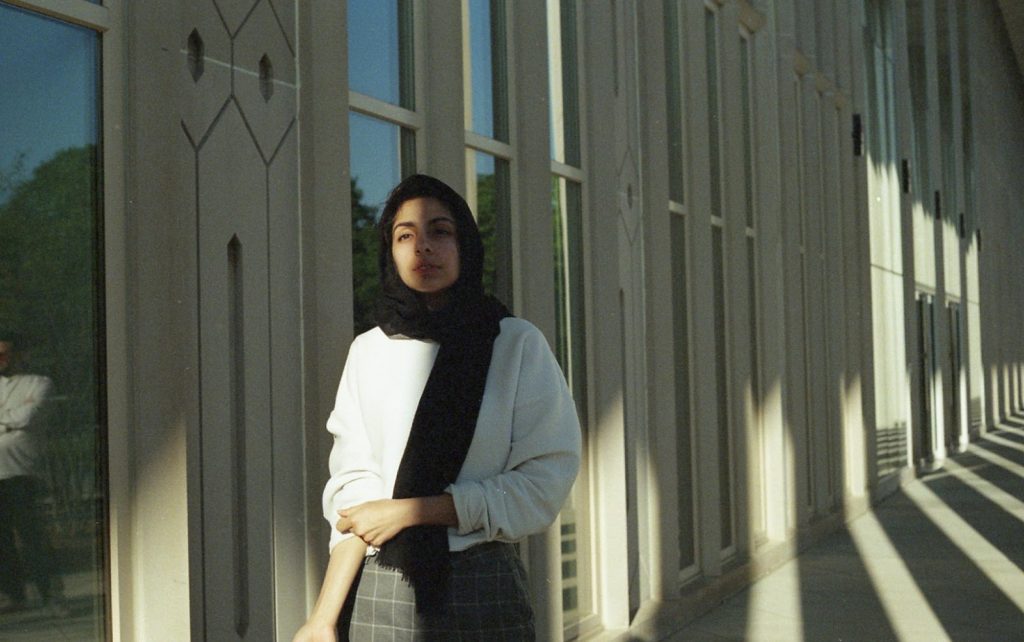

06 JULY 2015

WHY I SAY NO TO "FLATTERING" CLOTHES

Open almost any magazine or fashion publication today and you’ll be able to find the “right” clothes “for your body shape,” using various fruit and vegetable analogies to feign a level of politeness: are you a pear or an apple this time?
This post basically is here to say that this is all just a bunch of B.S, and why we need to move past the conception of “flattering” clothes.
Concession: as a thin and oh-so-slightly above average height (I’d like to think so) petite girl, I’m speaking from a place of privilege. Who am I to tell the rest of the fruits and vegetables of the world that they should embrace the bodies that the rest of society refuses to do? (Sure, I’ve experienced ostracization as a Muslim woman in the USA, but never because of my figure). So, I’d like to admit my privilege in this conversation and put it out there for you to consider while reading this.
(But that doesn’t mean stop reading—you’re not off the hook just yet)
Alright. Still with me? You’re great.
The conception that we should constantly be buying “flattering” clothes is based on a standardized idea of what beauty is—and, therefore, what it is not. The thin white girl with the curves in the right places and a waist you can put a keychain around still takes home the cake (but, of course, she just can’t eat it)—and flattering clothes are media’s conceptions of what can bring you closer to this ideal.
And I quote.
“Oval-shaped women hold most of their excess weight around the middle [thanks for that discovery, Sherlock]…chances are you have a good-sized bust so there are plenty of ways to draw the eye away from the waistline”
Yeah, um, how about not.
It seems we’ve (a “we” that is rooted in the patriarchy, btw…as is the oppression of women globally but just blamed on Islam…) become all too comfortable on giving women orders on how to dress and what to look like. In focusing all of our attention on outward appearances, of course it’s what is most important (aka character & intellect) that is often forgotten to cultivate. (All part of the patriarchy’s master plan, ladies).
Using “flattering” as a rubric for dress, us women are pushed to squeeze our waists and pump our rear ends (or whatever the kids are doing these days) in order to perpetuate society’s conception of ideal beauty–a conception that women must consistently strive for but will never reach. Certain jeans are off-limits to tomatoes or styles of dresses for carrots–all because it won’t help you mold and hide parts of your body that are hindering you from reaching that golden bar of beauty.
But reaching (and breaking) the glass ceiling is far more important, I think.
Of course, definitely not insinuating here that we should all go out and run around in paper bags, or even to stop wearing things that “fit,” but rather to reinterpret and redefine your style based on what makes you personally feel wonderful and confident so you can take on the world. (Like these wardrobe essentials). It’s not what makes your waist 2 sizes smaller that is important than what lets you move past a society that encourages women to be obsessed with fitting rubrics.
On JooJoo Azad we’re also moving forward together on a minimal wardrobe project in order to lessen our attachment to, and dependence on, material goods (clothing) in general as a preoccupation of our lives.
TL;DR: Screw society’s standards of beauty. Wear whatever makes you personally happy and confident. Wear what defines you as a person, not hides you as an object.
P.S. This post was inspired by me trying to be productive in a 12hr layover in Dusseldorf (…for a flight to Hamburg…even though I probably could have walked there in 12 hours…) and thinking about my upcoming research in Iran. If you’re also interested in women’s bodies as the center of politics (via fashion, of course), stick around because I’ll be sharing some findings on this space!
P.P.S Not into words? Then follow along on Instagram or Snapchat (@hodakay)!
-If you enjoyed this post, please share! If you didn’t, leave a comment…and then share!-

The post Why I say no to “flattering” clothes appeared first on Hoda Katebi.

]]>

https://hodakatebi.com/why-i-say-no-to-flattering-clothes/feed/ 0
6 (ethical) stores you’ll love as much as Zara https://hodakatebi.com/6-ethical-stores-youll-love-as-much-as-zara/ https://hodakatebi.com/6-ethical-stores-youll-love-as-much-as-zara/#respond Tue, 24 Mar 2015 17:13:00 +0000 https://hodakatebi.com/?p=2323 24 MARCH 2015 6 (ETHICAL) STORES YOU’LL LOVE AS MUCH AS ZARA Refinery29 just published an insanely-popular post–“6 Stores You’ll Love as Much as Zara”–featuring fast-fashion brands fueled by slave labor. Here is my response. Because fashion should be empowering, not exploitative~ { starting top left and going clockwise }1. Matter Prints: Sideswept Dhoti + Mobi […]

The post 6 (ethical) stores you’ll love as much as Zara appeared first on Hoda Katebi.

]]>
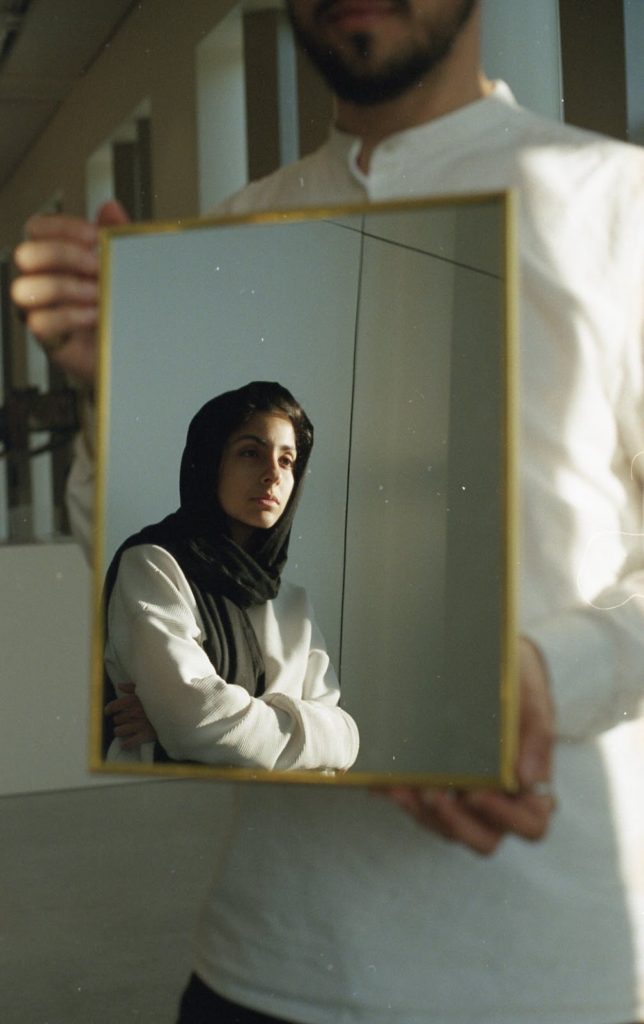

24 MARCH 2015

6 (ETHICAL) STORES YOU'LL LOVE AS MUCH AS ZARA

Refinery29 just published an insanely-popular post--"6 Stores You'll Love as Much as Zara"--featuring fast-fashion brands fueled by slave labor. Here is my response. Because fashion should be empowering, not exploitative~

{ starting top left and going clockwise }
1. Matter Prints: Sideswept Dhoti + Mobi Indigo Pants | Matter Prints works with artisans across India to create products that are eco-friendly, preserve their heritage, and are able to help the artisans become financially independent.
Update! — They just came out with a rad new ethical jumpsuit collection! Peep our editorial collaboration here!
2. Harveys: Berkeley Backpack in Black + White | bags & backpacks made from re-purposed seat belts. Seriously cool. All products are handmade in the USA!
3. New Classics Studios: Papaya Dress | I seriously want to buy everything. You know it’s an A+ store when they sell dresses with papayas on them. Because can you think of anything better to put on a dress? All clothing is created with high ethical standards (& aesthetics, obviously).
Update! — JooJoo Azad & New Classics Studios collabed on a sick new editorial shoot for their KowTow Phase Dress!
4. Osborne: Dune Oxford | handmade, fair-trade, eco-friendly, artisan crafted…basically everything you could ever want in an oxford (or a brand).
5. FashionABLE: Alem Color-Block Scarf | this brand uses fashion as a method of empowering women in Ethiopia, Kenya, and other countries bring themselves and their families out of poverty, receive an education, and become strong & independent individuals. Because that is what fashion should be for, right?
6. Shelby Steiner: Tie Tunic | a local designer from here in Chicago, Shelby produces her clothing using ethical, eco-friendly, and natural materials such as organic cotton, bamboo, and bad-assery.
 
Be sure to check out this post’s brother, The Top 5 Coolest Ethical Menswear Brands and the post for ethical, conscious shoppers on a budget, 5 Under $25: Ethical Buys on a College Student Budget.
Related reads:
+ Minimal Wardrobe Series — while you’re shopping ethically, are you also shopping minimally?
-Found this post helpful? Pass it on-

The post 6 (ethical) stores you’ll love as much as Zara appeared first on Hoda Katebi.

]]>
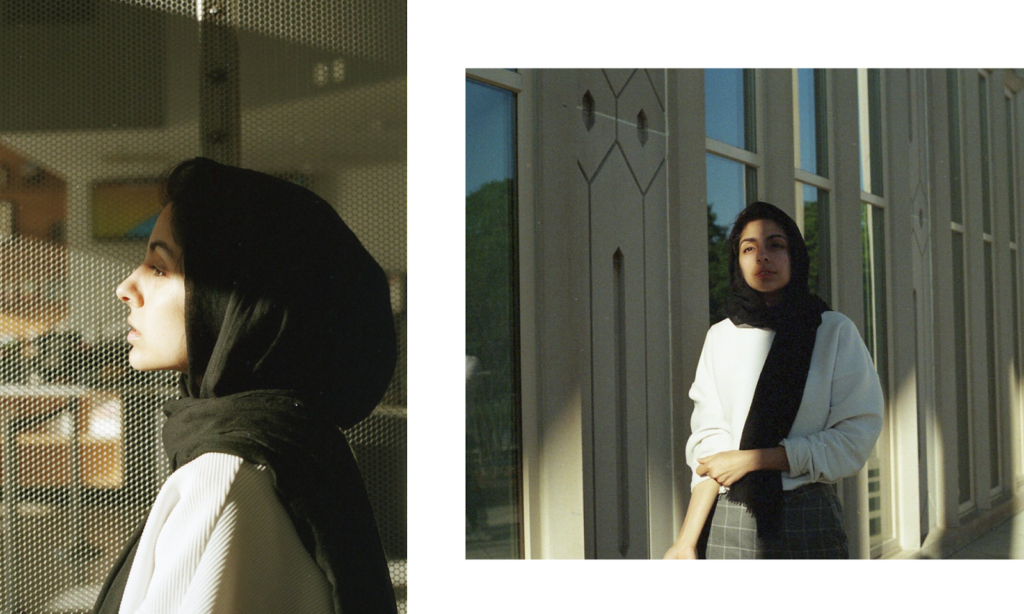
https://hodakatebi.com/6-ethical-stores-youll-love-as-much-as-zara/feed/ 0
5-step wardrobe cleanse https://hodakatebi.com/5-step-wardrobe-cleanse/ https://hodakatebi.com/5-step-wardrobe-cleanse/#respond Tue, 10 Feb 2015 17:28:10 +0000 https://hodakatebi.com/?p=2333 10 FEBRUARY 2015 5-STEP WARDROBE CLEANSE 1. Limit your spending | don’t think of this as a “let’s-get-rid-of-everything-and-re-buy-a-new-wardrobe” because that is not what we’re doing here. We are getting rid of (aka donating) and editing our current over-stocked inventory, not restocking. 2. Follow the “always, sometimes, never” rule | separate all of your clothes into […]

The post 5-step wardrobe cleanse appeared first on Hoda Katebi.

]]>


10 FEBRUARY 2015

5-STEP WARDROBE CLEANSE

1. Limit your spending | don’t think of this as a “let’s-get-rid-of-everything-and-re-buy-a-new-wardrobe” because that is not what we’re doing here. We are getting rid of (aka donating) and editing our current over-stocked inventory, not restocking.
2. Follow the “always, sometimes, never” rule | separate all of your clothes into 3 categories based on how often you wear/don’t wear them.
3. Analyze | great, you have a set of wardrobe staples (your “always” pile). Now time to purge your “sometimes” pile! Ask yourself:
  • Does it still fit right?
  • If it is damaged can I fix it?
  • Is it comfortable?
  • Does wearing it make me happy?
  • Can I wear this in multiple ways?
  • Does it have strong sentimental value?
  • Answering “no” to any of these questions is a good reason to move it to the donate pile!
4. Start defining your style | as I’ve gotten older I have been able to hone down on how I want to define myself visually: I have key elements/colors in my closet that are consistent and harmonious, with minor exceptions (I think I own one article of pink clothing…maybe). Defining my style enables me to donate whatever doesn’t fit ideologically with the rest of my clothes (shorter hemlines, tighter clothing, colors that are unflattering, etc).
5. Organize what is left | finally, make sure everything is visible, accessible, and organized in an aesthetically-pleasing manner. It will make getting dressed so much more enjoyable, easier, and quicker! Enjoy the new space and new life of a less cluttered and more defined wardrobe! xx
This post is part 2 of a series encouraging the transition to a minimal wardrobe—as in a wardrobe that is physically minimal (not the style) in order to limit our consumption, detach ourselves from material possessions, and live more socially-conscious lives.
Part 1: 5 Reasons Why You Should Have a Minimal Wardrobe
Part 3: 5 Wardrobe ResolutionsEveryone Needs to Make
-if you enjoyed this post or know someone who needs a spring clean, please share!-
| SHARE ON FACEBOOK | TWEET ON TWITTER | PIN ON PINTREST |

The post 5-step wardrobe cleanse appeared first on Hoda Katebi.

]]>
https://hodakatebi.com/5-step-wardrobe-cleanse/feed/ 0
This is not what feminism looks like | the Feminist Shirt controversy https://hodakatebi.com/this-is-not-what-feminism-looks-like-the-feminist-shirt-controversy/ https://hodakatebi.com/this-is-not-what-feminism-looks-like-the-feminist-shirt-controversy/#respond Sun, 16 Nov 2014 17:40:33 +0000 https://hodakatebi.com/?p=2342 16 NOVEMBER 2014 THIS IS NOT WHAT FEMINISM LOOKS LIKE | THE FEMINIST SHIRT CONTROVERSY As if feminism itself is not already (somehow) a controversial issue, creating “This is What a Feminist Looks Like” tshirts using (predominantly female) sweatshop labor and distributing to large male icons like Joseph Gordon-Levitt (my personal celebrity crush), Tom Hiddleston, […]

The post This is not what feminism looks like | the Feminist Shirt controversy appeared first on Hoda Katebi.

]]>
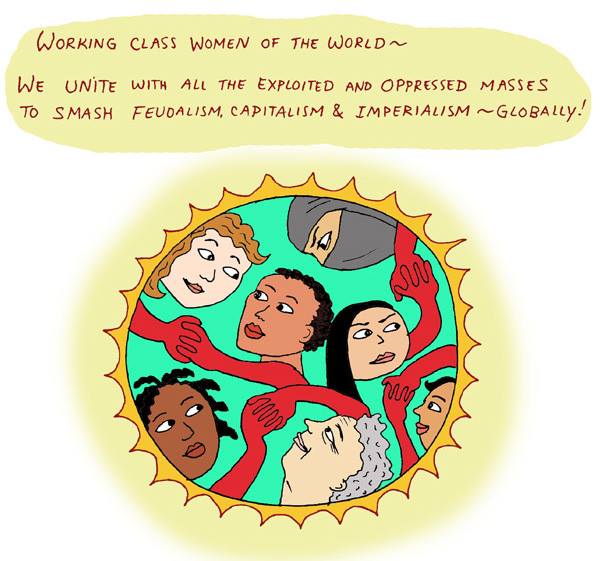

16 NOVEMBER 2014

THIS IS NOT WHAT FEMINISM LOOKS LIKE | THE FEMINIST SHIRT CONTROVERSY

As if feminism itself is not already (somehow) a controversial issue, creating "This is What a Feminist Looks Like" tshirts using (predominantly female) sweatshop labor and distributing to large male icons like Joseph Gordon-Levitt (my personal celebrity crush), Tom Hiddleston, and Benedict Cumberbatch, was not exactly a foot in the right direction.

Source: ELLE UK
Feminism, quite simply, is the “radical” view that women and men should have equality–no double standards in societal perspectives, no glass ceiling, no objectification and commercialization–the list goes on. In the United States (and in most of the world), it is not difficult to see the male-centric perspective that dominates and governs society, politics, the judicial system, and the workplace (in fact Sweden has dramatically benefited from seeing things from a more gender-balanced perspective). From receiving a smaller paycheck for the same career (devaluing the potential or work of a woman) to the widespread lack of justice for rape victims and victim-blaming, the existing system in most of the rest of the world lays testament to the strong need of a feminist movement–one which both men and women need to be a part of in order to succeed.
Enter the “This is What A Feminist Looks Like” shirts that you might have seen on the chests of some of the most in-demand men in Hollywood to raise awareness for this movement (in the guise of consumerism, of course, but we can save capitalist holidays/agendas for another post 😉 ). In theory, the idea of getting influential men to spread the word about, and trying to normalize, feminism, sounds like a great way to attract more men to join the cause, which unfortunately is not the easiest task to do. Not to mention that these roughly $70-$80 t-shirts are also raising money for charity. Sounds like a potentially decent plan?
Well, except for the teensy little part about the whole “these-shirts-were-made-in-a-sweatshop” thing. Which, I suppose, is slightly important and relevant to the discussion of feminism, given that most garment workers are marginalized women trying their best to make ends meet for their families and are taken heavily advantage of. It’s amazing how easy it is, as consumers, to not think twice about where our products come from. Scratch that. It’s incredibly frightening. The conditions in sweatshops are fairly widely known but also mentioned quite frequently here on JooJoo Azad (exhibit A, exhibit B), so it would not be necessary to again go through what these horrid conditions would entail here, but rather to understand the difficulty in reconciling the production of “feminist” shirts by exploited women.
While Fawcett claims to have launched an investigation into the suspicions on unethical practices which has concluded that such assertions are not accurate, (because a brand would definitely want to admit to hypocrisy?) the Daily Mail seems to have reached a different conclusion: women in their factories are being treated in a way counter-productive to the clothing’s suggested message. Earning less than the minimum wage is not only violating the basic human rights of these women, but it also directly contradicts the goals and purposes of feminism as a means of empowering and encouraging women. And this raises important questions for the feminist movement rooted in such consumer-based societies: Does feminism, as a movement, only extend to white, American women? As a feminist, is it not your responsibility to take into consideration the message your money is sending to fashion companies’ mass exploitation of marginalized women around the world?
-Enjoyed this post? Please spread the word!-

The post This is not what feminism looks like | the Feminist Shirt controversy appeared first on Hoda Katebi.

]]>
https://hodakatebi.com/this-is-not-what-feminism-looks-like-the-feminist-shirt-controversy/feed/ 0
Pattern clashing & cats | Marrakech, Morocco https://hodakatebi.com/pattern-clashing-cats-marrakech-morocco/ https://hodakatebi.com/pattern-clashing-cats-marrakech-morocco/#respond Wed, 22 Oct 2014 18:20:00 +0000 https://hodakatebi.com/?p=2379 22 OCTOBER 2014 PATTERN CLASHING & CATS | MARRAKECH, MOROCCO While channeling my inner style–what I like to call ‘unicorn throwup’– in Morocco was rather difficult, given that most Moroccans dressed like normal human beings (and attracting more attention to myself, on top of already doing shoots in public, was not at the top of […]

The post Pattern clashing & cats | Marrakech, Morocco appeared first on Hoda Katebi.

]]>


22 OCTOBER 2014

PATTERN CLASHING & CATS | MARRAKECH, MOROCCO

While channeling my inner style–what I like to call ‘unicorn throwup’– in Morocco was rather difficult, given that most Moroccans dressed like normal human beings (and attracting more attention to myself, on top of already doing shoots in public, was not at the top of my things-I-should-be-doing list), I was able to break it out a bit the same morning Alex and I woke up early and sneaked out to do this shoot catching the sunrise on the rooftop of our hotel, as we were not expecting to run into many people at such an early time. (To our dismay, we did) (It was really awkward) (bc we apparently were shooting right in front of the entrance to his home) (whoops)
But gosh do I miss this weather. Here in Chicago the weather is slowly tip-toeing towards a polar vortex again aka an infinite bitter sub-zero mess of broken dreams and skin.
In other news please enjoy a time-lapse of me slowly becoming friends with a cat.
{ Photos: Alex | Location: Marrakech, Morocco | Sandals: c/o Zappos } Similar below:

The post Pattern clashing & cats | Marrakech, Morocco appeared first on Hoda Katebi.

]]>
https://hodakatebi.com/pattern-clashing-cats-marrakech-morocco/feed/ 0
For the Sake of Fashion Benefit Runway Show | in collaboration with UNICEF-DePaul https://hodakatebi.com/for-the-sake-of-fashion-benefit-runway-show-in-collaboration-with-unicef-depaul/ https://hodakatebi.com/for-the-sake-of-fashion-benefit-runway-show-in-collaboration-with-unicef-depaul/#respond Sun, 19 Oct 2014 18:33:03 +0000 https://hodakatebi.com/?p=2394 19 OCTOBER 2014 FOR THE SAKE OF FASHION BENEFIT RUNWAY SHOW | IN COLLABORATION WITH UNICEF-DEPAUL Last Sunday I was given the honor of working with the UNICEF-DePaul University Chapter to act as the Fashion Director for their 3rd annual For The Sake of Fashion benefit runway show! 100% of the proceeds from this event […]

The post For the Sake of Fashion Benefit Runway Show | in collaboration with UNICEF-DePaul appeared first on Hoda Katebi.

]]>


19 OCTOBER 2014

FOR THE SAKE OF FASHION BENEFIT RUNWAY SHOW | IN COLLABORATION WITH UNICEF-DEPAUL

Last Sunday I was given the honor of working with the UNICEF-DePaul University Chapter to act as the Fashion Director for their 3rd annual For The Sake of Fashion benefit runway show! 100% of the proceeds from this event went towards the U.S. Fund for UNICEF, and of course, all of the clothing was sourced from socially-responsible boutiques and designers. We had the honor of showcasing 5 very talented and beautiful brands: Le Dessein, Mata Traders, CLEON’s Clothing, One Find Duo, and Anastasia Chatzka, each of which not only so generously loaned me their clothing in order to make the show possible, but they also are leading the way for a brighter, more responsible fashion industry. Below are a few select snapshots Alex took pre-show followed by complete sets of looks by the designers on the runway. Because of the (basically) endless number of photos she took, the rest of the photos will be posted on le Facebook Page, so as to not overwhelm you with photos (and secretly encourage you to “like” ze page!). Also the post-show photos look like holiday cards (who knew a bunch of Muslims would make great Christmas cards! Feel free to send to your relatives) which is handy. So you probably want to check those out, here.
Le Dessein | Elegant, sophisticated, classy. Le Dessein works to fund the education of young girls from underprivileged backgrounds–each of the portraits that you see chastised on to the clothing are done by the girls, who are then supported through purchases from the clothing. An incredibly beautiful brand, inside and out!
Mata Traders | As an avid pattern-clasher myself, the bright and fun prints (block-printed by hand with eco-friendly dyes!) were rather eye-catching and flattering on all body types. Not to mention that Mata Traders has a strict, fair-trade-only policy, working with women from cooperatives in India and Nepal that also provide not only fair wages and training, but also family services and literacy classes!
CLEON’S Clothing | Started in 2005, CLEON’s is a local Chicago brand constructed entirely by the hands of local designer Chad, and continues to be entirely a rather impressive one-man show that carries both cutting-edge (literally) mens and womenswear that make a powerful image.
One Find Duo | Young, playful, edgy. Based in Chicago and only a few years old, One Find Duo is a curatorial vintage re-sale store that partners with local non-profit organizations that empowers and encourages youth in the South Side of Chicago to become strong and charitable leaders. Not to mention that their vintage patterned windbreakers are basically the best thing ever.
Anastasia Chatzka | Feminine, bold, colorful. Another local designer in Chicago, Anastasia is brilliant when it comes to the mix of textures and fabrics and color. She also is incredibly conscious when it comes to the fashion industry’s “fast fashion” trend of excess waste and production, striving to bring morals and authenticity to her line by working with highly skilled artisans and not turning towards exploitative labor to create her art.
Photos: Alex
Again, thank you so much to Joseph and the DePaul University UNICEF Chapter for allowing me to be a part of this amazing event! Show them support by checking out their Facebook Page here where you can also see more photos of the show from other photographers, and JooJoo Azad’s Facebook Page here where you can see the rest of the photos taken by Alex! (Including a few awkward photos of myself pretending like I can do public speaking) (and those holiday cards I mentioned) (coming soon tonight)!
p.s yes maybe this post was supposed to go up a bit earlier but I got back a *bit* later than expected from the Her Campus College Fashion Week Show last night and immediately passed out on my flatmates so my apologies. Also, speaking of which, photos from College Fashion Week coming up shortly, as well as a few exciting collaborations! Huzzah! xx
                                                                                           Enjoy your Sunday!

The post For the Sake of Fashion Benefit Runway Show | in collaboration with UNICEF-DePaul appeared first on Hoda Katebi.

]]>

https://hodakatebi.com/for-the-sake-of-fashion-benefit-runway-show-in-collaboration-with-unicef-depaul/feed/ 0
Hassan Tower (صومعة حسان) Rabat, Morocco https://hodakatebi.com/hassan-tower-%d8%b5%d9%88%d9%85%d8%b9%d8%a9-%d8%ad%d8%b3%d8%a7%d9%86-rabat-morocco/ https://hodakatebi.com/hassan-tower-%d8%b5%d9%88%d9%85%d8%b9%d8%a9-%d8%ad%d8%b3%d8%a7%d9%86-rabat-morocco/#respond Wed, 08 Oct 2014 03:03:00 +0000 https://hodakatebi.com/?p=2432 08 OCTOBER 2014 HASSAN TOWER (صومعة حسان) RABAT, MOROCCO Collaborated with local talent Youssef Harzy Photography to produce a little shoot exploring one of Rabat’s beautiful monuments. (Yes, I’m still backlogged with photos from Morocco (…from 3 months ago..) –I will probably finish posting all of these shoots from Morocco by the time I return […]

The post Hassan Tower (صومعة حسان) Rabat, Morocco appeared first on Hoda Katebi.

]]>

08 OCTOBER 2014

HASSAN TOWER (صومعة حسان) RABAT, MOROCCO

Collaborated with local talent Youssef Harzy Photography to produce a little shoot exploring one of Rabat’s beautiful monuments. (Yes, I’m still backlogged with photos from Morocco (…from 3 months ago..) –I will probably finish posting all of these shoots from Morocco by the time I return again in less than 3 months (eep!))
The Hassan Tower (for which I posted a few other photos from in this post) in Rabat are the remains of an ancient mosque that was started in around 1195 and never completed. Sort of like most things I try to start in my life.
Sorry for the short post but I got to run to class–hope you enjoy the photos! Also I know I promised a new apt tour soonish, so that is in the near(er) future! Right after my desk chair comes in the mail…(so probably never). I’m also in the middle of working with a few really amazing socially-responsible brands that I can’t wait to share with you, so stay tuned! c;
Don’t forget to check out (& like) Youssef Harzy’s facebook page, here to see more of his photography around Morocco!
{ Photos: Youssef Harzy Photography | Location: Hassan Tower, Rabat, Morocco |
Leggings: c/o Macys | Blouse: Zara | Skirt: Local | Boots: c/o Zappos | Rings: H&M } Similar below:

The post Hassan Tower (صومعة حسان) Rabat, Morocco appeared first on Hoda Katebi.

]]>
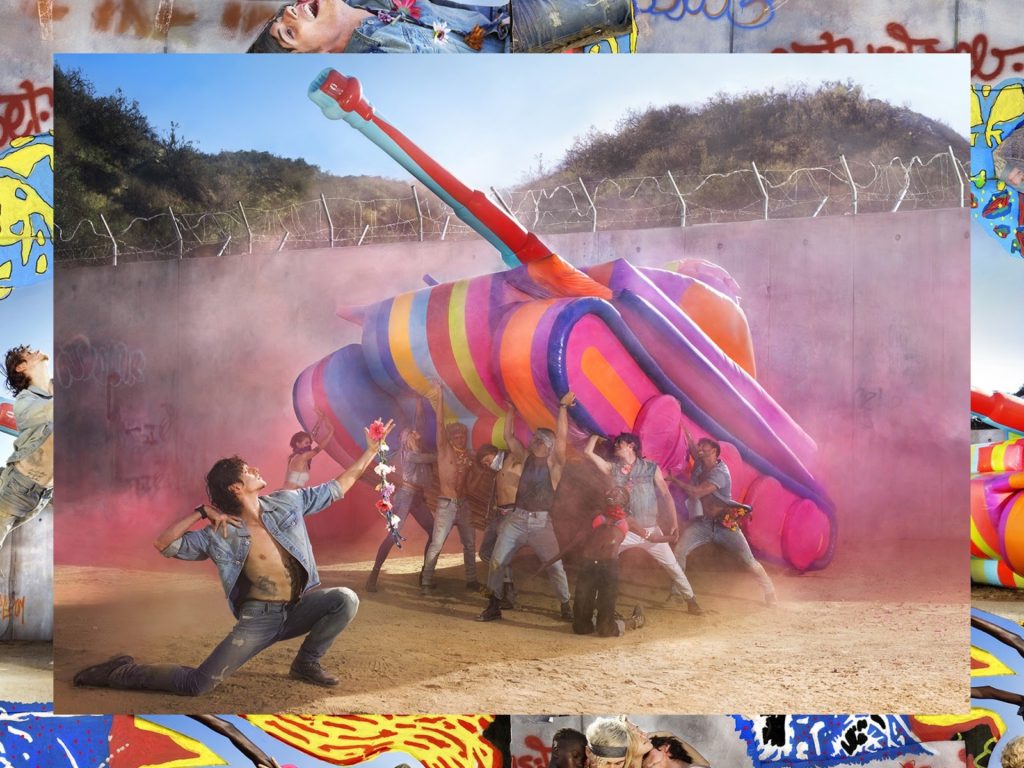
https://hodakatebi.com/hassan-tower-%d8%b5%d9%88%d9%85%d8%b9%d8%a9-%d8%ad%d8%b3%d8%a7%d9%86-rabat-morocco/feed/ 0
Moroccan sunrise on the rooftops of Marrakech https://hodakatebi.com/moroccan-sunrise-on-the-rooftops-of-marrakech/ https://hodakatebi.com/moroccan-sunrise-on-the-rooftops-of-marrakech/#respond Tue, 16 Sep 2014 18:07:26 +0000 https://hodakatebi.com/?p=2359 16 SEPTEMBER 2014 MOROCCAN SUNRISE ON THE ROOFTOPS OF MARRAKECH Ah, how quickly time passes. Our trip to Morocco already seems ages ago, when we woke up at an un-Godly hour to catch the sunrise on the roof of our hotel. (Honestly, I’m still in disbelief as to how we managed to wake up before […]

The post Moroccan sunrise on the rooftops of Marrakech appeared first on Hoda Katebi.

]]>
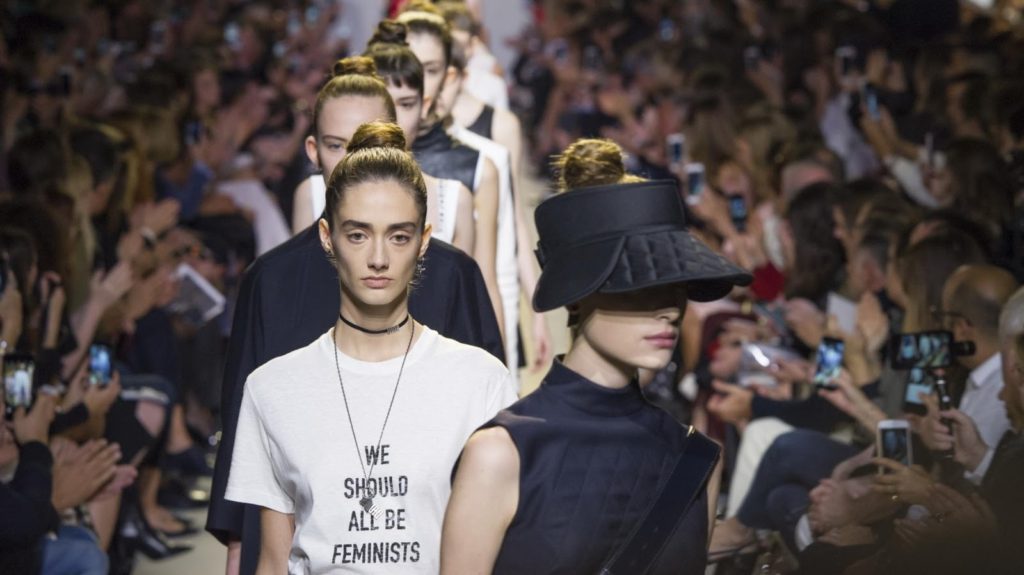

16 SEPTEMBER 2014

MOROCCAN SUNRISE ON THE ROOFTOPS OF MARRAKECH

Ah, how quickly time passes. Our trip to Morocco already seems ages ago, when we woke up at an un-Godly hour to catch the sunrise on the roof of our hotel. (Honestly, I’m still in disbelief as to how we managed to wake up before noon on vacation, but, this was in the name of the blog…and a bit of exploration.) Cities, I’ve found, are always so different in the early hours of the morning. So peaceful, so calming. If I had the physical ability to wake up at sunrise and start my day watching the sunrise every morning with a cup of tea in my hand, I would probably be a much better human being. But alas. Ain’t nobody got time for dat. But it’s definitely a magical experience when it does happen, once in a blue moon.
While Morocco overall was not unbearably hot, Marrakech, we were warned, was a different story, as we were nearing the Sahara Desert (p.s that is actually my all-time favorite photo from our trip!) and the sun will literally melt your skin off if you’re not wise (so you could tell I was nervous). Facing such conditions, the instinct for most (well I guess excluding Muslims) would be to wear as little as possible. But doing so is actually much hotter as the sun is directly on your skin (& therefore will give you the. worst. sunburns. in the history of your skin). Rather, the best option is to cover all of your skin (& head–no, I’m not trying to convert you….yet)(gotta protect that scalp too!) in light, airy colors and fabrics. So, I tied a light blue (Alex is convinced it’s white…it’s blue, right?!) thin blouse over a breezy maxi dress. And of course the usual jewels–black watch stolen borrowed from my mother, gifted bird necklace from Iran, and a fake wedding ring (when in Morocco, right?) (;
{ location: Marrakech, Morocco | photos: Alex | Maxi Dress: c/o Mart of China | Headscarf: Iran | Blouse: Zara | Rings: H&M // similar can be found below}
OH p.s. As of today, I started using affiliate links, so anytime you click on a link that starts with “Shop Sense” (you can check this by hovering over a link) you are so kindly helping fund my university/after-college travels 🙂 So thank you!
Happy Tuesday! Off to Chicago tomorrow morning! xx

The post Moroccan sunrise on the rooftops of Marrakech appeared first on Hoda Katebi.

]]>
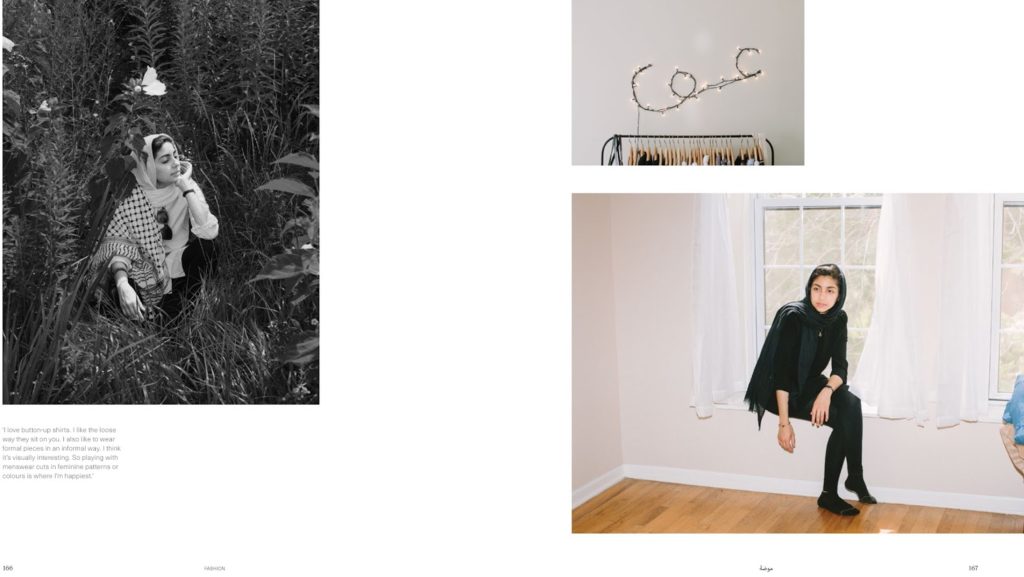
https://hodakatebi.com/moroccan-sunrise-on-the-rooftops-of-marrakech/feed/ 0
Overview of the Israel-Palestine ‘conflict’: 5 things you should know now https://hodakatebi.com/overview-of-the-israel-palestine-conflict-5-things-you-should-know-now/ https://hodakatebi.com/overview-of-the-israel-palestine-conflict-5-things-you-should-know-now/#respond Sat, 30 Aug 2014 04:40:50 +0000 https://hodakatebi.com/?p=2446 30 AUGUST 2014 OVERVIEW OF THE ISRAEL-PALESTINE CONFLICT: 5 THINGS YOU SHOULD KNOW NOW ….and no.5 is related to fashion.. Yes, I am aware this is a very sensitive topic that many are afraid to delve into–especially on such a public platform as a blog. It is a topic that is seen as incredibly complex, […]

The post Overview of the Israel-Palestine ‘conflict’: 5 things you should know now appeared first on Hoda Katebi.

]]>


30 AUGUST 2014

OVERVIEW OF THE ISRAEL-PALESTINE CONFLICT: 5 THINGS YOU SHOULD KNOW NOW

....and no.5 is related to fashion.. Yes, I am aware this is a very sensitive topic that many are afraid to delve into--especially on such a public platform as a blog. It is a topic that is seen as incredibly complex, unclear, and uncomfortable to talk about. But, in reality, the situation is quite clear if you've done your homework.

{ photos: Alex | location: Rabat, Morocco | shirt: gifted | blouse (worn as cardigan):
Zara | boots: c/o Zappos | jeans: h&m | watch: stolen from my mother }
First of all, let’s just all celebrate the recent declared ceasefire–this is a huge step in the road toward peace and freedom! But we can’t forget about what has happened, what currently is on the ground, and that justice still has not been served. Below is a quick list of 5 things that you need to know about the Israel-Palestine conflict, one of the most controversial and heated topics currently being discussed in the world. It’s one of those issues that you should avoid in interviews. Which is why we’re chatting about it today here 🙂 Lessgetstarted.

1. APARTHEID EXISTS

Nelson Mandela would know an apartheid regime when he sees one. In the words of the South African apartheid fighter himself, “We know too well that our freedom is incomplete without the freedom of the Palestinians.” Segregated roads; ethnic cleansing of all non-Jewish Palestinians; the lack of right to leave or enter freely, have their own recognized government, or own an airport or seaport; being subject to different laws; and always having chance to be taken from their homes at night and indefinitely prisoned without reason are all daily challenges of Palestinians living under Israeli occupation. There are 54 Israeli laws that discriminate against Palestinians. Apartheid is defined as “a policy or system of segregation or discrimination on ground of race” (dictionary.com) and the status (or lack thereof) of Palestinians under Israeli law leaves little room for debate. (source/more information: Human Rights Watch)

2. THE USA SUPPORTS ISRAEL. THE REST OF THE WORLD DOES NOT.

From the 188 countries of the UN, only 9 voted against the recognition of Palestine as a state. The support of Israel should not be, and is not, normalized within greater society. The world is slowly waking up and the Palestinian narrative–which for so many decades has been hidden from mainstream society, is slowly becoming more visible. In fact, the Human Rights Watch as well as several other international human rights organizations are urging Palestine to go to the International Criminal Court for the countless war crimes committed against Palestinian civilians and society. (source/more information: Human Rights Watch)

3. PALESTINIANS MAKE UP THE LARGEST REFUGEE GROUP IN MODERN HISTORY

1 in 4 Palestinians have been displaced. Since 1947, 85% of the indigenous population of Palestine has been displaced. Today, there are over 7 million Palestinian refugees, making them the largest and longest group of people to have refugee status. (source/more information: American Friends Service Committee)

4. IT IS NOT MUSLIMS VS JEWS

Contrary to popular belief, all non-Jewish ethnicities are being prosecuted and driven out of Israel–not just Arab Muslims. Many kindergartens in Israel are even segregated–separate (“but equal” — remind you of anything?) kindergartens for African Americans can be found across Israel. (source/more information: The Daily Beast)

5. IT IS NOT A FAIR FIGHT

Both parties involved have been killing innocent civilians–there is no question about that. The life of no human being is more important than another. But what is portrayed in the media as a fair fight between two equally-armed states, is just not the case. The Palestine Authority receives millions in monetary aid each year from countries around the world, most of which goes into rebuilding housing, hospitals, roads, and other infrastructure destroyed by Israel. And Israel? In just 3 years the US alone has given Israel enough weaponry to kill every Palestinian living under occupation 10 times over. On top of US aid, so many American companies–including fashion brands like Victoria’s Secret and others–donate millions to the Israeli army. So through your shopping habits you could be potentially supporting war crimes (not to mention Victoria’s Secret also uses unethical child labor but let’s not get too off track for once–you can read that story here) Some argue that Israel is simply acting in self-defense. But self-defense is not destroying civilian homes; raping women; using white-phosphorus bombs (aka bombs that break into several pieces and when in contact with skin creates a sort of indistinguishable fire that burns flesh–this is another war crime, btw); and killing, imprisoning, and torturing children. (sources/more information: Josh Ruebner | Human Rights Watch)
Simply put, history repeats itself. The atrocities of Israel are reminiscent of genocides and apartheids throughout the world’s history. After everything is over and peace is restored, the world always questions how people could have ever supported the perpetrators. You don’t want to be on the wrong side of history.
And because I don’t believe in writing about depression-provoking topics without providing some sort of relief, here are a few ways to take action:
For a larger and more comprehensive list of ways you can take action online and offline, check out this handy list of actions.
And because I don’t believe in writing about depression-provoking topics without providing some sort of relief, here are a few ways to take action:
I would love to hear your thoughts and perspectives–especially if you have any questions or disagree with anything. (I even kept anonymous open–come at me~)
(oh p.s. I do reserve the right to delete racist/offensive/crude/unproductive comments) See you in the comments!
P.S. yes, we had quite a bit of fun with this shoot + location. P.P.S. If you still don’t feel comfortable talking about this issue in the comments, feel free to note how awesome this abandoned construction site is that we accidentally stumbled upon in Morocco. P.P.P.S. yes, I almost fell into it a few times.
-if you enjoyed this post or found it helpful, please spread the word so it can help others, too!- SHARE ON FACEBOOK | TWEET ON TWITTER | PIN ON PINTREST

The post Overview of the Israel-Palestine ‘conflict’: 5 things you should know now appeared first on Hoda Katebi.

]]>

https://hodakatebi.com/overview-of-the-israel-palestine-conflict-5-things-you-should-know-now/feed/ 0